

Cabot Q3 adj EPS $1.67 beats estimate; sales rise 6.4% to $982M


Cabot Corporation delivered strong Q3 FY26 results with adjusted EPS of $1.67 and sales of $982 million, driven by Performance Chemicals. Leadership transition announced with Erica McLaughlin succeeding Shawn Keohane. Company reaffirmed battery materials EBITDA guidance and tightened full-year EPS outlook.



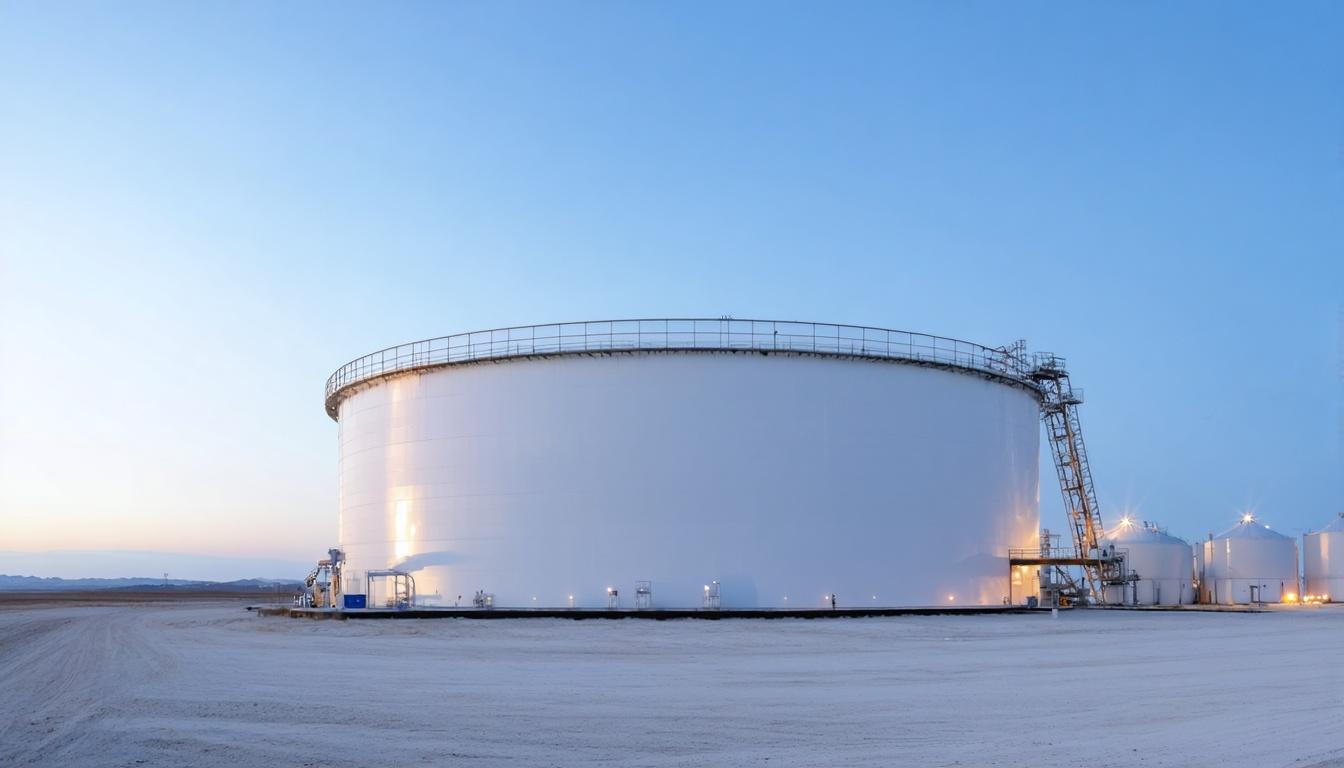
*this image is generated using AI for illustrative purposes only.
Cabot Corporation reported third quarter fiscal year 2026 adjusted earnings per share (EPS) of $1.67, surpassing the consensus estimate of $1.66, while sales rose 6.4% year-over-year to $982 million. The strong top-line performance, driven by volume growth in battery materials and fumed metal oxides, underscored underlying business resilience despite a significant drop in GAAP net income to $6 million due to restructuring charges. Concurrently, the Board of Directors announced that Erica McLaughlin will succeed Shawn Keohane as President and Chief Executive Officer, effective October 1, 2026, marking a planned leadership transition after Keohane’s nearly 25-year tenure.
The divergence in segment performance was stark during the quarter. The Performance Chemicals segment saw EBIT rise 19% year-over-year to $68 million, fueled by higher volumes in battery materials and fumed metal oxides. Conversely, the Reinforcement Materials segment experienced a 24% year-over-year decline in EBIT to $97 million, despite a 5% increase in global volumes, due to lower gross profit per ton from customer agreements. Management highlighted that pricing actions implemented ahead of rising raw material costs helped protect margins in Performance Chemicals, though normalization is expected in the fourth quarter.
| Segment | Q3 FY26 EBIT | Q3 FY25 EBIT | YoY Change |
|---|---|---|---|
| Reinforcement Materials | $97 million | $128 million | (24%) |
| Performance Chemicals | $68 million | $57 million | 19% |
Cash flow generation remained robust, with Cabot producing $75 million in operating cash flow. This was partially offset by $44 million used for higher net working capital, attributed to rising raw material costs, and $38 million in capital expenditures. The company returned $24 million to shareholders through dividends and ended the quarter with $250 million in cash and cash equivalents. Total available liquidity stood at $1.3 billion, with a net debt to EBITDA ratio of 1.4 times as of June 30, 2026. Management also noted that it has repurchased $101 million in shares year-to-date and expects to resume buybacks in the fourth quarter.
What the Numbers Show
A key analytical observation is the significant drag on GAAP profitability from non-operating items. While the company delivered an adjusted EPS of $1.67, the GAAP EPS was merely $0.12, indicating that $1.55 per share in earnings was consumed by restructuring charges ($42 million pre-tax) and employee benefit plan settlements ($30 million pre-tax). Furthermore, the effective tax rate spiked to 79% due to a $19 million discrete tax expense related to valuation allowance changes following the cessation of carbon black production at its Campana, Argentina plant. Management expects the full-year operating tax rate to remain in the range of 28% to 30%, suggesting the quarterly tax burden is largely non-recurring.
Outlook and Strategic Initiatives
Management tightened its fiscal year 2026 Adjusted EPS guidance range from $6.00 to $6.50 per share to $6.15 to $6.45 per share, reflecting year-to-date performance and expectations for the fourth quarter. Cabot also reaffirmed its expectation of approximately $40 million in EBITDA for its Battery Materials product line for the full fiscal year. The company is advancing capacity expansions in the United States and China, shifting its U.S. strategy from a greenfield facility in Michigan to brownfield additions at existing sites. These investments, totaling approximately $125 million, are expected to come online in 2028. Additionally, Cabot received a Platinum sustainability rating from EcoVadis for the sixth consecutive year, placing it in the top 1% of basic chemicals manufacturers.

How will the leadership transition to Erica McLaughlin impact Cabot's strategic execution in the high-growth battery materials sector compared to Shawn Keohane's tenure?
What specific pricing mechanisms or customer contract structures are expected to mitigate the margin pressure observed in the Reinforcement Materials segment during Q4?
Will the shift from greenfield to brownfield capacity expansions in the U.S. accelerate the timeline for achieving the projected $40 million EBITDA target for Battery Materials by fiscal year-end?
 19
19











 Access Market Heat-map & Insights
  Create, Save & Share your Screener
  Use 200+ Screening Filters





