

C3is Q2FY26 net income turns positive at $10 million; revenue up 124%


- C3is Q2FY26 revenue rose 124% YoY to $24.0 million, driven by higher charter rates
- Net income turned positive at $10.0 million, reversing a $5.3 million loss in Q2FY25
- Fleet capacity expanded to 311,431 dwt with the addition of two product tankers
- Cash balance reached $48 million by July 2026, covering upcoming capex obligations

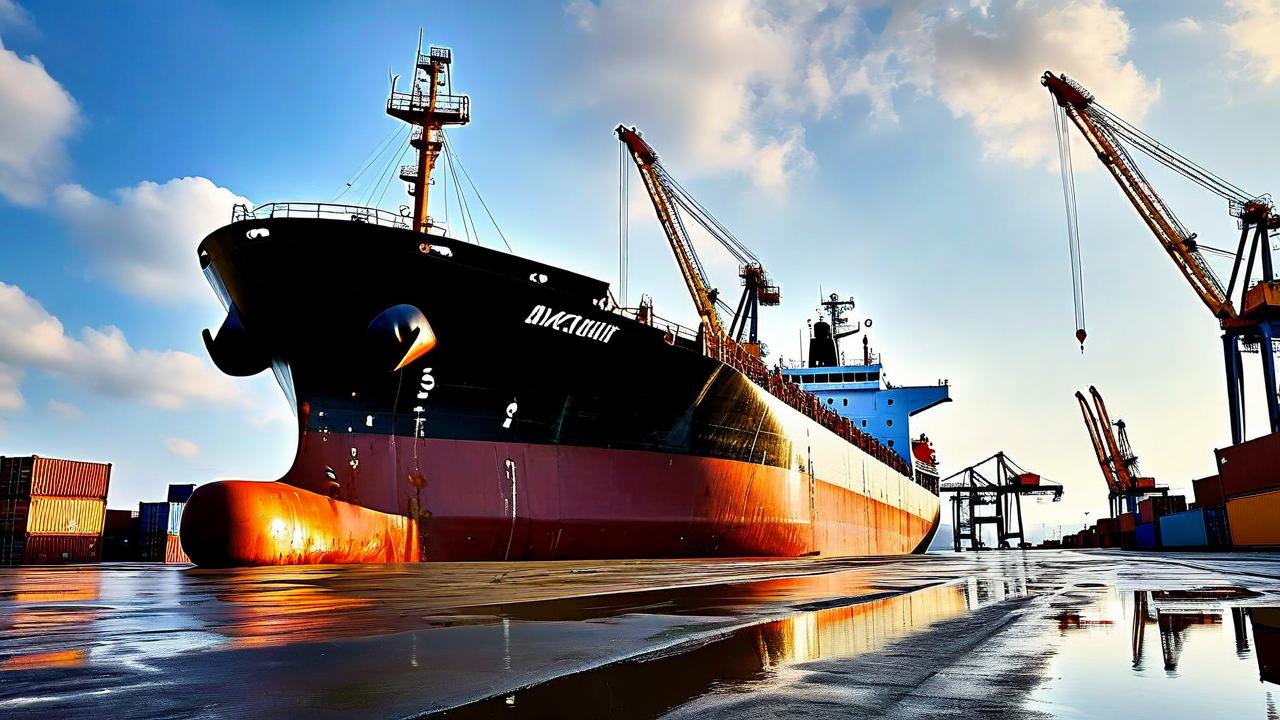

*this image is generated using AI for illustrative purposes only.
C3is Inc. (NASDAQ: CISS) reported a sharp turnaround in its second quarter of FY26, posting revenue of $24.0 million, up 124% year-over-year, and net income of $10.0 million. The Athens-based ship-owning company reversed a net loss of $5.3 million in the same period last year, driven by higher charter rates and fleet expansion.
Management hosted a conference call on August 27, 2026, to discuss the results. The company’s fleet capacity grew to 311,431 deadweight tons (dwt) following the delivery of two product tankers, enhancing its exposure to the tanker market.
Financial Highlights
For the three months ended June 30, 2026, C3is generated voyage revenues of $24.0 million, compared to $10.7 million in Q2FY25. The daily Time Charter Equivalent (TCE) rate rose 144.5% to $40,260 from $16,466 in the prior year period.
Adjusted net income reached $9.8 million, a 790.9% increase from $1.1 million in Q2FY25. Adjusted EBITDA stood at $11.8 million, up 321.4% from $2.8 million. For the six months ended June 30, 2026, net income was $13.2 million and adjusted EBITDA was $18.7 million.
Per share metrics also reflected the strong performance. Adjusted earnings per share (EPS) came in at $345.57, a significant improvement from the loss of $(2.86 thousand) per share in the corresponding period last year. This represents a 112.08% increase year-over-year.
| Metric | Q2FY26 | Q2FY25 | Change | 6MFY26 | 6MFY25 |
|---|---|---|---|---|---|
| Revenue ($ million) | 24.0 | 10.7 | +124% | 35.6 | 19.4 |
| Net Income ($ million) | 10.0 | (5.3) | Turnaround | 13.2 | 2.6 |
| Daily TCE ($) | 40,260 | 16,466 | +144.5% | 36,769 | 16,335 |
| Adjusted EBITDA ($m) | 11.8 | 2.8 | +321.4% | 18.7 | 5.8 |
| Adj. EPS ($) | 345.57 | (2.86 thousand) | +112.08% | - | - |
Fleet Expansion and Operations
The company’s fleet operational utilization was 78.6% in Q2FY26, slightly up from 78.0% in Q2FY25. The average number of vessels increased to 5.0 from 4.0 in the prior year.
C3is took delivery of two product tankers for an aggregate consideration of $39.8 million, payable by January 2027. One tanker was delivered on April 3, 2026, and the second on August 6, 2026. These acquisitions increase the company’s exposure to the product tanker market, where spot rates were approximately $30,000 per day. The Aframax oil tanker operated in the spot market, achieving rates around $100,000 per day.
All vessels remain unencumbered. Cash and cash equivalents rose 122.8% to $33.2 million at the end of Q2FY26, supported by a public offering of units that raised $6.0 million in July 2026. By the end of July 2026, the cash balance further increased to $48 million, an increase of 222% from year-end 2025. This position is sufficient to cover the upcoming capital expenditure obligation of $39.78 million due in January 2027.
The company has expanded its fleet capacity by 387% since inception through five vessel acquisitions: an Aframax oil tanker in 2023, a bulk carrier in 2024, and two product tankers in 2026. None of the vessels are Chinese-built, mitigating potential risks from US tariffs on Chinese-built ships. The average age of the fleet was 16.8 years as of June 30, 2026.
What the Numbers Show
The surge in profitability is primarily driven by rate recovery rather than volume growth. While total calendar days increased by 24.5% due to fleet expansion, the daily TCE rate more than doubled, indicating strong pricing power in both drybulk and tanker segments. The shift from a $5.3 million loss to a $10.0 million profit underscores the leverage gained from fixed-cost structures as charter rates improved. Additionally, the significant rise in cash reserves highlights disciplined capital management despite recent vessel acquisitions.

How might the upcoming $39.8 million capital expenditure for the new product tankers impact C3is's cash reserves and debt profile in early 2027?
Given the 144% surge in daily TCE rates, what are management's expectations for rate sustainability in the tanker and drybulk markets for the remainder of FY26?
Will C3is pursue further fleet acquisitions or consider alternative growth strategies, such as mergers or joint ventures, given its strengthened balance sheet?
 18
18








 Access Market Heat-map & Insights
  Create, Save & Share your Screener
  Use 200+ Screening Filters





