Brookfield Secures $1bn Mandate From UK Nuclear Liabilities Fund

scanx
Reviewed by
Naman SScanX News Team
Key Highlights
  • Brookfield Asset Management secures a $1bn initial commitment from the UK Nuclear Liabilities Fund
  • The mandate covers infrastructure, energy, private equity, real estate, and private credit strategies
  • Funds aim to cover decommissioning costs for eight UK nuclear stations without taxpayer reliance
  • Brookfield’s Investment Solutions Group will manage the multi-asset portfolio
powered bylight_fuzz_icon
50397118

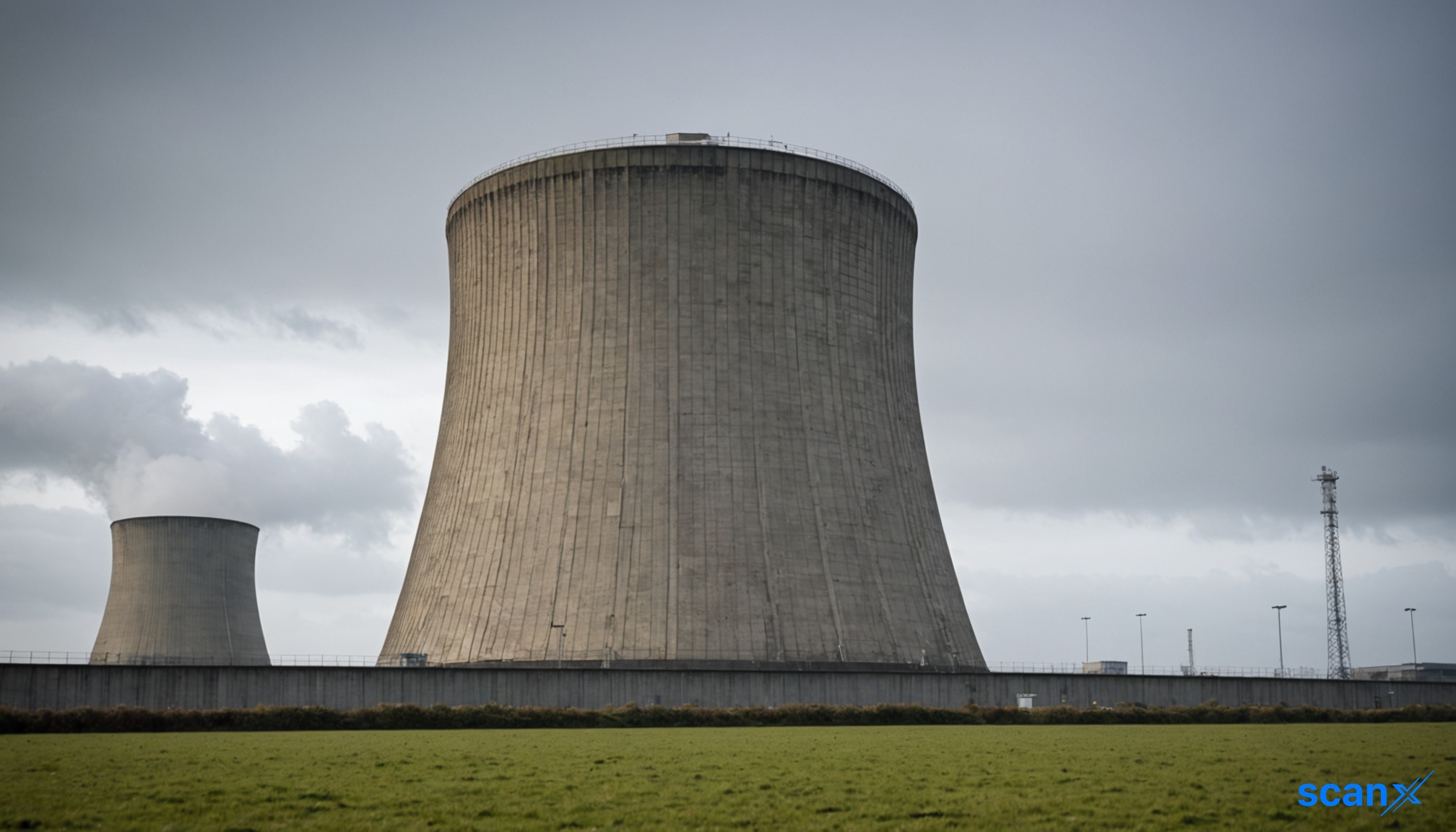
*this image is generated using AI for illustrative purposes only.

Brookfield Asset Management (NYSE: BAM, TSX: BAM) has been selected by the Nuclear Liabilities Fund (NLF) to manage a long-term investment mandate with an initial $1bn commitment.

The deal targets the fund's requirement to cover decommissioning costs for eight UK nuclear power stations without relying on taxpayers.

Deal Structure and Strategy

The mandate will be managed by Brookfield’s Investment Solutions Group (ISG), chaired by Oaktree Co-Chairman Howard Marks and led by Alper Daglioglu. The portfolio will invest globally across Brookfield’s infrastructure, energy, private equity, real estate, and private credit strategies.

Investments are expected to include a mix of fund commitments, direct investments, and co-investments. The structure aligns the portfolio’s horizon with NLF’s multi-decade funding needs, emphasizing disciplined capital allocation and reinvestment of proceeds to enhance long-term net investment outcomes.

Feature Detail
Initial Commitment $1bn (c.£750 million)
Manager Brookfield Investment Solutions Group
Asset Classes Infrastructure, Energy, Private Equity, Real Estate, Private Credit
Objective Cover decommissioning costs for eight UK nuclear stations

What the Numbers Show

The initial commitment of $1bn represents a significant portion of the NLF’s current asset base, given that the fund has paid out circa £3bn in decommissioning costs to date. The mandate’s design to reinvest capital rather than distribute it suggests a focus on compounding returns to meet liabilities that extend into the next century.

Executive Commentary

Alper Daglioglu, Head of Brookfield’s Investment Solutions Group, stated that the partnership is built on long-term thinking and the power of compounding over decades. He noted that Brookfield would draw on its breadth of capabilities to customize the portfolio around NLF’s specific objectives.

Melissa Hope, CEO of the Nuclear Liabilities Fund, said Brookfield stood out for its depth of global investment capability and disciplined approach. She highlighted that the partnership is designed to support obligations over a multi-decade horizon.

About the Parties

Brookfield Asset Management Ltd. is a global alternative asset manager headquartered in New York, with over $1 trillion of assets under management. The Nuclear Liabilities Fund was established in 1996 as an independent ring-fenced fund to meet the costs of decommissioning eight nuclear power stations in the UK.

Disclaimer: This article is AI-generated using data from ViewTrade. ScanX is not liable for any inaccuracies.

How might the multi-decade, non-distributive nature of this mandate influence Brookfield's overall asset allocation strategy and liquidity management?

What are the potential implications for UK nuclear decommissioning timelines if the global alternative asset markets underperform over the next 30 years?

Could this partnership serve as a model for other sovereign or public funds seeking to manage long-term environmental liabilities without taxpayer burden?

like18
dislike

Brookfield sees edge in specialized private credit lending

scanx
Reviewed by
Ritika DScanX News Team
Key Highlights
  • Specialty finance rose to 20% of private credit fundraising in 2025, up from 4% in 2024
  • Brookfield cites $100 trillion in global infrastructure investment needed by 2040
  • Firms warn of risks from payment-in-kind structures and liquidity mismatches
  • Success now requires specialized underwriting beyond traditional corporate lending
powered bylight_fuzz_icon
49488550

*this image is generated using AI for illustrative purposes only.

Brookfield Asset Management (NYSE: BAM) argues that investors need specialized expertise to succeed in the increasingly complex private credit market. The firm’s August 2026 white paper highlights a shift toward niche strategies where deep industry knowledge drives returns.

The private credit landscape is expanding beyond traditional direct lending into opportunistic credit, real-asset credit, and asset-backed finance. Brookfield notes that specialty finance accounted for roughly 20% of private credit fundraising in 2025, up from just 4% in 2024. This rapid growth signals a maturation of the asset class, mirroring the historical evolution of public credit markets from standardized instruments to specialized segments like high-yield bonds and collateralized loan obligations.

What the Numbers Show

The jump in specialty finance fundraising from 4% to 20% in one year indicates a structural shift in capital allocation. Investors are moving away from homogeneous corporate loans toward assets requiring bespoke underwriting. This concentration suggests that generic credit strategies may face margin pressure as competition intensifies in core direct lending, while alpha generation becomes dependent on sector-specific risk assessment capabilities.

Key Growth Areas

Brookfield identifies several sectors where specialized underwriting is critical:

  • Opportunistic Credit: Involves distressed debt and rescue financings, requiring expertise in restructuring and recovery analysis when traditional lenders withdraw.
  • Real Estate Debt: Demands understanding of property-level cash flows, leases, and collateral value rather than just borrower creditworthiness.
  • Infrastructure Debt: Targets renewable power, utilities, and data centers, driven by an estimated global need for roughly $100 trillion in infrastructure investment by 2040.
  • Asset-Backed Finance: Focuses on underlying asset cash flows for underwriting, independent of the borrower’s balance sheet.

Risks and Requirements

The move toward complexity carries distinct risks. Brookfield warns that payment-in-kind structures can signal financial stress, while concentrated sector exposure and liquidity mismatches may leave investors vulnerable. Looser underwriting standards further exacerbate these dangers.

Consequently, simply having capital is no longer sufficient. The firm argues that managers must possess data capabilities, operating experience, and specialized underwriting skills to understand risk at the source and generate excess returns.

Disclaimer: This article is AI-generated using data from ViewTrade. ScanX is not liable for any inaccuracies.

How might the rapid expansion of specialty finance from 4% to 20% impact valuation multiples and competition in traditional core direct lending over the next 12 months?

What specific regulatory changes could emerge to address the liquidity mismatches and payment-in-kind structures identified as risks in the complex private credit market?

Given the $100 trillion infrastructure investment need by 2040, which sub-sectors within infrastructure debt are likely to see the highest demand for specialized underwriting expertise in the coming decade?

like18
dislike

More News on Brookfield Asset Management - Class A