

Birla Corporation cites fuel costs, soft trade prices in Q1FY27 call


Birla Corporation Limited's Q1FY27 earnings call revealed strong volume performance but margin pressure from rising fuel costs and stagnant trade prices. The company maintains its FY27 capex guidance of ₹900 crore and net debt target of ₹2,000 crore, while focusing on operational efficiencies and strategic capacity expansions.


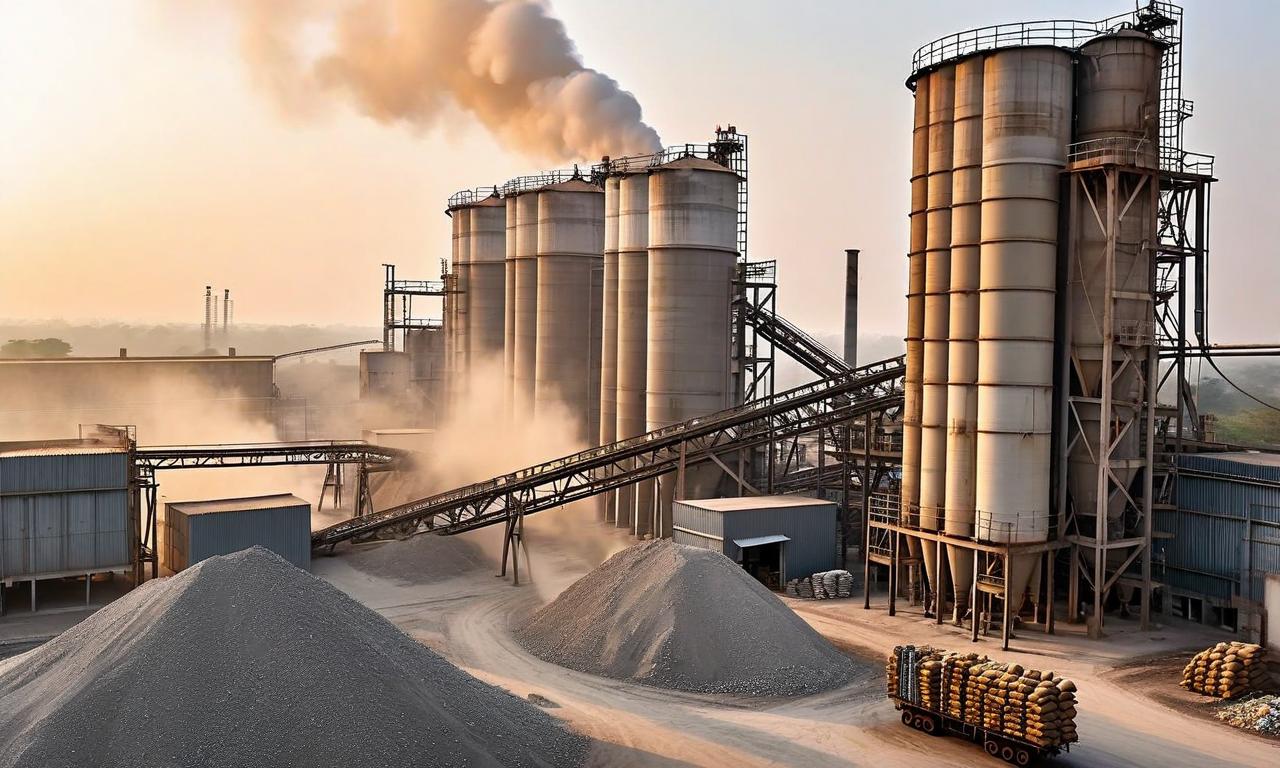
*this image is generated using AI for illustrative purposes only.
Birla Corporation Limited reported unaudited standalone and consolidated financial results for the quarter ended June 30, 2026, during an investor conference call held on July 25, 2026. Management highlighted that while volumes remained robust, margins faced pressure due to rising input costs—particularly fuel—and soft pricing in the trade segment. Despite these headwinds, the company reaffirmed its full-year capital expenditure guidance of ₹900 crore and a net debt target of approximately ₹2,000 crore for FY27.
The conference call was conducted pursuant to Regulation 30 read with Part A of Schedule III of the Securities and Exchange Board of India (Listing Obligations and Disclosure Requirements) Regulations, 2015. Key management participants included Sandip Ghose, Managing Director and CEO; Aditya Saraogi, Group CFO; Rajat Prusty, Chief of Manufacturing and Projects; and Kalidas Pramanik, Chief Marketing Officer. HDFC Securities Limited moderated the session.
Operational Highlights and Cost Dynamics
Management reported that Mukutban volumes reached 7.5 lakh tons in Q1FY27. However, blended cement realizations in the trade segment faced headwinds due to reluctance among industry players to pass on price increases, particularly in Central India. While non-trade and industrial segments saw recovery, Birla Corporation’s high dependence on trade volumes (over 80%) limited overall realization gains.
Group CFO Aditya Saraogi disclosed that total incentives accrued were ₹33 crore, down from ₹60 crore in Q4FY26. Excluding incentive impacts and year-end adjustments, realizations improved by ₹80 per ton sequentially. Conversely, fuel and packaging costs surged, with geopolitical factors adding ₹150 per ton to costs in Q1FY27. The company expects a further sequential cost increase of ₹70–₹80 per ton in Q2FY27.
Capital Expenditure and Capacity Expansion
The company maintained its full-year capex guidance of ₹900 crore for FY27. Net debt stood at ₹2,300 crore as of Q1FY27, with management reiterating a target to exit the year with debt around ₹2,000 crore. Capex spending on major expansions like Kundanganj Line 2 remains minimal, as pre-project activities are underway. The company is on track to achieve its long-term capacity target of 27.6 million tons by FY29.
| Metric | Value |
|---|---|
| Mukutban Volume | 7.5 lakh tons |
| Total Lead Distance | 335 km |
| KCal Cost | ₹1.64 |
| Q1 Capex | ₹120 crore |
| Net Debt | ₹2,300 crore |
| Incentive Accrual | ₹33 crore |
Strategic Outlook and Market Dynamics
Sandip Ghose emphasized that Birla Corporation will not shift its strategic focus from trade to non-trade segments, despite competitive pressures. He noted that while some peers deferred capacity expansions, Birla Corporation remains committed to its growth plans, operating above 90% capacity utilization. The company is exploring domestic coal sourcing via Bikram coal (1.2 lakh tons this year, scaling to 3.5 lakh tons next year) to reduce fuel dependency. Waste Heat Recovery System (WHRS) capacity currently stands at 43–44 megawatts, with plans to expand to 50 megawatts before Maihar Line 2 adds another 17–18 megawatts.
What the Numbers Show
The divergence between volume growth and margin pressure highlights the structural challenge in the cement sector: high operational leverage coupled with rigid pricing in trade segments. While Birla Corporation’s focus on blended cement aligns with sustainability goals, it exposes the company to greater volatility when trade prices remain stagnant despite rising input costs. The significant jump in other expenses—driven by packaging and limestone mining costs—underscores the need for rigorous cost management in an environment where price hikes are not being uniformly adopted across the industry.
Historical Stock Returns for Birla Corporation
| 1 Day | 5 Days | 1 Month | 6 Months | 1 Year | 5 Years |
|---|---|---|---|---|---|
| -1.71% | -3.14% | -1.52% | -18.42% | -33.23% | 0.0% |

How will the projected ₹70–₹80 per ton cost increase in Q2FY27 impact Birla Corporation's ability to maintain its ₹2,000 crore net debt target for FY27?
What is the expected timeline and financial impact of scaling domestic coal sourcing via Bikram coal to 3.5 lakh tons, and will this sufficiently offset rising fuel costs?
Given the industry-wide reluctance to pass on price hikes in Central India, what specific strategies is Birla Corporation employing to protect margins in its trade-heavy portfolio without losing market share?
 18
18





 Access 50+ Readymade Screeners
  Use 200+ Custom Filters
  Get Full Market Insights





