

BD stock rises 3% despite FDA recall alert for sodium chloride ampules


Becton Dickinson shares rose 3% to $186.23 on Wednesday, defying a concurrent FDA alert regarding recalled sodium chloride ampules in surgical kits. The stock trades well above its 200-day moving average, though an RSI of 74 suggests overbought conditions. Analysts maintain a Buy consensus with an average target of $184.20.



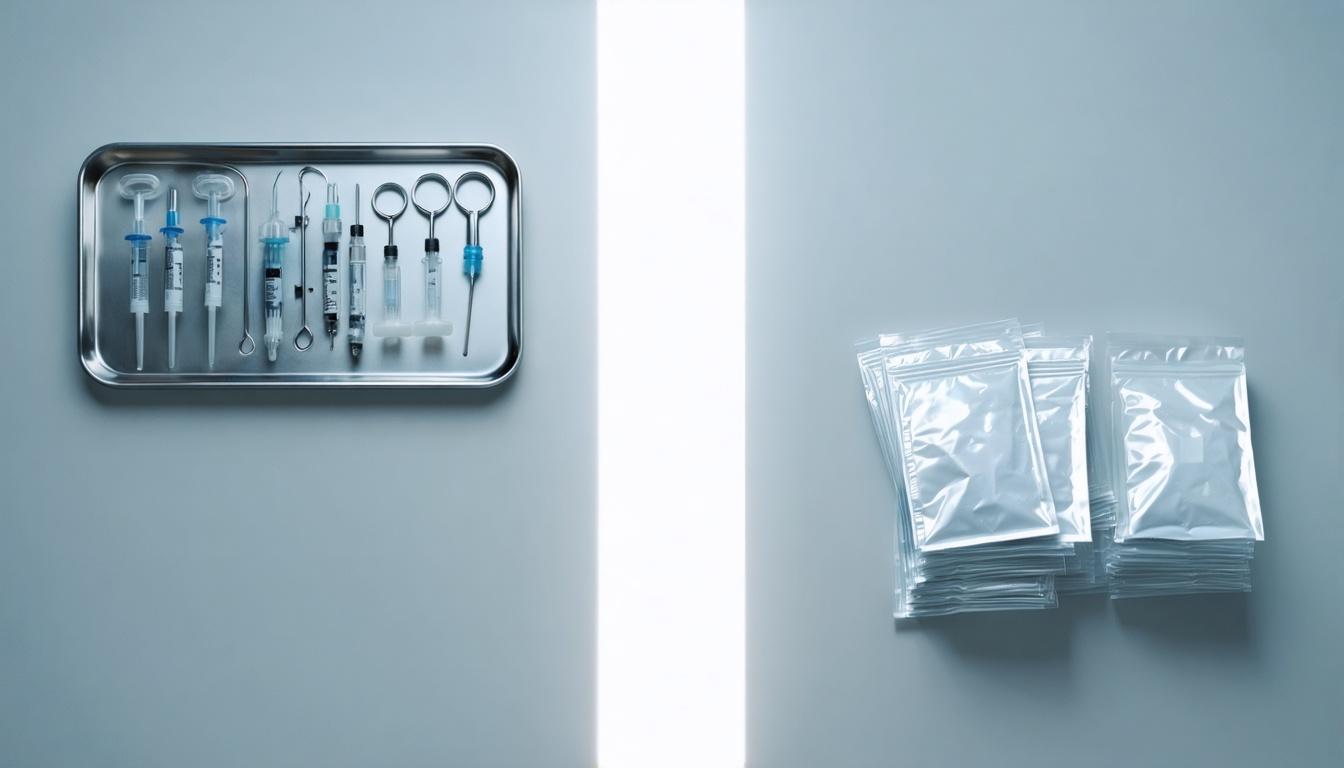
*this image is generated using AI for illustrative purposes only.
Becton Dickinson and Company (NYSE: BDX) shares rose 3.02% to $186.23 on Wednesday, outperforming the broader market as healthcare stocks led gains. The Nasdaq Composite fell 0.22%, while the S&P 500 gained 0.22%. The move extends the stock’s recent rebound, suggesting continued support from sector rotation.
The price action unfolded against the backdrop of a regulatory alert from the U.S. Food and Drug Administration. On August 10, BD instructed healthcare providers to stop using specific sodium chloride ampules found in certain convenience kits. These ampules were manufactured by Huons Co., Ltd. and initially recalled by Elevaris Medical Devices. The FDA noted that patients exposed to these ampules could face risks from endotoxins, microorganisms, or foreign particles, which can induce severe reactions including infections and organ failure. However, BD reported no deaths or serious injuries connected to this defect as of July 29.
Corrective Measures And Usage Guidelines
Convenience kits contain various surgical instruments, dressings, and pharmaceutical components designed for surgical procedures. BD’s letter directed facilities to quarantine their stock of the affected kits until they receive over-labels. Medical staff can safely use all other components within these surgical and procedural trays.
The company advised customers to label the impacted kits without covering essential regulatory details. Once a tray is opened in a sterile environment, staff must immediately remove and destroy the recalled ampule to preserve the sterility of the remaining items. Patients treated with the affected ampules require no specific follow-up if they remain asymptomatic.
Technical Position And Analyst Outlook
Becton Dickinson trades significantly above its key moving averages. The stock is 7.7% above its 20-day simple moving average of $172.90 and 8.6% above its 200-day SMA of $171.42. It also sits 16.5% above its 50-day SMA of $159.78 and 20% above its 100-day SMA of $155.12.
| Metric: | Value | Price Level |
|---|---|---|
| 20-Day SMA: | +7.7% | $172.90 |
| 50-Day SMA: | +16.5% | $159.78 |
| 100-Day SMA: | +20.0% | $155.12 |
| 200-Day SMA: | +8.6% | $171.42 |
Despite the upward momentum, the relative strength index stands at 74.01. An RSI above 70 generally indicates overbought conditions, raising the risk of a near-term pause or pullback. The longer-term technical picture remains mixed; the stock formed a death cross in March when its 50-day SMA fell below its 200-day SMA. BDX has since reclaimed both averages, but the bearish crossover has not yet reversed. Resistance sits near $196, while support is around $153.50.
Analysts maintain a Buy consensus rating with an average price forecast of $184.20. Recent updates include:
- RBC Capital: Maintained a Sector Perform rating and raised its price forecast to $190 on August 13. It had previously raised the forecast to $180 on August 7.
- Citigroup: Maintained a Buy rating and raised its price forecast to $204 on August 7.

Will the FDA recall of sodium chloride ampules lead to increased supply chain scrutiny or higher compliance costs for Becton Dickinson in the coming quarters?
Given the RSI of 74.01 indicating overbought conditions, is a technical pullback likely to occur before the stock reaches the $196 resistance level?
How might the recent analyst upgrades from RBC Capital and Citigroup influence institutional buying pressure despite the lingering bearish death cross signal?
 19
19










 Access 50+ Readymade Screeners
  Use 200+ Custom Filters
  Get Full Market Insights





