Apple opens Houston manufacturing center for Mac mini production

1 min read     Updated on 14 Aug 2026, 07:43 AM
scanx
Reviewed by
Shriram SScanX News Team
AI Summary

Apple Inc. inaugurated its Advanced Manufacturing Center in Houston, Texas, which will produce Mac mini computers later this year. The facility is part of a $600 billion U.S. investment pledge. Apple also reported sourcing over 20 billion chips from U.S. suppliers last year.

powered bylight_fuzz_icon
48219215

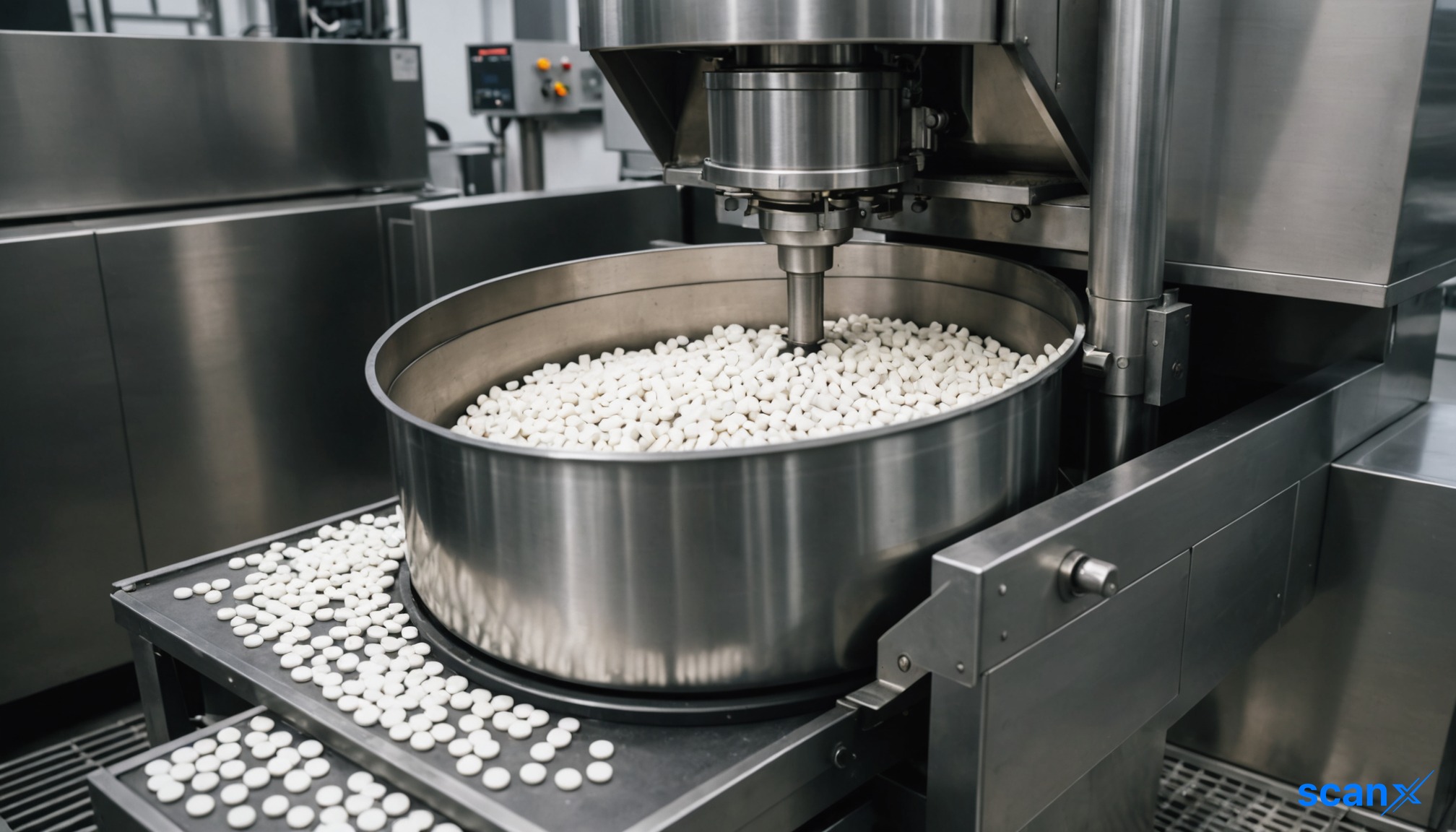
*this image is generated using AI for illustrative purposes only.

Apple Inc. (NASDAQ: AAPL) opened its new Advanced Manufacturing Center in Houston, Texas, on Thursday, marking a step toward domestic production of its Mac mini computers. CEO Tim Cook joined U.S. Commerce Secretary Howard Lutnick at the ribbon-cutting ceremony to announce that manufacturing will commence later this year.

The 20,000-square-foot facility focuses on advanced manufacturing techniques, including machine-learning-powered quality control and automation. Apple stated it has invested hundreds of millions of dollars into the Houston site in less than nine months. The center will also provide free training to small and mid-sized businesses, workers, and students.

Investment Context

The opening aligns with Apple’s commitment of $600 billion to U.S. investments over four years. This capital allocation includes expanding domestic production of chips, components, and other technologies. Commerce Secretary Lutnick highlighted the strategic importance of the move, noting that President Donald Trump had urged the return of advanced technology manufacturing to the United States.

Apple reported sourcing more than 20 billion chips from U.S. suppliers last year. This volume included 100 million chips manufactured at Taiwan Semiconductor Manufacturing Co.’s (NYSE: TSM) facility in Arizona.

Leadership Transition

The announcement comes shortly before Tim Cook steps down as CEO on September 1. Longtime hardware executive John Ternus is scheduled to assume the role of CEO. Cook will transition to executive chairman.

What the Numbers Show

While Apple has expanded its supply chain presence in the United States through chip sourcing and component manufacturing, it has not committed to assembling iPhones domestically. Instead, the company continues to expand production in countries including India and Vietnam. The Houston center represents a targeted expansion in final assembly for specific product lines like the Mac mini, rather than a broad shift of iPhone manufacturing.

Metric Detail
Facility Size 20,000 square feet
Product Line Mac mini
Production Start Later this year
Total U.S. Commitment $600 billion over four years
Chips from U.S. Suppliers >20 billion last year
TSM Arizona Chips 100 million

Apple shares closed at $305.26 on Thursday, up 1%. After-hours trading saw shares at $304.51, down 0.25%.

How might the transition of CEO duties from Tim Cook to John Ternus influence the pace and scope of Apple's domestic manufacturing expansion?

Will the success of the Mac mini assembly in Houston serve as a blueprint for bringing iPhone final assembly to the U.S., or will geopolitical factors keep that production offshore?

What impact could Apple's $600 billion U.S. investment commitment have on the competitive landscape for other tech giants like Samsung and Intel regarding domestic supply chains?

like20
dislike

Smartphone sales fall in US and China as memory costs push prices higher

3 min read     Updated on 13 Aug 2026, 03:52 PM
scanx
Reviewed by
Suketu GScanX News Team
AI Summary

Smartphone sales in the US and China declined in early 2026 due to rising memory costs forcing price hikes. US Q2 sales fell 5%, with smaller rivals down 45% versus top makers down 4%. China saw an 8.6% drop in the first 30 weeks. Huawei leads China, while Apple faces seasonal weakness. Agentic AI spending adds further pressure.

powered bylight_fuzz_icon
48162126

*this image is generated using AI for illustrative purposes only.

Rising memory component costs are pressuring smartphone manufacturers globally, leading to higher handset prices and weakened demand in key markets including the United States and China. Research from Counterpoint indicates that while industry leaders such as Apple Inc. (NASDAQ: AAPL) and Samsung Electronics Co. Ltd. (OTC: SSNLF) are leveraging scale to absorb these shocks, smaller competitors are facing significant headwinds.

US Market Contraction

US smartphone sales declined 5% year over year in the second quarter of 2026, driven by elevated memory prices and broader macroeconomic pressures. The contraction was uneven across the market. Sales from the four largest manufacturers — Apple, Samsung, Motorola, and Alphabet Inc.'s (NASDAQ: GOOGL) Google — fell by just 4%. In contrast, the rest of the market plunged 45% as smaller manufacturers struggled to justify higher component costs.

The pressure was most acute at the entry level. Sales of smartphones priced below $100 tumbled 64%, as manufacturers either halted shipments of certain devices or raised prices to offset memory inflation. Prepaid smartphone sales also dropped 11%, although Samsung and Motorola gained market share as weaker competitors pulled back. Motorola raised prices on several Moto G models during the quarter, while Samsung increased the price of the Galaxy A17 by $50 in July.

Segment YoY Change Key Drivers
Top 4 Manufacturers -4% Scale advantages; stable component sourcing
Rest of Market -45% Inability to absorb rising component costs
Sub-$100 Devices -64% Price hikes; shipment halts
Prepaid Sales -11% Share gains for Samsung/Motorola

Counterpoint expects average selling prices to rise again in the third quarter. Apple is anticipated to increase prices for its iPhone 18 lineup, while Google will launch its Pixel 11 devices at higher prices than the Pixel 10 series. Despite this, Apple is expected to benefit from a strong upgrade cycle as users transition from the iPhone 15 series, with carrier subsidies playing a critical role in demand retention.

China Market Slump

The challenge is equally pronounced in China, where smartphone sales fell 8.6% year over year during the first 30 weeks of 2026. The decline accelerated into double digits following the 618 shopping festival, as seasonal weakness combined with persistent memory-cost inflation.

Huawei remained the market leader, maintaining a weekly sales share above 20% since the second quarter, supported by demand for the Enjoy 90 Pro Max and stable pricing. However, Counterpoint expects Huawei to raise prices in the second half to offset higher costs. Apple's demand weakened significantly after the 618 festival, with its weekly sales ranking dropping to fifth place during its typical pre-launch seasonal slowdown. Some demand had also been pulled forward by the shopping event.

Xiaomi Corp. (OTC: XIACY) climbed to second place in week 30 following the launch of the REDMI Note 17 series. Nevertheless, higher pricing and specification cuts hurt sales compared to the previous generation. Xiaomi subsequently introduced another round of price increases ranging from 300 Chinese yuan to 500 Chinese yuan across several product lines.

What the Numbers Show

The divergence between the top four manufacturers (-4%) and the rest of the market (-45%) in the US highlights a widening gap in cost absorption capabilities. While large players use scale to secure components at lower prices, smaller rivals are forced to pass costs directly to consumers or exit segments entirely, particularly in the sub-$100 tier where volume collapsed by nearly two-thirds. This suggests that market consolidation may accelerate as memory inflation persists.

Outlook: AI and Cost Pressures

Conditions are expected to remain tough in the second half as rising memory and system-on-chip costs drive further price increases. Simultaneously, spending on agentic artificial intelligence is becoming a competitive necessity rather than a differentiator. Counterpoint warned that companies unable to keep pace with both hardware cost inflation and AI integration risks falling further behind.

Apple shares were up 0.31% at $303.25 during premarket trading on Thursday.

How might the widening gap between top-tier manufacturers and smaller competitors accelerate market consolidation in the sub-$100 segment during the second half of 2026?

To what extent will carrier subsidies mitigate the impact of anticipated iPhone 18 and Pixel 11 price hikes on US consumer upgrade cycles?

Will Huawei's expected price increases in the second half of 2026 erode its current market leadership position in China against cost-conscious rivals like Xiaomi?

like20
dislike

More News on Apple Inc