
 NewsApollo Pipes Q4 FY26 Earnings Call: Management Targets INR400 Crores Q1 Revenue, Charts 35% CAGR Path to INR5,000 Crores by FY31
Apollo Pipes Q4 FY26 Earnings Call: Management Targets INR400 Crores Q1 Revenue, Charts 35% CAGR Path to INR5,000 Crores by FY31


Apollo Pipes Limited's Q4 FY26 Earnings Conference Call on May 08, 2026 highlighted a challenging FY26 marked by a 30% decline in consolidated EBITDA, PVC price volatility, and subdued demand, even as the company crossed 1 lakh ton in annual sales volume and reported INR1,100 crores in revenue. Management guided for INR400 crores or more in Q1 FY27 revenue and outlined a 5-year plan targeting 35% revenue CAGR to reach INR5,000 crores by FY31, underpinned by three existing plants, a planned South India facility, and allied product expansion. Kisan Mouldings is targeted for eventual merger into Apollo Pipes, with capacity expansion capex of INR50–INR60 crores planned for brownfield growth. FY27 capex is guided at approximately INR100 crores, with working capital targeted to return to below 35 days by March 2027.



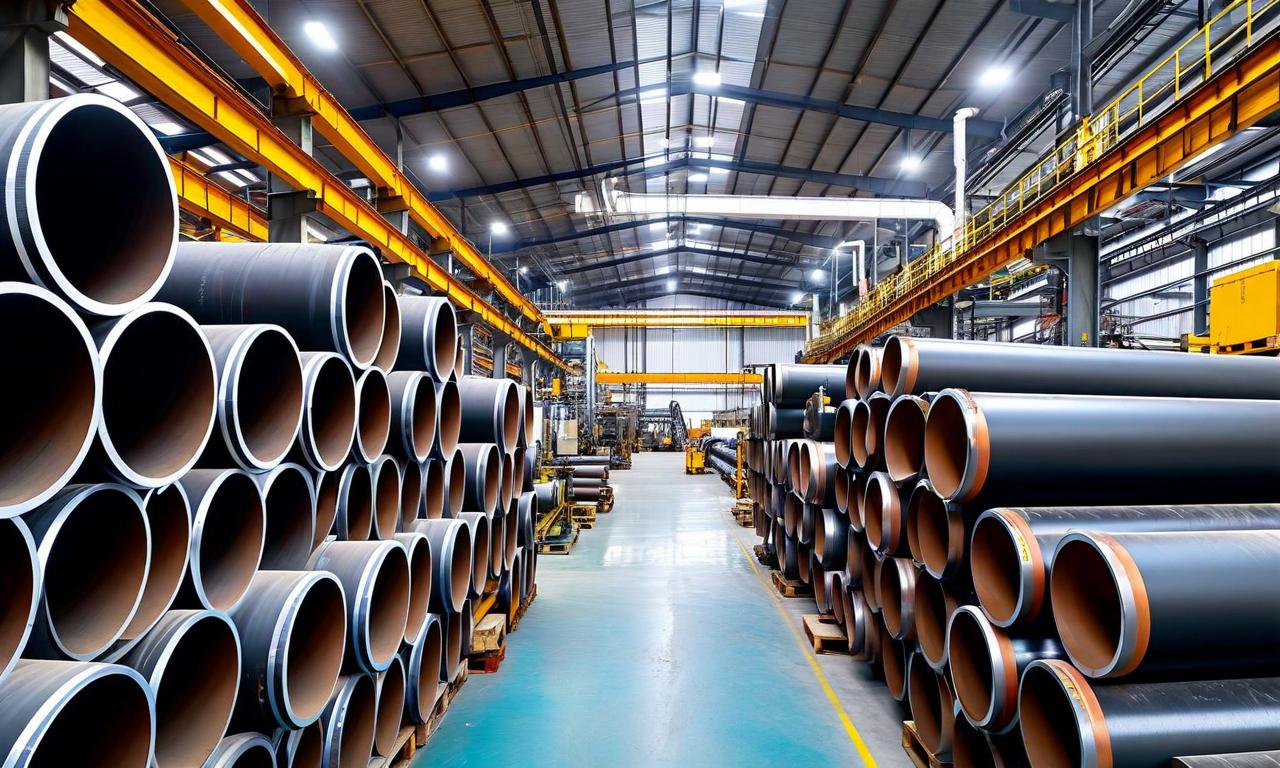
*this image is generated using AI for illustrative purposes only.
Apollo Pipes Limited convened its Q4 FY26 Earnings Conference Call on May 08, 2026, hosted by Emkay Global Financial Services. The call was attended by Chairman and Managing Director Mr. Sameer Gupta, Joint Managing Director Mr. Arun Agarwal, CFO Mr. Ajay Kumar Jain, and Group Chief Strategy Officer Mr. Anubhav Gupta. Management reflected on a turbulent FY26 shaped by sharp PVC price swings and subdued end-market demand, while laying out an ambitious multi-year growth roadmap.
FY26 Performance: Navigating PVC Volatility and Demand Headwinds
FY26 proved to be a year of significant operational challenges for Apollo Pipes. PVC prices dropped 15% in the first 8 months, then rallied 75% over the next 4 months, before falling again by 25% over 2 months, settling at approximately INR84 per kg. Demand remained subdued throughout the year due to a slowdown in both the private real estate sector and government infrastructure spending. The company's consolidated EBITDA declined 30% for the full year, impacted by inventory write-downs, aggressive pricing strategies, and fixed expenses associated with new business verticals.
Despite these headwinds, Apollo Pipes crossed 1 lakh ton of annual sales volume. Standalone sales volume increased by 7% on a year-on-year basis, while Kisan Mouldings remained flat year-on-year. The company reported INR1,100 crores in FY26 consolidated revenue.
| Metric | FY26 Details |
|---|---|
| Annual Sales Volume | Crossed 1 lakh ton |
| Standalone Volume Growth (YoY) | 7% |
| Kisan Volume Growth (YoY) | Flat |
| Consol EBITDA Change (Full Year) | Declined 30% |
| FY26 Revenue | INR1,100 crores |
| PVC Price (Current) | INR84 per kg |
Q4 FY26 Quarterly Highlights
For Q4 FY26, revenue came in at approximately INR350 crores, with a net selling realization (NSR) of INR110 per kg for the full quarter. Gross margins deteriorated both on a quarter-on-quarter and year-on-year basis, attributed to three key factors: continued aggressive pricing to maintain dealer confidence, costs associated with the ramp-up of the window profile business (including sampling at showrooms), and write-downs on unsold finished goods inventory to create space for volume ramp-up. Management noted that inventory gains from the sharp rise in PVC prices during the quarter were minimal, as the company was actively clearing inventory.
For Kisan Mouldings specifically, Q4 FY26 revenue was INR80 crores, up from INR60 crores in Q3 FY26. Volume also improved from approximately 5,000 tons in Q3 to 7,000 tons in Q4 on a quarter-on-quarter basis. However, margin performance was below expectations, as demand only recovered towards the end of February and March, leading to push sales in January and February.
| Metric | Q4 FY26 | Q3 FY26 |
|---|---|---|
| Apollo Pipes Revenue | ~INR350 crores | — |
| Apollo Pipes NSR | INR110 per kg | — |
| Kisan Revenue | INR80 crores | INR60 crores |
| Kisan Volume | ~7,000 tons | ~5,000 tons |
Q1 FY27 Guidance and Near-Term Outlook
Management expressed confidence in carrying forward the volume momentum into Q1 FY27, which is typically a seasonally strong quarter. The company is targeting INR400 crores or more in revenue for Q1 FY27, implying approximately 15% quarter-on-quarter growth. Volume growth for the quarter is expected to be in double digits, with NSR expected to remain broadly in line with Q4 FY26 levels, varying by INR2 to INR4 per kg.
On the demand side, management noted that rural demand, driven by the agricultural season, is outperforming urban demand. Construction-related projects that spilled over into Q4 are now being pursued by contractors, supporting near-term demand. Channel inventory, which had built up towards end of March due to rising PVC prices, is described as currently at normal to below-normal levels following subsequent destocking.
Regarding PVC resin prices, management indicated that Reliance prices (Delhi landing) are around INR84–INR85 per kg, while the local trade market is around INR79 per kg. Near-term price movement is expected to remain within a plus/minus 5% range. An import duty exemption currently in place is expected to expire on June 30, after which an 8.25% duty will apply, which management believes will support domestic PVC prices.
Five-Year Growth Strategy: INR5,000 Crores by FY31
Management outlined a comprehensive 5-year growth plan targeting 35% revenue CAGR to achieve INR5,000 crores in revenue by FY31. The strategy is built around the following pillars:
- Existing capacity: Three plants already operational, each capable of generating INR1,000 crores in revenue (North India, West India, and Varanasi)
- South India expansion: A new plant in the Tumkur/Malur/Bangalore belt, expected to come online towards FY28, adding INR1,000 crores in capacity
- Allied products: INR1,000 crores targeted from window profiles, water tanks, and bath fittings
- Group synergies: Leveraging APL Apollo's dealer network, with large group dealers already taking up PVC pipe dealerships
- Brand investment: Renewal of Mr. Amitabh Bachchan as brand ambassador
- Leadership: Mr. Sanjay Gupta joining the Board as Group Chairman
Management noted that current market share stands at approximately 2%–2.5% of an estimated INR55,000 crores industry, with a target to reach 3%–3.5% market share over the next 3–4 years, assuming industry growth of 7%–8%.
Margin Targets and Segment-Wise EBITDA Outlook
Management provided detailed EBITDA per ton targets across segments:
| Segment | Near-Term Target (EBITDA/ton) | Medium-Term Target (EBITDA/ton) |
|---|---|---|
| Apollo Pipes Standalone | INR8,000–INR10,000 | INR10,000–INR11,000 |
| Kisan Mouldings (Year 1 target) | INR5,000–INR6,000 | INR10,000 (longer term) |
| Consolidated | INR6,000–INR8,000 | INR10,000–INR12,000 (2–3 years) |
For Apollo standalone, a 10% EBITDA margin is the stated target, with gradual improvement in spreads from INR8,000 towards INR8,500–INR9,000 per ton expected. Kisan Mouldings, currently barely EBITDA-positive, is expected to show improvement from Q1 FY27 as operating leverage benefits materialize with plant ramp-up.
Kisan Mouldings: Merger Plans and Capacity Expansion
Management confirmed that Apollo Pipes intends to eventually merge Kisan Mouldings into Apollo Pipes Limited, with work already underway on the timeline and process. In the interim, the strategy for Kisan is to first ramp up to INR500 crores in revenue, supported by INR30–INR40 crores of capex already incurred, and then expand capacity to INR1,000 crores through an additional INR50–INR60 crores of brownfield capex within the existing premises. The target EBITDA margin for Kisan at scale is 10%–12%.
Capital Expenditure and Working Capital
For FY26, the company spent INR150 crores in capex. For FY27, total capex requirements are guided at approximately INR100 crores, focused on Kisan plant capacity expansion and brownfield expansions at existing plants. The South India plant capex is not included in FY27 guidance, with land acquisition work expected to begin after approximately one year.
On working capital, the net working capital cycle increased from 35 days in FY25 to approximately 45–46 days in FY26, primarily driven by inventory days rising from 70 days to 80 days. Management targets a return to below 35 days by end of FY27, with an internal target of 30 days as of March 2027.
| Working Capital Metric | FY25 | FY26 | FY27 Target |
|---|---|---|---|
| Net Working Capital Cycle | 35 days | 45–46 days | Below 35 days |
| Inventory Days | 70 days | 80 days | 5–10 days reduction |
Product Mix and Business Diversification
Management provided an overview of the current sales mix and growth expectations by product segment:
- Construction plumbing: Approximately 60%–65% of total sales
- Agriculture and government infrastructure: Approximately 35% of total sales
- CPVC: Grew 10% in FY26; targeted to grow more than 20% in FY27, supported by a tie-up with Lubrizol
- Water tanks: Growing at 20%–30%
- Window profiles: Currently contributing approximately 1.5% to total sales; targeted to reach 4%–5% of construction plumbing revenue in FY27; currently present in North India and South India
Management reiterated that government infrastructure demand remains subdued, with no significant on-ground activity observed despite announcements, and that near-term growth confidence is primarily driven by core products, dealer network expansion, and group synergies.
Historical Stock Returns for Apollo Pipes
| 1 Day | 5 Days | 1 Month | 6 Months | 1 Year | 5 Years |
|---|---|---|---|---|---|
| -4.31% | -6.96% | -8.78% | +6.22% | +49.15% | -23.32% |

How will the expiry of the PVC import duty exemption on June 30 affect Apollo Pipes' competitive positioning against cheaper imports, and could rising raw material costs offset the anticipated volume growth in Q1 FY27?
Given that government infrastructure demand remains subdued despite policy announcements, what is the realistic timeline for a meaningful recovery in this segment, and how dependent is Apollo Pipes' INR5,000 crore FY31 target on a government spending revival?
With Kisan Mouldings currently barely EBITDA-positive and the merger process underway, what valuation and equity dilution risks could the consolidation pose for Apollo Pipes shareholders?
 18
18






 Create Custom Screeners
  Access 200+ Pre-built Filters
  Use 50+ Readymade Screener





