

Amber targets 8 million units in Oppo manufacturing deal


Amber Enterprises India Limited has entered a manufacturing collaboration with Oppo Mobiles India Private Limited to produce mobile phones for Oppo, OnePlus, and Realme brands. The agreement, executed on June 18, 2026, involves an asset-light model with minimal capex below ₹50 crore and low working capital requirements. Trial production is set for Q4 FY27, with commercial production starting in Q1 FY28, targeting 8 million units in the first year and 13–15 million in the second year.



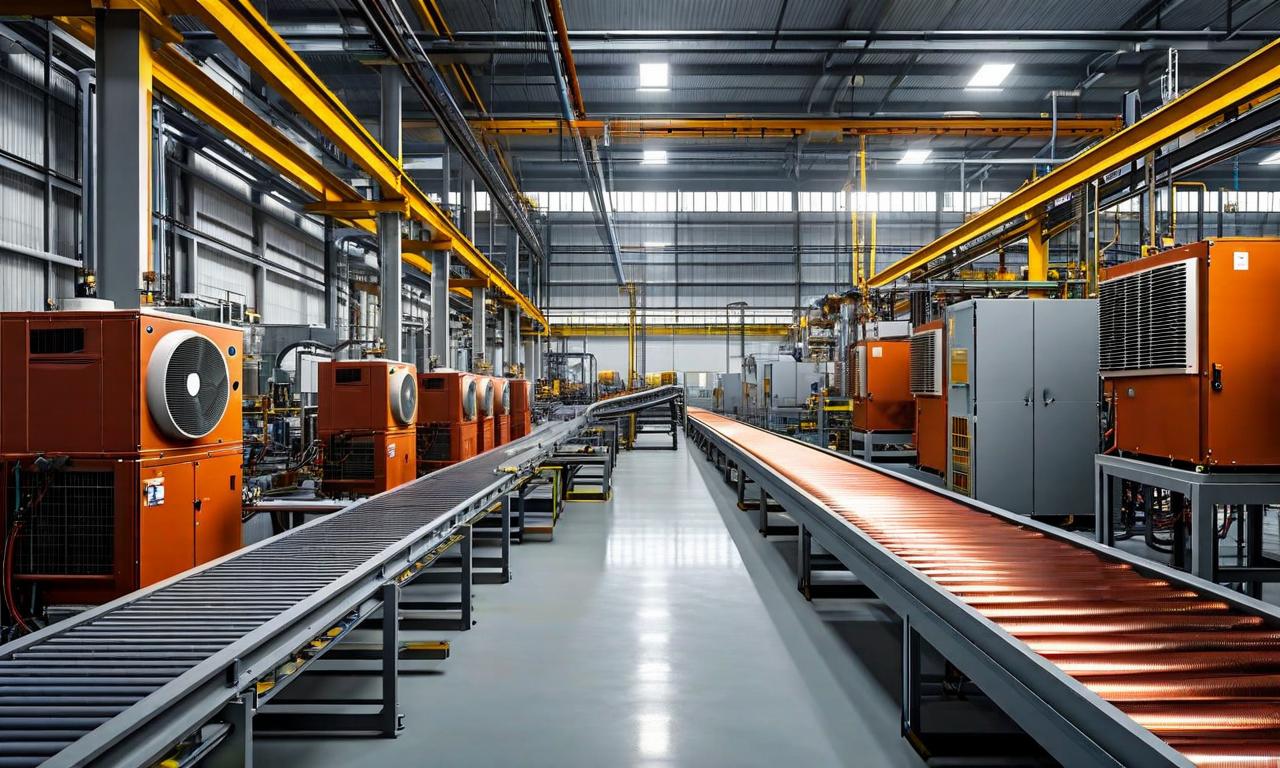
*this image is generated using AI for illustrative purposes only.
Amber Enterprises India Limited has disclosed the operational and financial roadmap for its manufacturing collaboration with Oppo Mobiles India Private Limited. The agreement, executed on June 18, 2026, covers the production of mobile phones for Oppo, OnePlus, and Realme brands. Management expects trial production to commence in Q4 FY27, with commercial production starting in Q1 FY28.
The company plans to begin with approximately 8 million units in the first year, with a calibrated ramp-up targeting 13 million to 15 million units in the second year. Manufacturing will be carried out at an existing facility under a sublease arrangement with Oppo India, a structure that does not require Press Note 3 approval. The capital expenditure for the initial assembly and SMT operations is expected to be minimal, below ₹50 crore.
Financial and Operational Context
Jasbir Singh, Executive Chairman and CEO, highlighted that the collaboration marks Amber Group's entry into the consumer electronics industry. The deal leverages Oppo's global product expertise and Amber's manufacturing scale. The arrangement is asset-light and structurally low on working capital intensity, with net-working capital days estimated between 4 and 10 days.
| Metric | Detail |
|---|---|
| Initial Volume | 8 million units |
| Target Volume (Year 2) | 13–15 million units |
| Initial Capex | Below ₹50 crore |
| Net-working Capital Days | 4–10 days |
Strategic Outlook
Management anticipates returns on capital employed (ROCE) to exceed 30% on a standalone basis for the assembly business. While initial EBITDA margins are expected to be in line with industry standards of 1.5% to 2%, the company aims to improve margins through progressive local value addition. The roadmap includes moving from assembly and SMT operations to high-density interconnect printed circuit boards over the next five years, potentially increasing local value addition to 35%–40%.
The collaboration is intended to diversify Amber's revenue profile and reduce the seasonal concentration inherent in its room air conditioner business. Amber Group reported a revenue from operations of INR 12,186 crores for the financial year ended March 31, 2026, while Oppo Mobiles India Private Limited recorded a revenue from operations of INR 31,981 crores for the financial year ended March 31, 2025.
Historical Stock Returns for Amber Enterprises
| 1 Day | 5 Days | 1 Month | 6 Months | 1 Year | 5 Years |
|---|---|---|---|---|---|
| +0.08% | -3.26% | -8.28% | -7.43% | -20.20% | +80.66% |

How will the transition to high-density interconnect printed circuit boards impact the capital expenditure requirements beyond the initial minimal investment?
What specific risks does Amber face regarding supply chain dependencies or technology transfer as it increases local value addition to 40%?
How will this asset-light model affect Amber's ability to scale production if demand for Oppo, OnePlus, and Realme devices exceeds the 15 million unit target?
 16
16













 Create Custom Screeners
  Access 200+ Pre-built Filters
  Use 50+ Readymade Screener





