

US-Iran escalation lifts crude to six-week high, boosting oil and defense ETFs


- October WTI crude rose 0.48% to $89, hitting a six-week high amid US-Iran tensions
- Over 17 million barrels passed through the Strait of Hormuz on Monday, keeping flows open
- IEA warns global inventories could decline at double the previously projected rate in Q3
- Russian crude runs fell below 4 million bpd in July, the lowest in over two decades
- Energy and defense ETFs gain focus while airline funds face margin pressure from higher fuel costs



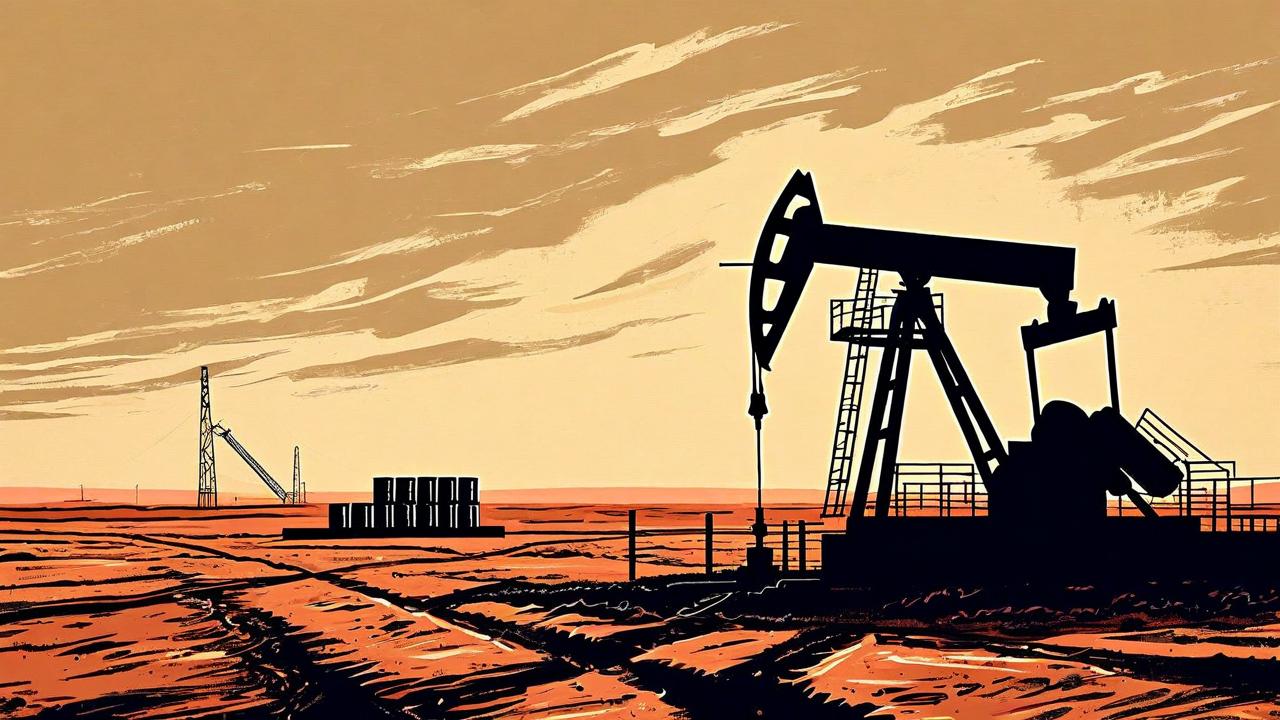
*this image is generated using AI for illustrative purposes only.
The worst US-Iran exchange of fire since July has pushed October WTI crude up 0.48% to around $89, marking a fresh six-week high. Investors are focusing on energy and defense ETFs as hostilities raise fears of prolonged disruptions to global oil flows through the Strait of Hormuz.
Hormuz Remains the Key Oil-Market Risk
The Strait of Hormuz is central to the market's response. Energy Secretary Chris Wright stated that more than 17 million barrels of oil passed through the strait on Monday, indicating that flows have not yet been shut down. This data point limits crude's immediate gains, highlighting a key tension: as long as the strait remains open, geopolitical fears alone struggle to sustain a large oil premium.
However, US military strikes on Iranian radar systems and mine-laying capabilities, combined with Tehran's retaliation, raise the possibility of further disruption. Trump noted that the US naval blockade of Iranian ports is pressuring Tehran and that there is no timeline for ending the conflict.
Broader Middle East risks also factor into the outlook. New Israeli strikes on Iran-backed Hezbollah in Lebanon and Hamas in Gaza, along with Houthi attacks on ships in the Red Sea and reported attacks on vessels around Hormuz, increase the potential for prolonged regional conflict.
A Tightening Global Supply Backdrop
Oil's bullish case is reinforced by supply concerns outside the Middle East. The International Energy Agency (IEA) warned that global inventories could decline at more than double its previously projected rate in the third quarter due to disruptions linked to the US-Iran war. This occurs even as high prices and weaker economic activity weigh on demand.
Russia presents another pressure point. Ukrainian drone attacks have repeatedly targeted Russian refineries, tankers, and pipeline infrastructure. According to S&P Global, Russian crude runs fell below 4 million bpd in July, the lowest level in more than two decades. Meanwhile, the IEA reported that Russian crude production fell to 8.89 million bpd.
ETF Implications
The supply backdrop strengthens the case for specific funds:
| ETF Name | Ticker | Exchange |
|---|---|---|
| United States Oil Fund | USO | NYSE |
| United States Brent Oil Fund | BNO | NYSE |
| Energy Select Sector SPDR Fund | XLE | NYSE |
| iShares U.S. Aerospace & Defense ETF | ITA | BATS |
| Invesco Aerospace & Defense ETF | PPA | NYSE |
| U.S. Global Jets ETF | JETS | NYSE |
Defense ETFs such as ITA and PPA gain support from continued US military operations, weapons consumption, and the prospect of prolonged Middle East tensions. These factors reinforce expectations for higher defense spending and munitions replenishment.
Conversely, the airline industry faces headwinds. The U.S. Global Jets ETF (JETS) could face pressure if crude and gasoline prices remain elevated, creating a direct margin challenge for carriers.
What the Numbers Show
The divergence between physical flow data and price action is notable. While over 17 million barrels passed through the Strait of Hormuz on Monday, confirming operational continuity, crude prices still rose to a six-week high. This suggests that the market is pricing in the risk of future disruption rather than an immediate supply shock, driven by the broader geopolitical context including Russian production declines to 8.89 million bpd.

How might a potential closure of the Strait of Hormuz alter the IEA's current projections for global inventory declines in the third quarter?
What is the estimated timeline for Russian crude production to recover from its two-decade low, and how will this impact the supply deficit caused by Middle East tensions?
Could sustained high oil prices trigger a more significant demand destruction in major economies than currently anticipated by the IEA?
 19
19











 Create Custom Screeners
  Access 200+ Pre-built Filters
  Use 50+ Readymade Screener





