Morgan Stanley Forecasts Gold at $4,800 per Ounce by Fourth Quarter 2026

2 min read     Updated on 06 Jan 2026, 06:15 PM
scanx
Reviewed by
Radhika SScanX News Team
AI Summary

Morgan Stanley forecasts gold reaching $4,800 per ounce by Q4 2026, driven by falling interest rates, Federal Reserve leadership changes, and central bank buying. Gold gained 64% in 2025, its best performance since 1979, while silver surged 147% amid peak deficit conditions. The bank also favors aluminum and copper due to supply constraints and rising demand.

powered bylight_fuzz_icon
29249128

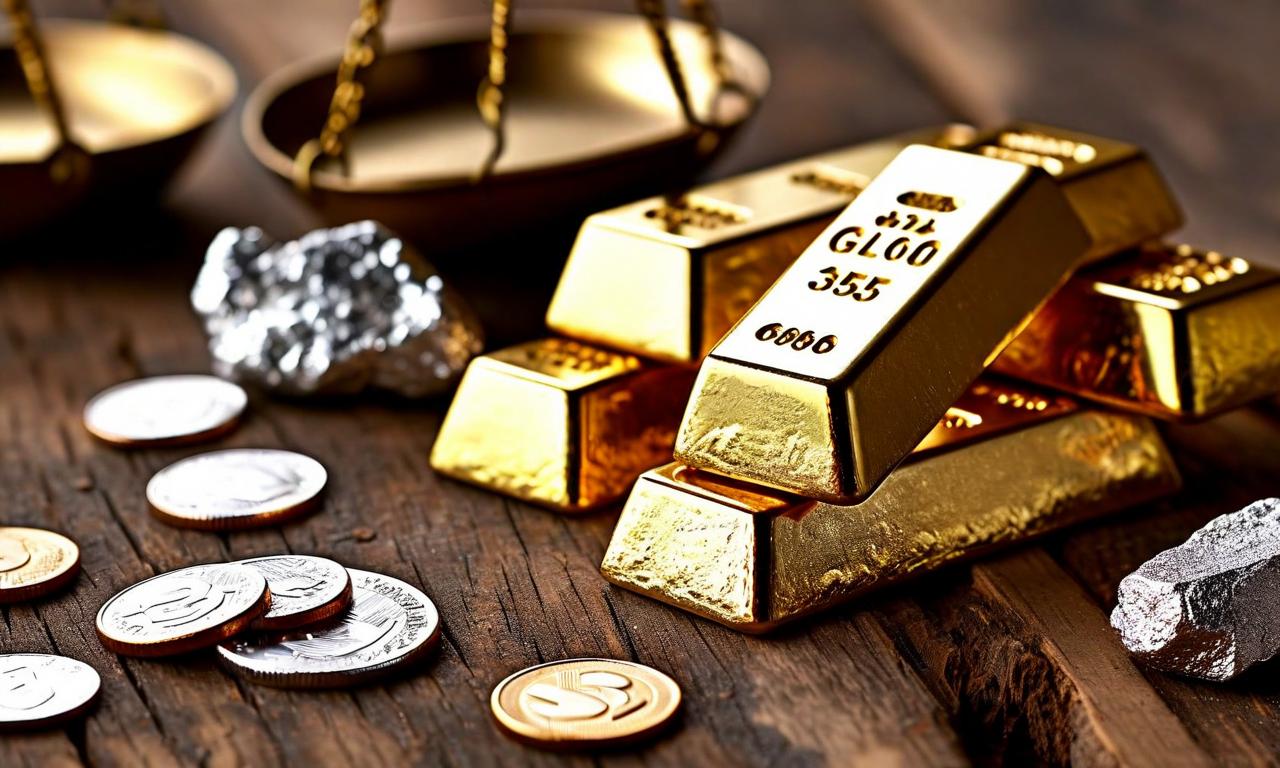
*this image is generated using AI for illustrative purposes only.

Morgan Stanley has issued an optimistic forecast for gold, predicting the precious metal will reach $4,800 per ounce by the fourth quarter of 2026. The investment bank's projection comes after gold delivered exceptional performance in 2025, recording its best annual gains in decades.

Gold's Record-Breaking Performance

Gold demonstrated remarkable strength throughout 2025, achieving several significant milestones that underscore its appeal as a safe-haven asset.

Metric 2025 Performance
Annual Gain 64%
Record High $4,549.71/oz (December 26)
Best Performance Since 1979
Q4 2026 Forecast $4,800/oz

The precious metal's 64% gain in 2025 represented its strongest annual performance since 1979, highlighting the metal's renewed appeal among investors seeking portfolio diversification and protection against economic uncertainty.

Key Drivers Behind the Forecast

Morgan Stanley's bullish outlook stems from multiple fundamental factors that are expected to support gold prices through 2026. In a note dated January 5, the bank identified falling interest rates as a primary catalyst, along with anticipated changes in Federal Reserve leadership. The combination of these monetary policy shifts creates a favorable environment for non-yielding assets like gold.

Central bank purchases and institutional fund buying represent additional pillars supporting the bank's forecast. These large-scale buyers have consistently demonstrated appetite for gold as a strategic reserve asset, providing sustained demand that helps underpin price stability and growth.

Silver Delivers Exceptional Returns

Silver significantly outperformed gold in 2025, delivering extraordinary gains that reflected both industrial demand and investment interest.

Silver Performance Metrics 2025 Results
Annual Gain 147%
Market Condition Peak Deficit
Key Driver Industrial & Investor Appetite
Additional Factor China Export Licence Requirements

Morgan Stanley noted that 2025 marked peak deficit conditions for silver, with China's new export licence requirements adding upside risk to prices. The structural market deficit, combined with rising industrial applications and investor demand, contributed to silver's remarkable 147% surge.

Base Metals Outlook

The investment bank expressed particular optimism for aluminum and copper, citing supply constraints and growing demand fundamentals. Aluminum supply remains constrained everywhere except Indonesia, while rising Midwest Premium suggests returning U.S. buying interest.

Copper markets face continued tightness, with U.S. imports rising and supply disruptions from 2025 extending into 2026. The benchmark three-month copper on the London Metal Exchange reached $13,387.50 on Tuesday, reflecting these supply-demand dynamics.

Nickel also gained attention, rising 5.8% to $17,980 per ton on Tuesday and hitting its highest level since October 8, 2024. The bank attributed nickel's strength to supply disruption risks in Indonesia, though noted much of this risk may already be reflected in current pricing.

like19
dislike

Gold, Silver Prices Rise Amid Geopolitical Risks and US Policy Uncertainty

2 min read     Updated on 05 Jan 2026, 08:19 AM
scanx
Reviewed by
Radhika SScanX News Team
AI Summary

Gold and silver prices rose amid volatile trading driven by geopolitical risks from US-Venezuela tensions and uncertainty over Federal Reserve policy direction. Despite profit booking after December record highs, underlying support remains strong due to safe-haven demand and softening US inflation. Silver faced additional technical pressure from raised margin requirements, while analysts expect continued volatility dependent on US data and geopolitical developments.

powered bylight_fuzz_icon
29126958

*this image is generated using AI for illustrative purposes only.

Gold and silver prices gained ground in volatile trading sessions as a combination of geopolitical risks, US monetary policy uncertainty, and market positioning dynamics supported demand for safe-haven assets. The precious metals rally comes despite recent profit-taking activities following record highs achieved in late December.

Geopolitical Tensions Drive Safe-Haven Demand

Geopolitical uncertainty emerged as the primary catalyst for precious metals strength following reports of US military action involving Venezuela's leadership. This development injected fresh risk premium into global markets, with investors particularly concerned about potential disruptions given Venezuela's strategic importance in the global oil supply chain. The heightened tensions encouraged market participants to increase their exposure to traditional safe-haven assets like gold and silver.

Federal Reserve Policy Expectations Shape Market Sentiment

US monetary policy outlook continues to influence bullion performance as markets await key economic indicators. Investors are closely monitoring upcoming data releases including manufacturing activity reports and labor market statistics, alongside commentary from Federal Reserve officials. These inputs are expected to provide crucial guidance on the interest rate trajectory, which remains a critical factor for non-yielding assets such as gold.

Key Market Drivers: Impact
Geopolitical Risks: Increased safe-haven demand
Fed Policy Uncertainty: Influences interest rate outlook
Market Positioning: Profit booking creates volatility
US Inflation Backdrop: Softening trend supports metals

Trading Dynamics and Market Positioning

Market positioning and profit booking activities contributed to increased volatility in precious metals trading. After touching record highs in late December, gold prices experienced a correction as investors booked profits at elevated levels. Year-end holiday periods also resulted in thinner market liquidity, amplifying price movements in both directions.

On the Multi Commodity Exchange (MCX), gold futures retreated from all-time highs but maintained trading within a wide range, reflecting ongoing two-way interest from market participants. This trading pattern indicates continued uncertainty about near-term direction while underlying demand remains supportive.

Silver Experiences Amplified Volatility

Silver prices followed a similar upward trajectory to gold but exhibited sharper intraday swings due to additional technical factors. International silver markets faced particular pressure after margin requirements for futures trading were raised, forcing leveraged participants to reduce positions and triggering short-term selling pressure. This technical adjustment created temporary downward pressure despite the broader positive sentiment for precious metals.

Market Outlook and Support Levels

Despite recent pullbacks, analysts note that underlying support for precious metals remains intact. The combination of a softening US inflation backdrop and sustained investor caution continues to provide fundamental support for gold and silver prices. Gold has maintained its position above key psychological levels, indicating persistent demand amid ongoing macroeconomic and geopolitical uncertainty.

Analysts expect price volatility to remain elevated in the near term, with direction dependent on incoming US economic data, Federal Reserve policy tone, and the evolution of current geopolitical risks. While the broader outlook for precious metals remains constructive, intermittent corrections are anticipated in the current highly reactive market environment.

like16
dislike

More News on