

Iran oil loadings fall to 248,000 bpd as Gulf neighbors recover


- Iranian crude loadings fell to 248,000 barrels a day in August, down from 1.85 million in March-April
- Non-Iranian Gulf crude shipments rebounded to 5.2 million barrels a day in early August
- Kharg Island inventories dropped 700,000 barrels to 19.3 million, signaling production shutdowns
- Petrochemical exports declined 63% since early 2026, compounding foreign exchange pressure
- Brent crude traded near $88.04 while WTI fell over 4% for the week amid new US sanctions



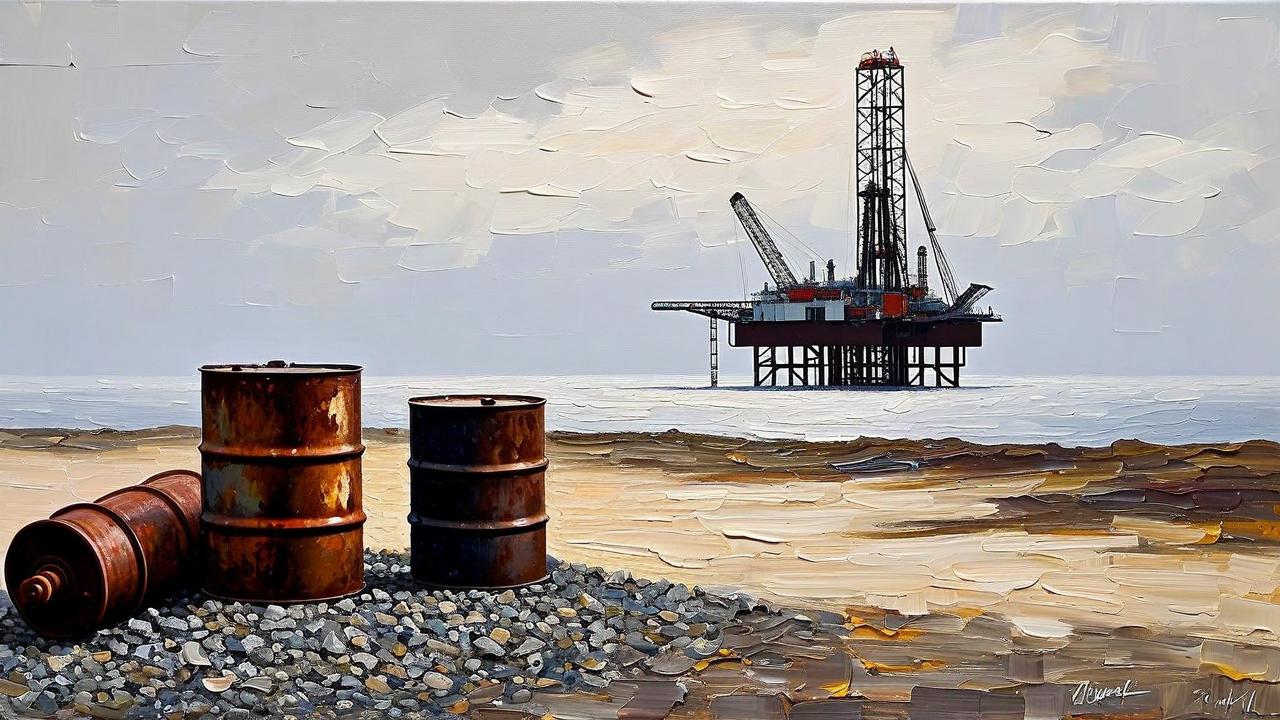
*this image is generated using AI for illustrative purposes only.
Iranian crude oil loadings dropped to 248,000 barrels a day in August, according to commodity intelligence firm Kpler. This marks a steep decline from the 1.85 million barrels a day exported between March and April.
The shift underscores a widening divergence between Iran and its regional peers. While Tehran’s exports have collapsed, non-Iranian crude leaving the Persian Gulf rebounded significantly. In the week starting Aug. 3, approximately 5.2 million barrels a day of non-Iranian crude departed the region, including ship-to-ship transfers.
Regional Recovery vs Iranian Contraction
The contrast is stark when viewed against the earlier period. Between March and April, non-Iranian crude flows had fallen to as low as 300,000 barrels a day. Today, the dynamic has reversed entirely.
When accounting for pipeline flows through Adnoc’s Fujairah terminal and Aramco’s East-West line, total regional output rises to roughly 9 million barrels. Kpler notes that regional producers are currently shipping about 65% of what they moved before the conflict began.
"The renewed US blockade is making the status quo progressively more expensive for Tehran," said Kpler analyst Homayoun Falakshahi.
Inventory and Revenue Pressures
Physical indicators suggest Iran is actively curbing production rather than accumulating stock. Inventories at Kharg Island fell by 700,000 barrels this month to 19.3 million, despite minimal loading activity. Kpler interprets this drop as evidence that Iran is shutting in production to prevent oil from piling up.
Tehran still holds more than 80 million barrels afloat outside the blockade zone. Most of this volume is already committed to buyers. Payments typically arrive at Chinese ports one to two months after discharge, providing Iran with roughly five to six months of export revenue before receipts effectively cease.
Broader Economic Strain
The pressure extends beyond crude oil. Petrochemical exports, Iran’s second-largest source of foreign earnings, have declined by 63% since early 2026. Agricultural imports, including corn, soybean, and wheat, are running below their five-year range.
Further isolating the economy, the United Arab Emirates moved on Aug. 19 to halt trade with Iran, closing another critical import channel.
What the Numbers Show
The data reveals a severe concentration risk in Iran’s remaining export window. With over 80 million barrels already committed and payments delayed by one to two months post-discharge, the country faces a hard revenue cliff within six months. The simultaneous 63% collapse in petrochemical exports indicates that secondary export channels are failing to offset the loss in crude volumes, accelerating the depletion of foreign currency reserves.
Market Reaction
Brent crude traded near $88.04 a barrel on Wednesday, down 0.6% for the day. West Texas Intermediate, tracked by United States Oil Fund (NYSE: USO), stood at $83.12, falling over 4% for the week.
Oil prices retreated following a new package of U.S. sanctions against Iran. The Treasury Department targeted over 60 entities linked to Iran’s regime and threatened to extend secondary sanctions to any foreign entity conducting business with Tehran.
Kpler frames Tehran’s position as a trilemma: absorb the blockade, escalate to change the calculation for others, or negotiate terms it has previously rejected. The firm does not view escalation as inevitable or imminent but argues that the longer the blockade persists, the more attractive escalation becomes relative to inaction.

How might the impending six-month revenue cliff for Iran influence its geopolitical strategy regarding the US blockade?
What are the potential supply chain disruptions for Asian markets as non-Iranian Persian Gulf crude exports rebound to fill the void?
Could Iran's decision to curb production and shut in wells lead to long-term capacity degradation that affects future market stability?
 16
16








 Create Custom Screeners
  Access 200+ Pre-built Filters
  Use 50+ Readymade Screener





