
 News Budget 2026 Should Focus on Policy Continuity and Bond Market Development: A Balasubramanian
Budget 2026 Should Focus on Policy Continuity and Bond Market Development: A Balasubramanian


A Balasubramanian of Aditya Birla Sun Life AMC emphasizes India's strong fiscal position and strategic advantages amid global uncertainties. He highlights the success of Make in India initiative and ₹11.00 lakh crore allocation for manufacturing capability. For Budget 2026, he expects policy continuity in tax provisions, development of vibrant bond markets, and stronger domestic funding mechanisms to support India's 7.50%-8.00% growth trajectory.


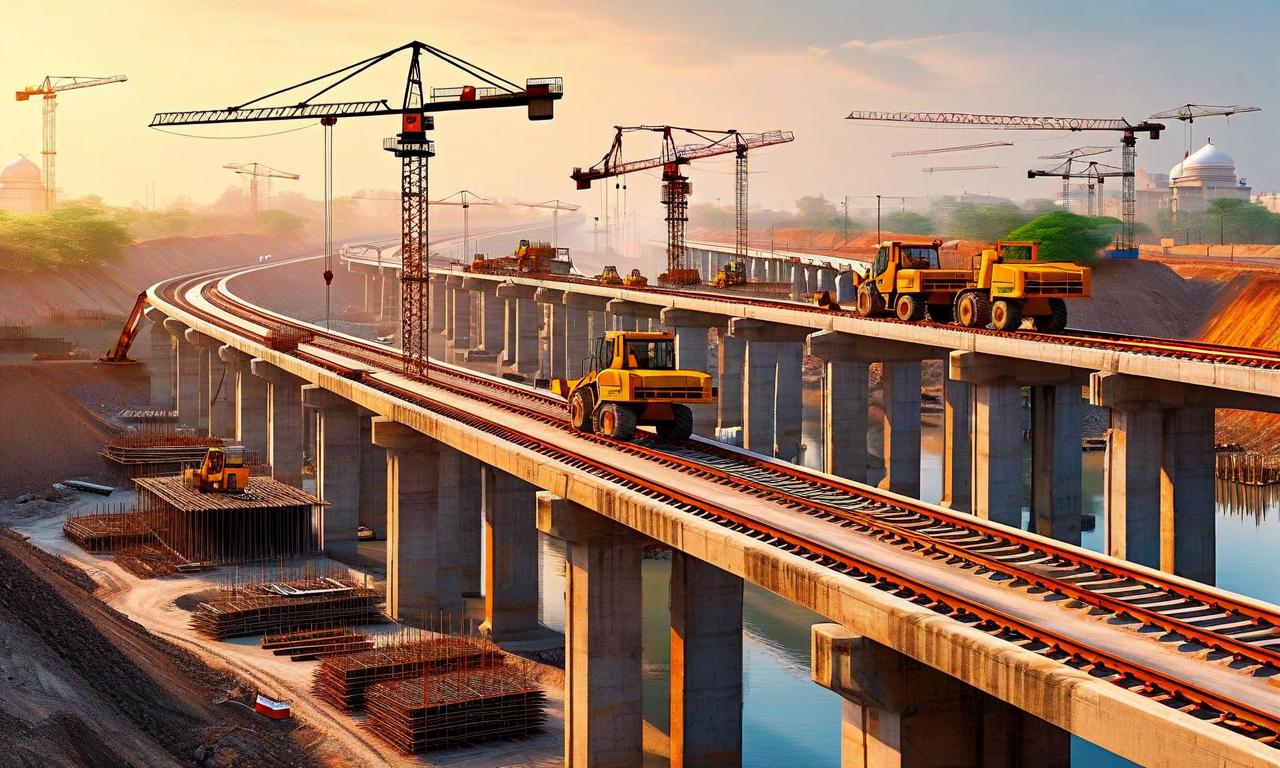
*this image is generated using AI for illustrative purposes only.
As global markets face trade wars and geopolitical uncertainties, India enters Budget season from a position of relative strength. A Balasubramanian, MD & CEO of Aditya Birla Sun Life AMC, outlines key priorities for Budget 2026, emphasizing policy continuity, bond market development, and domestic funding mechanisms as essential elements for sustained growth.
India's Strategic Position Amid Global Challenges
Balasubramanian highlights India's historical resilience during global crises, noting that the country has consistently emerged stronger when faced with sanctions, trade wars, or geopolitical risks. He emphasizes India's current "sweet spot" position, particularly on the fiscal front where the country stands out among global economies facing fiscal challenges.
The Make in India initiative, launched in 2017, has evolved significantly from the initial debate of "make in India for India" versus "make in India for the world." Today, India produces a large number of goods domestically for both local consumption and exports, demonstrating the success of this strategic approach.
| Key Achievement | Details |
|---|---|
| Fiscal Consolidation | Quietly accomplished by Finance Minister Nirmala Sitharaman |
| Policy Adaptability | Third round of reforms being planned |
| Cost of Capital | Among the lowest globally, even lower than US home loan rates |
| Growth Sustainability | Maintains ability to provide fiscal stimulus when needed |
Real Asset Creation and Capital Allocation
India's focus on creating tangible hard assets distinguishes it from other economies. Over recent years, nearly ₹11.00 lakh crore has been allocated towards building India's manufacturing capability, incentivizing manufacturing companies while improving self-sufficiency across multiple sectors.
The government's capital expenditure has targeted several key areas:
- Defence manufacturing and self-sufficiency
- Renewable energy infrastructure
- Roads, ports, and airports development
- Rural infrastructure investment
- Inland water transport and logistics
Balasubramanian notes that these sectors can absorb significantly more capital to become not only self-sustainable but also strong suppliers to global markets. The focus on real asset creation contrasts with other economies where capital expenditure largely revolves around areas like AI.
Market Valuations and Investment Outlook
Regarding market valuations, Balasubramanian observes that Indian equity markets have undergone a necessary correction over the past two years. The Nifty and Sensex have generated single-digit returns, while small and midcap segments have experienced significant underperformance, effectively correcting excess valuations from earlier periods.
| Market Performance Indicator | Status |
|---|---|
| Nifty/Sensex Returns | Single-digit over last two years |
| Small & Midcap Performance | Significant underperformance |
| Valuation Correction | Excess valuations from 1-1.5 years ago corrected |
| Expected Growth Rate | 7.50% to 8.00% |
The market has undergone what he describes as a "time-value correction," positioning it for potential momentum return driven by earnings recovery and government-led reforms. Various economic measures, including interest rate cuts and GST reductions, are expected to reflect in corporate earnings over the coming years.
Budget 2026 Expectations
Balasubramanian outlines three key expectations for Budget 2026:
Policy Continuity: The budget should demonstrate continuity in tax provisions that have contributed to India's growth story. Current tax incentives should be maintained to support ongoing economic momentum.
Bond Market Development: Fixed income as an asset class requires attention to create a vibrant bond market comparable to India's equity market. Both capital market asset classes must work together to fund future growth, making India more self-sufficient in meeting its funding needs.
Domestic Funding Mechanisms: Strengthening domestic funding capabilities will reduce dependence on external capital flows and support sustained economic growth.
Foreign Investment and Currency Dynamics
Despite some foreign institutional investor outflows, Balasubramanian remains optimistic about future inflows. He notes that many private equity investors who invested in India have exited with substantial profits, creating strong potential for their return. With the rupee-dollar rate around 93.00 and expected interest rate reductions, India is likely to become more attractive among emerging markets.
The country's alignment with the Viksit Bharat vision, maintaining growth visibility of 7.50% to 8.00%, strong corporate earnings visibility, and a robust investment environment should naturally attract foreign institutional investors without requiring additional taxation-led initiatives.
Balasubramanian concludes that India's quiet achievements in fiscal consolidation, real asset creation, and capital market maturity have established a strong foundation for sustained growth, positioning the country advantageously amid global economic challenges.
 18
18








 Access Market Heat-map & Insights
  Create, Save & Share your Screener
  Use 200+ Screening Filters





