Wearable Devices showcases neural sensing tech for Physical AI in Israel

scanx
Reviewed by
Ritika DScanX News Team
Key Highlights
  • Wearable Devices Ltd. will showcase its neural sensing layer for Physical AI at the Physical AI 2026 conference
  • The technology enriches vision-based training data with synchronized signals for human movement and intent
  • The company is a Sponsor of the event held in collaboration with Israel's National AI Directorate
  • The conference addresses challenges in training humanoid hands by complementing vision with human intent data
  • The event takes place on September 8, 2026, at the David InterContinental in Tel Aviv
powered bylight_fuzz_icon
50417778

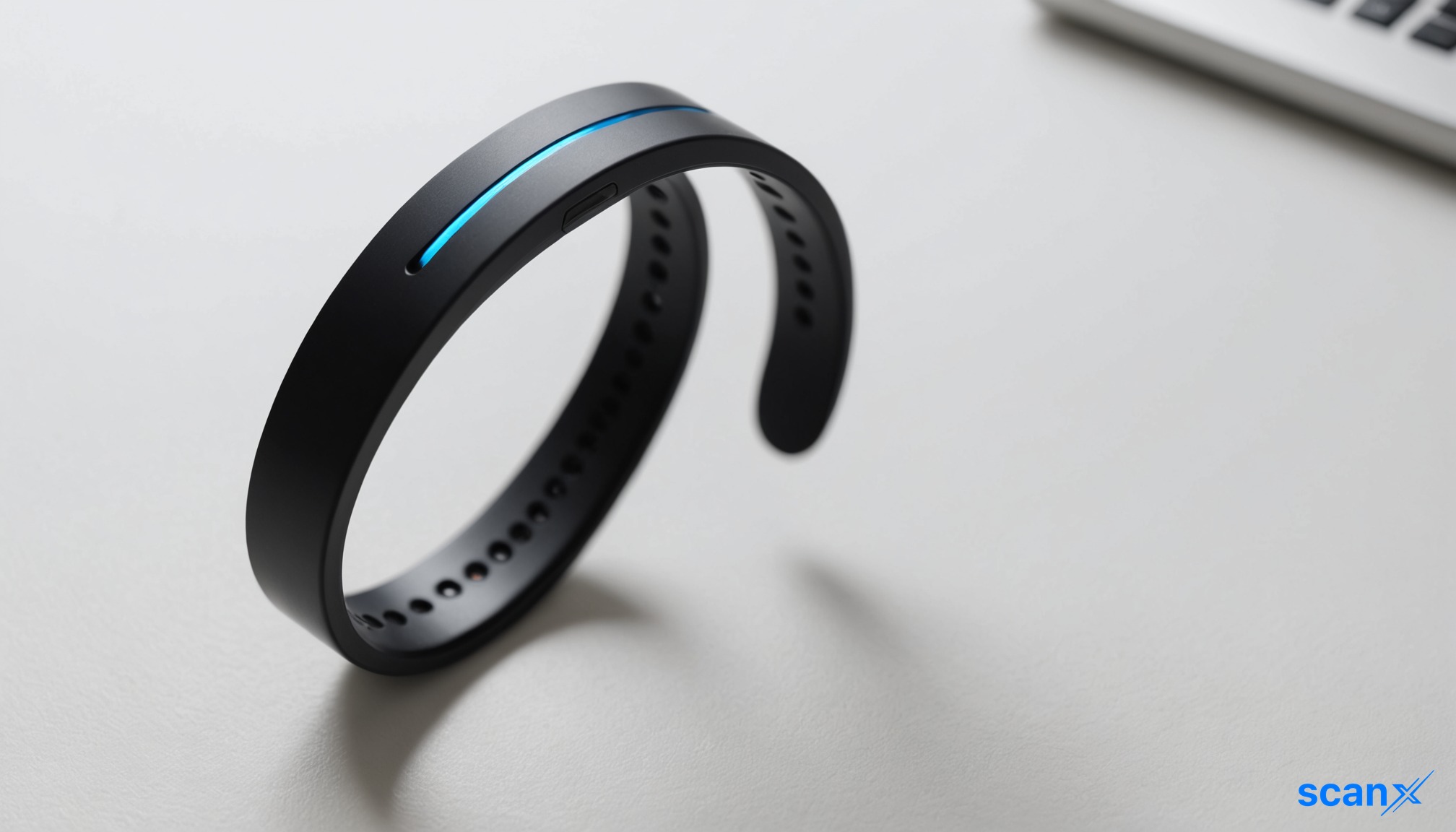
*this image is generated using AI for illustrative purposes only.

Wearable Devices Ltd. (NASDAQ: WLDS) will showcase its neural sensing layer for Physical AI and humanoid robotics at the Physical AI 2026 conference in Tel Aviv.

The company, a pioneer in artificial intelligence-powered touchless sensing wearables, announced it will participate as a Sponsor of the premier industry event. The conference is held in collaboration with the National AI Directorate in the Prime Minister's Office.

Technology Focus

The company is positioning its technology as the neural input layer for Physical AI. This system is designed to enrich vision-based training data with synchronized signals associated with human movement, muscle activation, and intent.

The new technology complements vision with human intent data. This approach aims to address challenges in training humanoid hands. The showcase will highlight how these signals integrate with existing visual data streams to improve robotic precision.

Event Details

The Physical AI 2026 conference takes place on September 8, 2026. The event is hosted at the David InterContinental in Tel Aviv. It is the first conference of its kind in Israel.

Disclaimer: This article is AI-generated using data from ViewTrade. ScanX is not liable for any inaccuracies.

How might the integration of human intent data with vision-based systems accelerate the commercial deployment of humanoid robots in industrial settings?

What potential regulatory or ethical challenges could arise from using neural sensing data for training Physical AI models?

Could Wearable Devices Ltd.'s sponsorship and collaboration with the National AI Directorate signal broader government support for Israeli robotics startups?

like20
dislike

Wearable Devices H1FY26 net loss widens 49% to $5.5 million

scanx
Reviewed by
Anirudha BScanX News Team
Key Highlights
  • Net loss widened 49% YoY to $5.5 million in H1FY26
  • Revenue grew 19% to $350 thousand from $294 thousand
  • EPS improved to $(3.50) from $(20.71) per share
  • R&D expenses nearly doubled to $2.70 million
  • Cash position stable at $18.8 million
powered bylight_fuzz_icon
49147791

*this image is generated using AI for illustrative purposes only.

Wearable Devices Ltd (NASDAQ: WLDS) reported a net loss of $5.5 million for the six months ended June 30, 2026, compared to a $3.7 million loss in the same period last year. Revenue rose 19% year-on-year to $350 thousand, driven by commercial sales of its Mudra Link and Mudra Band products.

The widening loss reflects significant investments in research and development (R&D) and operating expenses as the company expands its artificial intelligence capabilities. Management highlighted progress in its "Physical AI" vertical with the introduction of new hardware architectures, including the Mudra Pro and Mudra Ultimate devices.

Financial Performance

Revenue for the first half of FY26 reached $350 thousand, up from $294 thousand in H1FY25. This growth was supported by continuous sales across iOS, Android, and desktop ecosystems. Despite the top-line increase, the company’s profitability metrics deteriorated due to higher operational costs.

Metric H1FY26 H1FY25 Change
Revenue $350 thousand $294 thousand +19%
Operating Loss $(5,867) thousand $(3,758) thousand -56%
Net Loss $(5,520) thousand $(3,715) thousand -49%
EPS (Basic/Diluted) $(3.50) $(20.71) -83%

The operating loss expanded by 56% to $5.87 million. R&D expenses nearly doubled to $2.70 million from $1.47 million in the prior period. Sales and marketing expenses increased to $1.24 million, while general and administrative costs rose to $1.91 million. Financing income provided a partial offset at $351 thousand, up significantly from $48 thousand in H1FY25.

What the Numbers Show

The divergence between revenue growth and margin contraction highlights the company’s heavy investment phase. While revenue grew 19%, R&D expenses surged 84%, indicating that capital is being aggressively deployed toward product development rather than immediate profit generation. Additionally, financing income accounted for approximately 6% of total revenue, suggesting that interest earnings on deposits are becoming a more material component of the income statement relative to core operations.

Balance Sheet and Cash Position

As of June 30, 2026, Wearable Devices held $18.8 million in cash and short-term bank deposits, compared to $18.4 million at the end of December 2025. Total current assets remained stable at $19.6 million. The company maintained a strong liquidity position with no long-term debt disclosed in the interim balance sheets. Total liabilities stood at $1.48 million, primarily consisting of current obligations such as accrued payroll and lease liabilities.

Strategic Developments

Beyond financial results, the company announced several strategic advancements:

  • Mudra Studio Launch: A new software platform enabling developers to build applications using neural signals and hand motions via natural text prompts.
  • Hardware Expansion: Introduction of Mudra Pro (3 sEMG channels) and development of Mudra Ultimate (8 sEMG channels) for advanced AI and extended reality (XR) programs.
  • ai6 Labs: Continued acceleration of its innovation engine to prototype agentic solutions and edge AI experiments.
  • Patent Portfolio: Expansion of intellectual property rights covering neural interface capabilities and gesture recognition technologies.
Disclaimer: This article is AI-generated using data from ViewTrade. ScanX is not liable for any inaccuracies.

Given the 84% surge in R&D expenses, what specific milestones must the Mudra Pro and Mudra Ultimate devices achieve to justify the increased burn rate to investors?

How will the launch of Mudra Studio impact developer adoption rates and potential recurring software revenue streams in the coming fiscal year?

With only $18.8 million in cash and widening operating losses, what is the company's projected runway before requiring additional capital raising or achieving profitability?

like16
dislike

More News on Wearable Devices Ltd