

Teradyne launches Iris 100 test system for microLED devices


- Teradyne launches Iris 100, a production-ready optical test platform for microLED devices
- System integrates with UltraFLEXplus for combined optical and electrical testing
- Addresses throughput gaps for AR microdisplays and AI data center optical interconnects
- Follows earlier launch of Photon 100 and acquisition of Quantifi Photonics in 2025

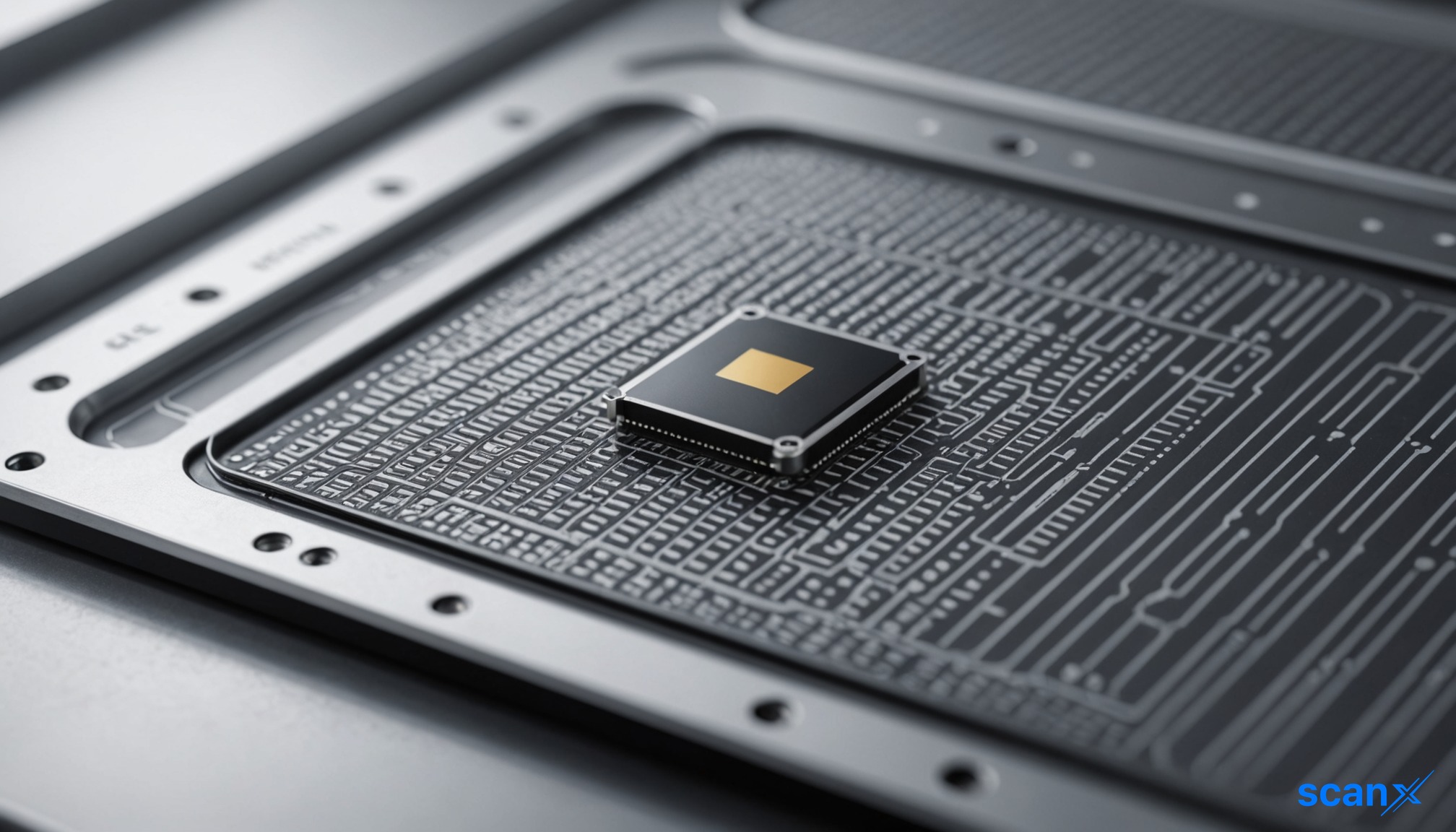

*this image is generated using AI for illustrative purposes only.
Teradyne, Inc. (NASDAQ: TER) announced the Iris 100, a production-ready optical test platform designed for microLED devices. The system delivers semiconductor-grade testing for next-generation optical interconnects and augmented reality displays.
Product Capabilities
The Iris 100 measures every individual emitter in an array, addressing the need for production-level precision in devices containing hundreds of thousands to millions of emitters. It integrates directly with the Teradyne UltraFLEXplus platform to enable combined optical and electrical testing.
Key technical features include:
- Spectrometer and high-resolution camera for spectral response, per-pixel luminance, and uniformity measurement
- Advanced test parallelization and image-processing algorithms for high-throughput characterization
- IG-XL software integration to detect optical defects such as dead/stuck pixels early in manufacturing
- NIST-traceable calibration workflow for absolute measurements correlating lots, wafers, and manufacturing sites
Market Context
MicroLED technology is critical for AR microdisplays and optical data interconnects in AI data center architectures. While bench-top instruments can characterize these devices in labs, they lack the throughput and cost-per-unit economics required for volume manufacturing. The Iris 100 bridges this gap by enabling per-emitter test at production throughput.
Shannon Poulin, president of the Semiconductor Test division at Teradyne, stated that microLED is shifting from lab to volume production. He noted that both AR microdisplays and optical interconnects demand per-emitter test at production throughput, which Iris 100 delivers on existing customer infrastructure.
Strategic Expansion
The Iris 100 follows the introduction of the Teradyne Photon 100 for silicon photonics and co-packaged optics test earlier this year. It also extends capabilities following the acquisition of photonic test specialist Quantifi Photonics in 2025.
Iris 100 supports wafer and final test, allowing manufacturers to add microLED test to existing fleets. A roadmap exists to support photodetector test capabilities in the same insertion.
What the Numbers Show
Teradyne’s strategy demonstrates a clear consolidation of optical test capabilities through both organic development and M&A. By integrating Iris 100 with the widely adopted UltraFLEXplus platform and IG-XL software, the company leverages existing installed bases to drive adoption of new optical test solutions without requiring customers to deploy standalone infrastructure.

How might the integration of Iris 100 with the existing UltraFLEXplus platform impact Teradyne's customer retention rates and upgrade cycle revenues in the semiconductor test sector?
What is the projected timeline for microLED manufacturing to achieve cost parity with competing display technologies, and how will Iris 100 adoption influence this transition?
Given the acquisition of Quantifi Photonics, how does Teradyne plan to differentiate its optical interconnect testing solutions from competitors like Advantest or Keysight in the AI data center market?
 18
18












 Access 50+ Readymade Screeners
  Use 200+ Custom Filters
  Get Full Market Insights





