

Apple launches M6 2nm chip and Mac Studio with M5 Ultra for AI


- Apple debuts M6, its first 2nm chip, in the new Mac mini with a 12-core CPU and Dual 16-core Neural Engine
- Mac Studio now offers M5 Ultra with a new quad-die architecture, up to 512GB unified memory, and 1.2TB/s bandwidth
- M5 Ultra delivers up to 4.3x faster AI compute than M3 Ultra, enabling local inference of large language models
- M6 provides up to 1.2x faster multithreaded performance vs M5 and 30% higher peak GPU compute for AI



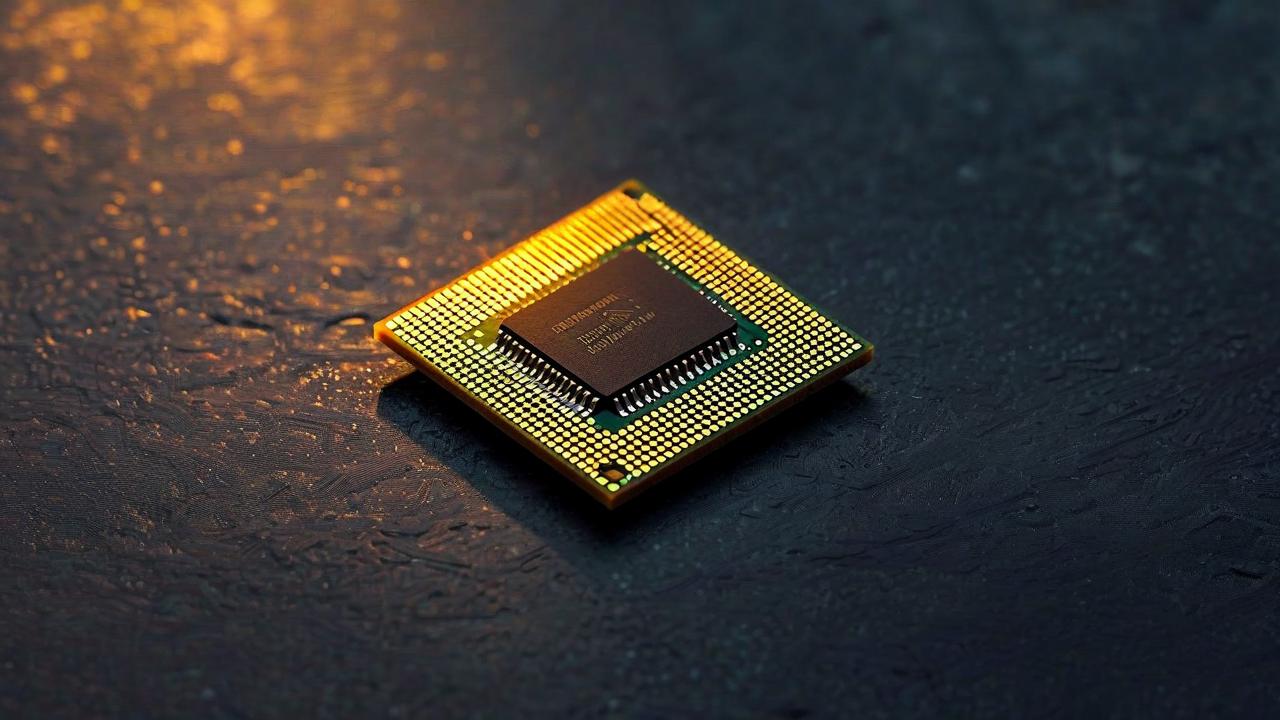
*this image is generated using AI for illustrative purposes only.
Apple Inc. debuted its first 2-nanometer chip, M6, in the new Mac mini and introduced the updated Mac Studio featuring M5 Max and M5 Ultra silicon. The launch delivers major gains in on-device AI performance, with the M5 Ultra offering up to 4.3x faster AI compute than its predecessor.
The M6 chip is built on cutting-edge 2nm process technology, packing greater transistor density into a smaller die. It features a 12-core CPU complex with two super cores, four performance cores, and six efficiency cores. This architecture delivers up to 1.2x faster multithreaded performance compared to M5 and up to 2.4x faster than M1. The chip also includes a Dual 16-core Neural Engine, providing up to 2x the peak compute over previous generations, and supports up to 32GB of unified memory with 170GB/s bandwidth. The GPU features Neural Accelerators in each core, delivering a nearly 30% increase in peak GPU compute for AI compared to M5.
Mac Studio: M5 Max and M5 Ultra
The new Mac Studio features M5 Max and the all-new M5 Ultra, designed for demanding pro workflows and local AI inference. The M5 Max includes an 18-core CPU and an up-to-40-core GPU with Neural Accelerators in each core, supporting up to 128GB of unified memory. It delivers up to 3.9x faster AI performance than the prior generation.
The M5 Ultra uses next-generation UltraFusion technology to form a quad-die architecture, connecting two dual-die M5 Max chips with over 4.4TB/s inter-die bandwidth. It features an up-to-36-core CPU (12 super cores, 24 performance cores) and an up-to-80-core GPU, supporting up to 512GB of unified memory and 1.2TB/s of bandwidth. This configuration enables users to run large language models (LLMs) with hundreds of billions of parameters entirely on device, achieving up to 4.3x the peak AI compute performance of M3 Ultra. The GPU also incorporates hardware-accelerated mesh shading and third-generation ray tracing.
| Metric | M5 Ultra vs M3 Ultra | M5 Ultra vs M1 Ultra |
|---|---|---|
| Single-threaded CPU performance | Up to 1.25x faster | N/A |
| Multithreaded CPU performance | Up to 1.3x faster | N/A |
| Peak GPU compute for AI | Up to 4.3x higher | Over 9.8x higher |
| Graphics performance | Up to 1.8x faster | N/A |
| Unified memory bandwidth | 50% higher (1.2TB/s) | N/A |
| Maximum unified memory | 512GB | N/A |
Application benchmarks
Apple provided specific benchmark comparisons for both chips across key applications.
M6 benchmarks:
- LLM prompt processing in LM Studio: up to 13.5x faster than Mac mini with M1; up to 4.8x faster than M4
- Microsoft Excel spreadsheet calculations: up to 2.3x faster than M1; up to 1.5x faster than M4
- Gaming in Cyberpunk 2077 with ray tracing: up to 2x faster than M4
Mac Studio with M5 Max benchmarks:
- LLM prompt processing in LM Studio: up to 10.7x faster than Mac Studio with M1 Max; up to 3.9x faster than M4 Max
- Text-to-image performance: up to 7.4x faster than M1 Max; up to 3.5x faster than M4 Max
- Magic Mask in DaVinci Resolve Studio: up to 5.3x faster than M1 Max; up to 3x faster than M4 Max
Mac Studio with M5 Ultra benchmarks:
- CopyCat ML training in Foundry Nuke: up to 15.4x faster than M1 Ultra; up to 3.3x faster than M3 Ultra
- LLM prompt processing in LM Studio: up to 9.8x faster than M1 Ultra; up to 4x faster than M3 Ultra
- Text-to-image performance: up to 8.2x faster than M1 Ultra; up to 4.3x faster than M3 Ultra
Connectivity and software
Both Mac mini models support Wi-Fi 7 and Bluetooth 6. The M6 model includes three Thunderbolt 4 ports, while the M5 Pro variant features three Thunderbolt 5 ports. The new Mac Studio also introduces Wi-Fi 7 and Bluetooth 6 for the first time, along with Thunderbolt 5 ports delivering up to 120Gb/s bandwidth. This connectivity allows multiple Mac Studio systems to be clustered using RDMA, creating a shared memory pool that delivers up to 3x faster AI inference compared to a single system.
The devices launch with macOS 27 Golden Gate, which includes Siri AI and next-generation Apple Intelligence features. Developers can leverage Core AI, Core ML, Metal, and Xcode to build and deploy AI models directly on Apple silicon, utilizing the Neural Accelerators and massive unified memory pools.
Pricing and availability
| Model | U.S. Price | Education Price |
|---|---|---|
| Mac mini with M6 | $899 | $799 |
| Mac mini with M5 Pro | $1,699 | $1,599 |
| Mac Studio with M5 Max | $2,499 | $2,299 |
| Mac Studio with M5 Ultra | $5,499 | $5,099 |
- Pre-orders begin August 25 on apple.com/store and the Apple Store app in 30 countries
- Availability begins September 22 at Apple Store locations and authorised resellers
- Mac Studio with 512GB of unified memory is coming in late October
- The new Mac mini is made with 50% recycled material overall, while the Mac Studio uses 35% recycled content overall, including 100% recycled aluminium in the enclosure

How will the 2nm process node and associated manufacturing costs impact Apple's gross margins compared to previous generations?
Will the ability to run large language models locally on the M5 Ultra accelerate the adoption of on-device AI in enterprise workflows, reducing reliance on cloud-based AI services?
How might competitors like NVIDIA or AMD respond to Apple's significant leap in unified memory bandwidth and local AI inference capabilities?
 16
16














 Access Market Heat-map & Insights
  Create, Save & Share your Screener
  Use 200+ Screening Filters





