

TEAL Positions for Growth as India Builds Manufacturing Equipment Alternatives to China


TEAL, Titan Company's engineering subsidiary, is capitalizing on global supply chain disruptions and India's manufacturing expansion to position itself as a domestic equipment alternative in semiconductors, solar and battery sectors. With FY25 revenue of ₹ 860 crore split between automation equipment and aerospace manufacturing services, the company targets downstream equipment opportunities while facing competition from multinational giants. Despite pausing North American expansion due to tariff uncertainty, TEAL benefits from domestic demand driving 70% of automation revenue and resilient aerospace exports supported by long-term contracts.

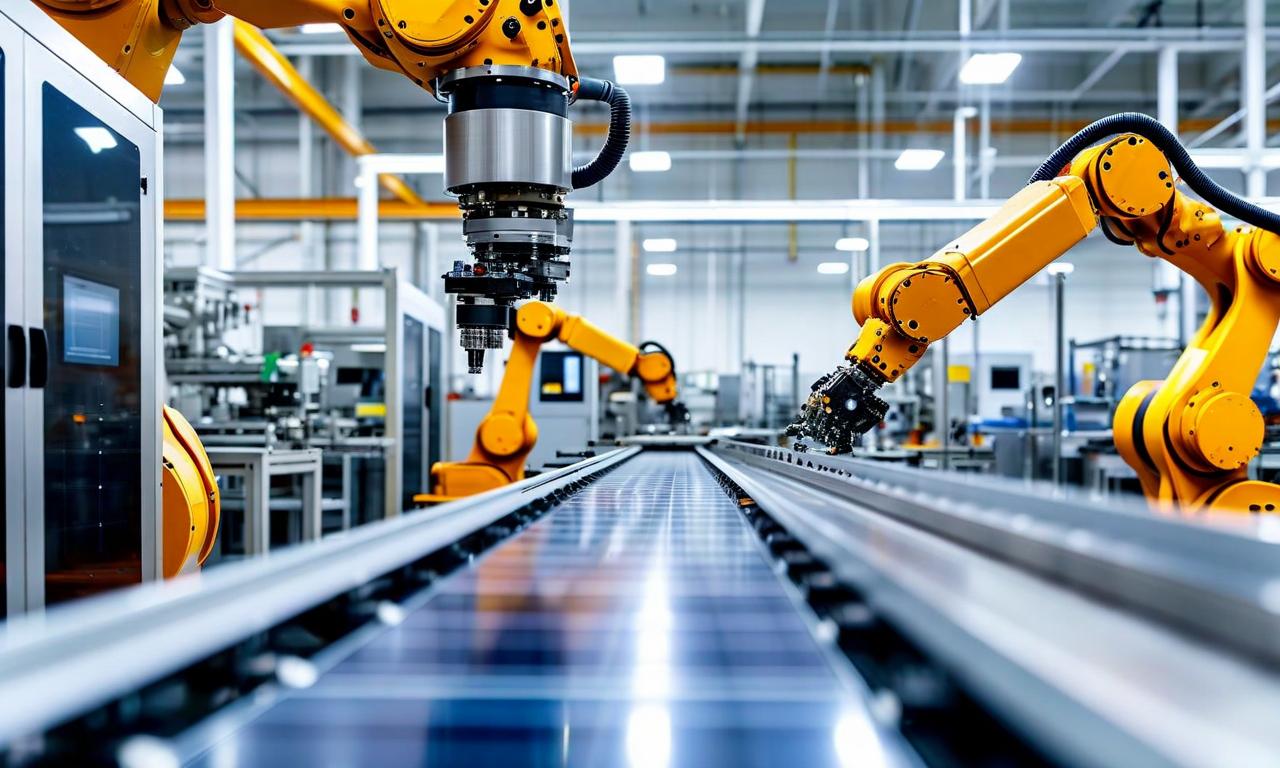

*this image is generated using AI for illustrative purposes only.
TEAL, the engineering subsidiary of Titan Company, is positioning itself to capitalize on a unique convergence of global trade disruptions and India's ambitious manufacturing expansion. As US tariffs and European supply chain diversification create pressure to move away from Chinese equipment suppliers, the company sees significant opportunities in India's rapidly growing semiconductor, solar and battery manufacturing sectors.
Strategic Positioning Amid Global Disruption
According to Sridhar N.P., managing director and chief executive of TEAL, current market conditions represent an unprecedented opportunity for Indian manufacturing. The company operates across two distinct business segments that face different demand dynamics and growth trajectories.
| Business Segment | Primary Focus | Market Exposure |
|---|---|---|
| Automation Equipment | High-volume manufacturing systems | 70% domestic, 30% export |
| Manufacturing Services | High-precision aerospace components | 95% export-oriented |
While TEAL's aerospace manufacturing exports remain resilient due to long-term contracts and deep customer relationships, tariff uncertainty has led the company to pause its automation expansion plans in North America. The company incorporated a US subsidiary several years ago but has limited progress on that front as it adopts a wait-and-watch approach.
India's Manufacturing Ecosystem Transformation
India's government has established comprehensive policy frameworks to reduce import dependence across critical technology sectors. The India Semiconductor Mission, backed by approximately ₹ 76,000 crore in incentives, supports end-to-end semiconductor manufacturing with fiscal support of up to 50% of project costs for approved facilities.
Major industry players have responded with substantial commitments:
- Intel-Tata Partnership: Memorandum of understanding for semiconductor manufacturing and advanced packaging localization
- Tata Semiconductor Projects: Fabrication plant and OSAT facility valued at an estimated $14 billion
- Upstream Investment: Solar and battery manufacturers investing in cells, wafers and ingots
Sridhar emphasizes that this manufacturing cycle differs fundamentally from previous booms, particularly in the automotive sector, due to its compressed timeline and comprehensive scope.
Market Position and Competitive Landscape
TEAL operates in an industrial automation market dominated by multinational corporations. The competitive environment includes established global players with significant scale advantages.
| Company Category | Examples | Scale Indicators |
|---|---|---|
| Global Multinationals | Siemens AG | €78.9 billion revenue (FY 2025) |
| Indian Subsidiaries | Honeywell Automation India | ₹ 4,189.6 crore revenue (FY25) |
| Indian Specialists | TEAL | ₹ 860 crore revenue (FY25) |
With automation contributing over 60% of revenue and manufacturing services accounting for the remainder, TEAL positions itself between large multinational leaders and smaller Indian engineering specialists. The company targets downstream and adjacent equipment categories where automation and precision engineering capabilities provide competitive advantages.
Growth Strategy and Investment Focus
TEAL's approach focuses on pragmatic market opportunities rather than attempting to compete in core semiconductor process tools or proprietary chemistry. The company targets specific equipment categories including:
- Assembly automation systems
- Material handling equipment
- Packaging machinery
- Discrete manufacturing systems for semiconductors, solar and electronics
According to Nithin Chandra, partner at consulting firm Kearney, this strategy represents a logical and scalable path, particularly when executed through strategic partnerships. The company plans continued investment in both business segments, with particular emphasis on new technologies and capabilities.
Future Expansion Plans
TEAL is exploring facilities in East Asia to better serve electronics equipment customers while investing in advanced capabilities including lasers, vision systems, robotics, high-speed automation and new-energy applications. The company also sees potential in adapting software industry models to automation, where core design and engineering occur in India with overseas commissioning and tuning.
Industry experts view TEAL's positioning favorably for emerging opportunities, particularly given the long-cycle nature of semiconductor, solar, battery and aerospace sector growth. As these industries scale according to expectations, suppliers with deep engineering capabilities are positioned for sustained growth over the coming decade.
 18
18






 Access 50+ Readymade Screeners
  Use 200+ Custom Filters
  Get Full Market Insights





