
 NewsTata Motors Clarifies Indonesia Vehicle Import Reports, Confirms 70,000-Vehicle Order Remains Intact
Tata Motors Clarifies Indonesia Vehicle Import Reports, Confirms 70,000-Vehicle Order Remains Intact


Tata Motors Limited clarified media reports about Indonesia putting vehicle imports on hold, confirming its 70,000-vehicle order through subsidiary PT Tata Motors Distribusi Indonesia remains intact. The company stated on March 2, 2026, that media reports reflect domestic policy discussions rather than execution risks, with no material impact on operations. The order includes 35,000 Yodha pick-ups and 35,000 Ultra T.7 trucks for agricultural and rural logistics support in Indonesia.



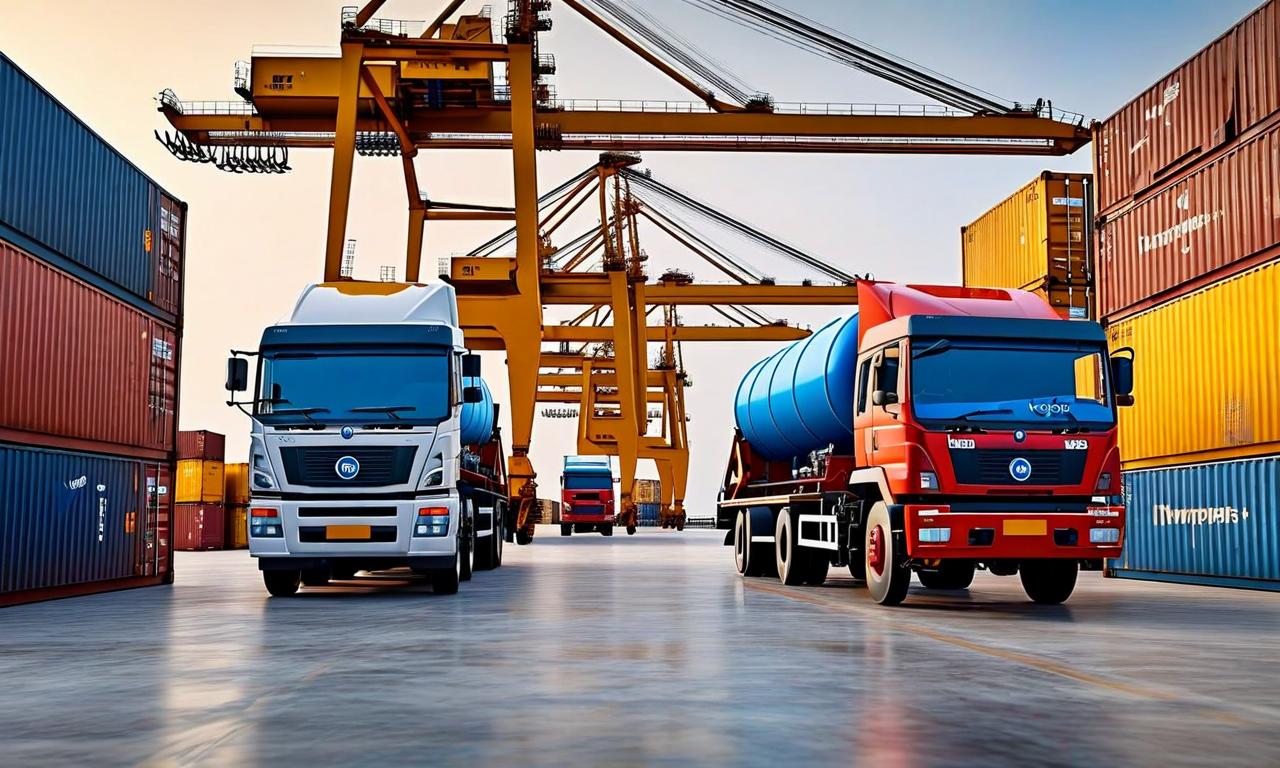
*this image is generated using AI for illustrative purposes only.
Tata Motors Limited has addressed media reports suggesting that Indonesia has put vehicle imports from the company on hold, clarifying that its major order remains unaffected. The company issued a detailed response to stock exchanges on March 2, 2026, following queries from BSE and NSE surveillance departments regarding news reports published on the same date.
Order Details and Background
The clarification centers around a significant agreement secured by PT Tata Motors Distribusi Indonesia, the company's wholly owned indirect subsidiary. As originally announced on February 10, 2026, this subsidiary entered into an agreement for the supply of 70,000 vehicles for deployment in Indonesia.
| Vehicle Details: | Specifications |
|---|---|
| Total Order: | 70,000 vehicles |
| Yodha Units: | 35,000 pick-up vehicles |
| Ultra T.7 Units: | 35,000 truck vehicles |
| End Customer: | PT Agrinas Pangan Nusantara |
| Purpose: | Agricultural activities and rural logistics |
The vehicles are designated for supporting agricultural activities and rural logistics, including farm-to-market transportation and regional goods movement across Indonesia. They will be delivered to PT Agrinas Pangan Nusantara, an Indonesian state-owned enterprise focused on modernizing agricultural supply chains.
Company's Response to Media Reports
Tata Motors provided point-wise clarifications to address the stock exchange queries. The company confirmed that PT Tata Motors Distribusi Indonesia has ascertained that media reports in Indonesia, which were subsequently reproduced in India, reflect domestic policy discussions on imports and local manufacturing rather than any demand or execution risk related to the received order.
Key clarifications provided:
- The order and advance received remain programme-driven
- The company intends to begin supplies soon
- Deliveries will be completed in a phased manner as per commitment
- The published article has no material impact on the company
Vehicle Specifications and Applications
The order comprises two key vehicle models designed for Indonesia's diverse operational requirements. The Tata Yodha is positioned as a rugged, last-mile mobility platform built to operate in challenging terrain conditions, enabling connectivity between farms, villages, and rural enterprises to markets. The Tata Ultra T.7 is described as a refined, high-efficiency truck designed for modern logistics, combining durability with superior uptime and driving comfort.
These vehicles will be deployed through the Koperasi Desa and Kelurahan Merah Putih Project, supporting Indonesia's nation-building efforts by strengthening rural connectivity, livelihoods, and economic resilience. The fleet rollout will occur through agricultural cooperatives under a structured, phased delivery programme.
Market Position and Global Presence
Tata Motors maintains one of the industry's most comprehensive commercial vehicle portfolios across over 40 countries, spanning sub-1-tonne to 60-tonne cargo vehicles and 9-seater to 71-seater mass mobility solutions. The company operates in India and South Korea, with a global presence across Africa, the Middle East, Latin America, Southeast Asia, and SAARC countries.
The clarification demonstrates the company's commitment to transparency and regulatory compliance while reinforcing confidence in its international operations and order execution capabilities.
 15
15











 Access 50+ Readymade Screeners
  Use 200+ Custom Filters
  Get Full Market Insights





