
 NewsPower Sector Priorities for Budget 2026: Addressing Financial Distress and Infrastructure Gaps
Power Sector Priorities for Budget 2026: Addressing Financial Distress and Infrastructure Gaps


India's power sector has achieved 250.64 GW renewable capacity by December 2025 through successful schemes like PM Surya Ghar Muft Bijli Yojana, but faces critical challenges including ₹6.92 trillion discom losses and ₹5.81 trillion outstanding generator dues. Transmission infrastructure lags with 33% shortfall in substation capacity addition, while storage deployment at 43.2 GWh falls short of projected 34.72 GWh requirement by 2026-27. Budget 2026 should prioritize discom debt refinancing, transmission project acceleration, and enhanced storage market development.

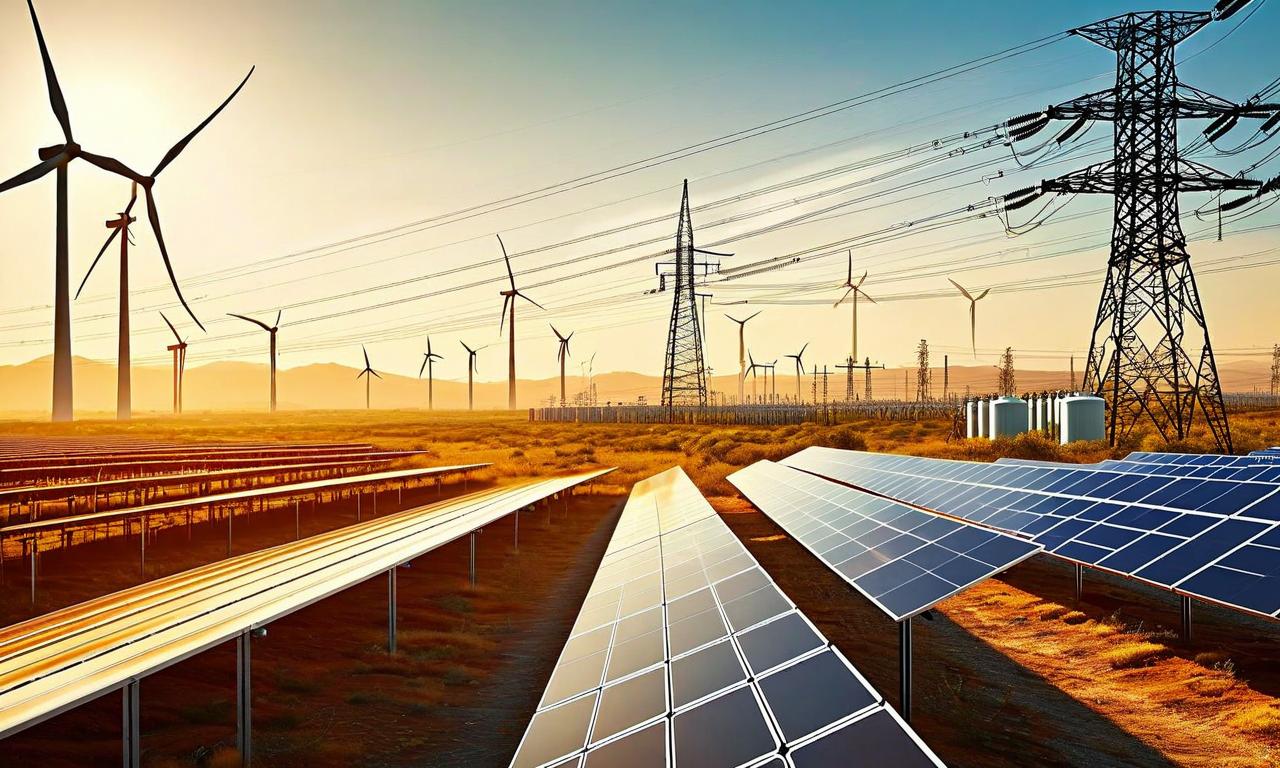

*this image is generated using AI for illustrative purposes only.
India's power sector has achieved significant milestones in renewable energy expansion while grappling with persistent structural challenges that require urgent policy attention in the upcoming Budget 2026. The sector's growth trajectory shows promise with non-fossil fuel-based energy capacity reaching 250.64 GW as of December 2025, supported by various government initiatives and budgetary allocations.
Policy Successes and Current Achievements
Several government schemes have demonstrated notable success in democratizing energy access across different consumer segments. The PM Surya Ghar Muft Bijli Yojana and PM-KUSUM initiatives have effectively extended solar energy benefits to retail and agricultural consumers, contributing to the sector's renewable energy expansion.
The Battery Energy Storage Systems (BESS) sector has received substantial policy support through viability gap funding schemes. The government has allocated ₹9,100 crore to support 43.2 GWh of storage capacity, with plans to scale this to 47 GW by 2032. Additionally, Budget 2025 introduced the Revamped Distribution Sector Scheme (RDSS) and a conditional 0.5 percent GSDP borrowing allowance, though implementation has shown limited progress.
Critical Financial Challenges in Distribution
The distribution sector continues to face severe financial distress that threatens overall sector stability. The financial health of distribution companies (discoms) has deteriorated significantly, creating systemic risks across the power value chain.
| Financial Parameter: | Amount | Period |
|---|---|---|
| Accumulated Losses: | ₹6.92 trillion | March 2024 |
| Year-on-Year Growth: | 5% increase | From previous year |
| Gross Debt: | ₹7.40 trillion | Current |
| Projected Subsidy Dependence: | ₹2.20 trillion | FY26 |
| Outstanding Dues to Generators: | ₹5.81 trillion | June 2025 |
This financial crisis has created severe liquidity constraints for Independent Power Producers (IPPs) and prompted judicial intervention. The Supreme Court has emphasized the importance of cost-reflective tariffs and directed that regulatory assets be capped at 3 percent of aggregate revenue requirement (ARR), with existing assets to be liquidated within specified timeframes.
Transmission Infrastructure Bottlenecks
Transmission capacity development is struggling to keep pace with generation capacity additions, creating potential grid stability concerns. Despite ambitious planning, execution has fallen short of targets across multiple parameters.
The transmission sector has planned over 191,000 circuit kilometers of transmission lines and 1,270 GVA of capacity between 2022-23 and 2031-32. However, implementation faces significant challenges:
- Substation capacity addition was 33% below planned targets during April-January FY25
- Persistent delays due to right-of-way constraints and environmental approvals
- Coordination challenges among multiple agencies and states
- Prolonged litigation affecting project timelines
Storage Market Development Needs
The energy storage sector requires enhanced policy focus to meet India's growing renewable integration requirements. The Central Electricity Authority (CEA) has projected substantial storage capacity needs that current commitments cannot adequately address.
| Storage Requirement: | Capacity | Timeline |
|---|---|---|
| Near-term Requirement: | 34.72 GWh | 2026-27 |
| Long-term Projection: | 1,840 GWh | 2047 |
| Current Commitments: | 43.2 GWh | Present |
While BESS deployment has received policy attention, concerns remain about insufficient cost reflectiveness in tender responses and the need for stronger ancillary services market development.
Budget 2026 Recommendations
Industry experts suggest several priority areas for Budget 2026 to address these structural challenges effectively:
Financial Sector Reforms:
- Refinancing mechanisms for legacy discom debt linked to verifiable performance improvements
- Direct subsidy payments to consumers rather than through discoms
- Acceleration of regulatory reforms including the Electricity Bill 2025
Infrastructure Development:
- Dedicated platform for transmission project approvals similar to PM Gati Shakti
- Enhanced focus on indigenous battery manufacturing capabilities
- Establishment of nuclear energy zones near industrial clusters for captive power applications
The recent passage of the SHANTI Act 2025 for nuclear sector reform provides encouragement, though implementation of key frameworks including tariff mechanisms and capacity building remains pending. Budget 2026 represents a critical opportunity to deliver foundational reforms encompassing financial discipline, regulatory harmonization, and infrastructure acceleration to ensure the power sector's sustainable growth trajectory.
 19
19






 Access 50+ Readymade Screeners
  Use 200+ Custom Filters
  Get Full Market Insights





