

Jio IPO Set to Re-rate Bharti Airtel as Jefferies Raises Target to ₹2,760


Jefferies has upgraded Bharti Airtel's target price to ₹2,760, identifying Jio's planned 2026 IPO as a major re-rating catalyst for the telecom sector. The brokerage expects the listing to drive tariff hikes and increase telecom sector weight in major indices from 4-5% to 7-8%, benefiting Bharti alongside Jio. Financial projections show strong growth with 17% consolidated revenue growth in FY27, led by 19% growth in India mobile business and robust free cash flow generation of ₹540 billion.


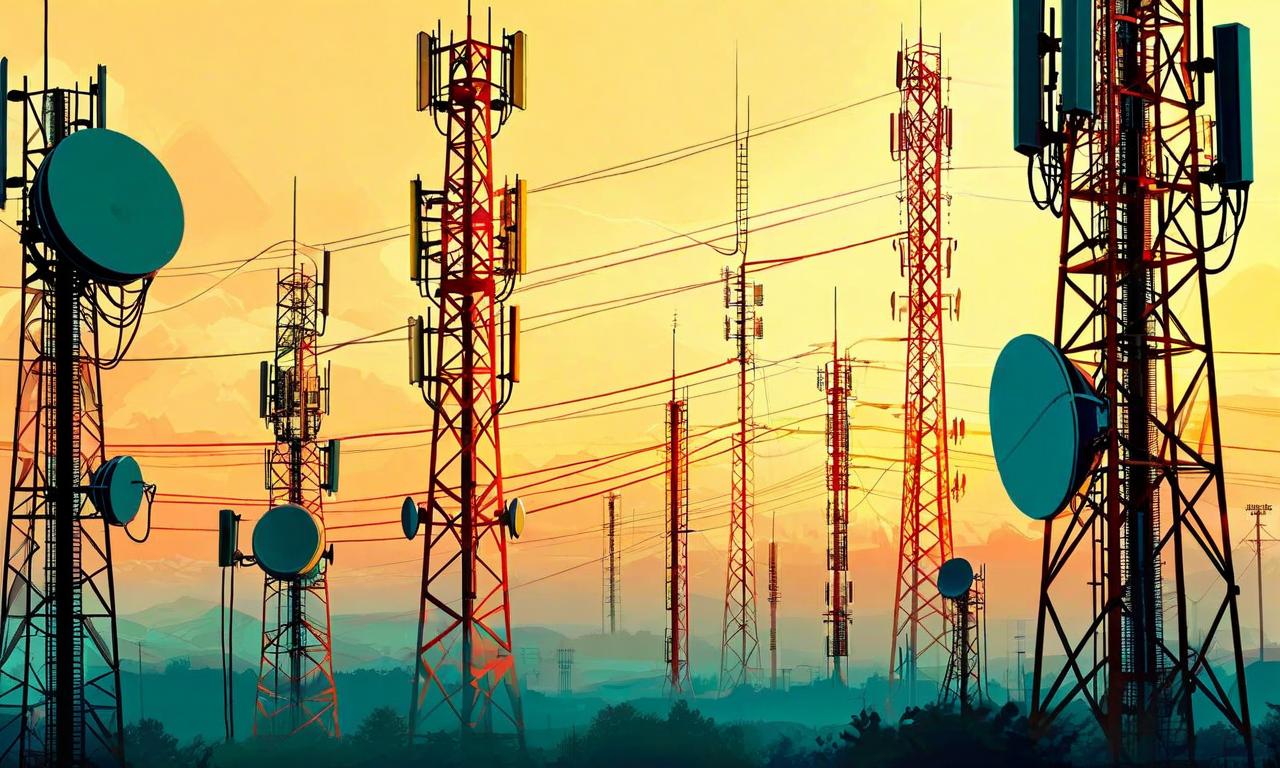
*this image is generated using AI for illustrative purposes only.
Jefferies has identified Jio's planned mega IPO in the first half of 2026 as a crucial re-rating catalyst for Bharti Airtel , raising its target price to ₹2,760 and maintaining the stock as its top pick in the Indian telecom sector. The global brokerage argues that the upcoming listing will drive tariff hikes and increase sector weight in indices, working in Bharti's favour rather than against it.
Target Price Revisions and Market Impact
The brokerage has made significant upward revisions to its target prices for key telecom stocks:
| Company: | Previous Target | New Target | Upside Potential |
|---|---|---|---|
| Bharti Airtel: | ₹2,635 | ₹2,760 | 32% from current levels |
| Indus Towers: | ₹425 | ₹510 | Significant upside |
Billionaire Mukesh Ambani had guided to listing Jio Platforms Ltd in the first half of 2026, which analysts expect to be largely an offer for sale by financial investors while strategic shareholders like Reliance, Meta, and Google remain invested.
Jio IPO as Tariff Hike Catalyst
Jefferies argues that once Jio is listed, public market scrutiny will sharpen the operator's focus on monetisation and returns, making fresh mobile tariff hikes in 2026 more likely. According to the brokerage's sensitivity analysis, a 10-20% tariff increase is needed for Jio's equity valuation to move closer to Bharti's and deliver double-digit internal rate of return to existing private equity investors.
| Scenario: | FY27 EBITDA | Investor IRR Range |
|---|---|---|
| Without Tariff Hikes: | $8.50 billion | 6-8% |
| With Tariff Hikes: | Higher levels | 8-14% |
Why Bharti May Re-rate Alongside Jio
Jefferies expects Jio's IPO to benefit rather than create an overhang for Bharti Airtel, citing the stock's 32% gain in 2025 despite more than $5.00 billion of promoter share sales. With Bharti's India business already trading around 13 times EV/EBITDA, the brokerage expects Jio to be priced off Bharti's multiples, leaving limited room for de-rating.
Once Jio is included in major benchmarks with roughly 33% free float, the neutral weight of telecom in headline indices such as Nifty50 and MSCI India could rise from 4-5% to 7-8%. This increased sector allocation is expected to benefit Bharti along with Jio through incremental passive and benchmark-driven flows.
Financial Projections and Growth Outlook
Jefferies expects strong financial performance from Bharti Airtel in the coming years:
| Metric: | FY27 Projection | Growth Rate |
|---|---|---|
| Consolidated Revenue Growth: | 17% YoY | Led by mobile business |
| India Mobile Business: | 19% growth | Strong momentum |
| International Portfolio: | 20% growth | Robust expansion |
| Consolidated EBITDA: | 18% growth | 56% margins |
| Free Cash Flow: | ₹540 billion | 19% jump |
On a three-year view, the brokerage builds in about 25% cumulative mobile tariff hikes over FY27-28, translating into roughly 16% ARPU CAGR between FY26 and FY28. Additional growth optionality from enterprise, data centre and cloud services could add 1-3 percentage points of incremental growth annually over the next five years.
Sector Backdrop and Competitive Dynamics
Jefferies expects a 15% across-the-board mobile tariff hike in June 2026, two years after the last round, as operators pivot from market share grabs to monetisation. The brokerage sees scope for sector revenues to accelerate to 16% year-on-year growth, powered by ARPU expansion of about 14%.
Regarding Vodafone Idea, a potential five-year moratorium on AGR dues could cut the operator's government-dues outflows by 35-85% over FY26-30, improving its capital raising prospects. However, VIL would still need a cumulative 45% tariff hike over FY27-30 just to meet spectrum and AGR commitments, reinforcing the case for industry-wide pricing increases.
Historical Stock Returns for Bharti Airtel
| 1 Day | 5 Days | 1 Month | 6 Months | 1 Year | 5 Years |
|---|---|---|---|---|---|
| +0.03% | +3.68% | -2.11% | -3.04% | -7.12% | +159.54% |
 17
17




 Access Market Heat-map & Insights
  Create, Save & Share your Screener
  Use 200+ Screening Filters





