

Indian Real Estate Stocks Under Pressure Despite Strong Developer Performance Data


Indian real estate stocks have declined significantly with the Nifty Real Estate Index down 11% over six months, while major developer stocks fell 20-33% in 2025. Despite aggregate market challenges including 14% decline in housing sales across top cities, large listed developers show operational resilience through sustenance sales strategies. Premium housing segments demonstrate exceptional strength with luxury sales surging 164% year-on-year, creating a disconnect between stock performance and underlying business fundamentals.



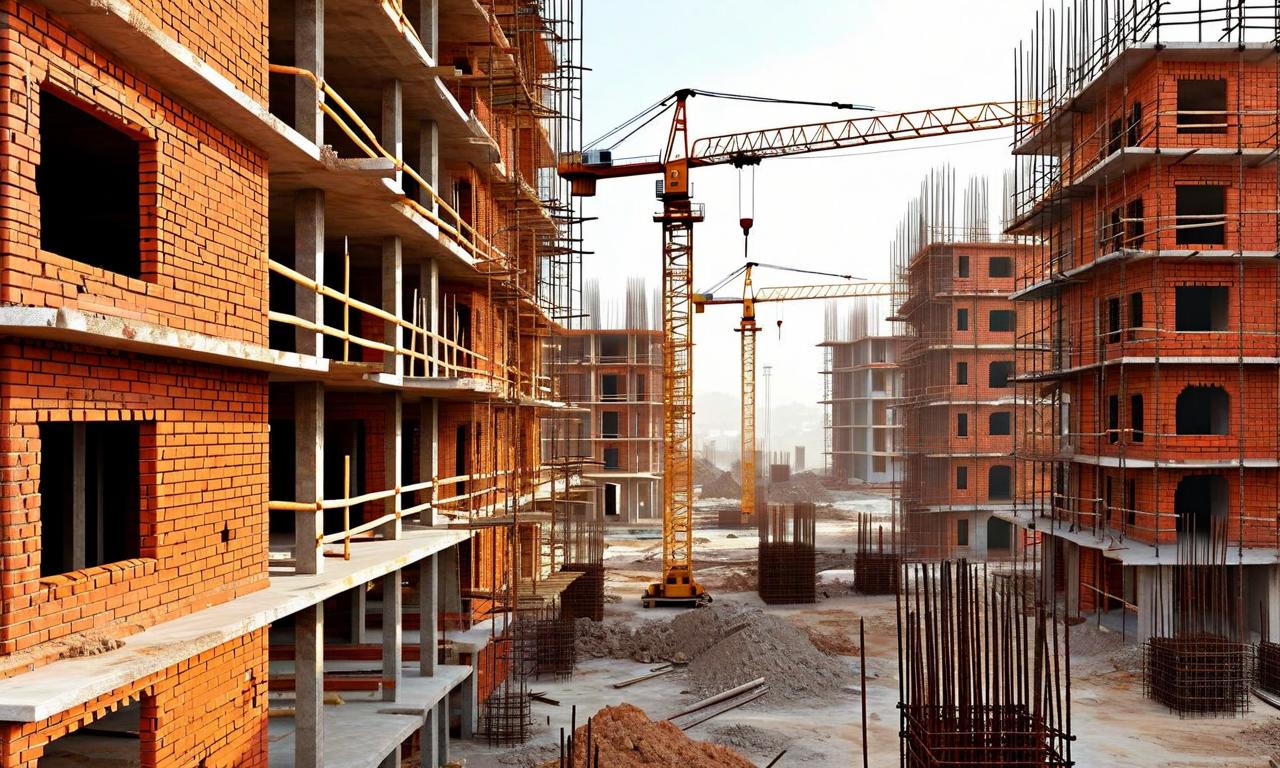
*this image is generated using AI for illustrative purposes only.
Indian real estate stocks continue facing pressure despite operating performance data from major developers indicating sector resilience. The Nifty Real Estate Index has declined approximately 11% over the past six months and nearly 3% in the past week, reflecting investor concerns about housing demand, rising prices, and macroeconomic uncertainty.
Stock Performance and Market Sentiment
Major real estate stocks have experienced significant declines, with shares of prominent developers showing substantial weakness:
| Company | Stock Performance (2025) |
|---|---|
| Anant Raj | Down 20-33% |
| Brigade Enterprises | Down 20-33% |
| Oberoi Realty | Down 20-33% |
| Godrej Properties | Down 20-33% |
| Lodha Developers | Down 20-33% |
This performance has established a cautious tone for the sector, with markets questioning whether Indian real estate has reached a plateau after a strong multi-year upcycle.
Housing Market Fundamentals
Aggregate market data reveals mixed signals across key metrics. Housing sales across the top seven cities declined 14% in 2025, while new project launches decreased 3% year-on-year to approximately 3.62 lakh units. Sales volumes remained relatively stable, declining only 1% to 3.48 lakh units, suggesting demand fatigue amid higher property prices and employment concerns in IT-heavy markets.
| Market Metric | 2025 Performance |
|---|---|
| Housing Sales (Top 7 Cities) | -14% YoY |
| New Project Launches | -3% YoY (3.62 lakh units) |
| Sales Volumes | -1% YoY (3.48 lakh units) |
Regional Price Dynamics
Residential prices have continued rising across major markets, contributing to affordability concerns. According to Knight Frank data, price appreciation has been substantial across key metropolitan areas:
| Region | Price Growth (Past Year) |
|---|---|
| NCR | +19% |
| Bengaluru | +12-13% |
| Hyderabad | +12-13% |
| Mumbai | +7% |
These price increases have reinforced concerns about a potential volume-led slowdown as affordability becomes challenging for broader buyer segments.
Developer Performance Divergence
Analysts highlight a growing divergence between broader market trends and large listed developer performance. Murtaza Arsiwala, Director of Research at Kotak Institutional Equities, noted that while volumes have softened from a top-down perspective, companies are delivering strong numbers and often running ahead of pre-sales guidance when examined individually.
A significant factor supporting developer performance is increasing reliance on sustenance sales from projects in existing geographies rather than aggressive new launches. Lodha Group's chief sales officer Prashant Bindal indicated that approximately 65-70% of the company's business now originates from established markets, providing consistency even during periods of muted launch activity.
Premium Segment Strength
The demand composition is shifting toward higher ticket sizes, with value growth remaining strong despite volume softness. Premium housing segments have demonstrated exceptional performance:
| Price Segment | Sales Growth (YoY) |
|---|---|
| ₹20-50 million | +20% |
| ₹50-100 million | +31% |
| ₹100-200 million | +164% |
The most striking performance came from the ₹100-200 million segment, where sales surged 164%, highlighting the resilience of premium and luxury housing demand.
Market Valuation Disconnect
A notable disconnect persists between stock valuations and operational performance. Residential developers continue trading at discounted valuations despite delivering double-digit growth, while REITs command higher multiples based on steadier cash flows. According to Arsiwala, the market remains focused on industry-wide concerns, but continued company-level execution should eventually close this valuation gap.
 16
16











 Access Market Heat-map & Insights
  Create, Save & Share your Screener
  Use 200+ Screening Filters





