
 NewsIndian Railways Completes Electrification of Challenging Sakleshpur-Subramanya Road Ghat Section
Indian Railways Completes Electrification of Challenging Sakleshpur-Subramanya Road Ghat Section


Indian Railways has successfully electrified the 55 km Sakleshpur-Subramanya Road ghat section in the Mysuru Division of South Western Railway. The ₹93.55 crore project overcame significant engineering challenges, including steep gradients, 57 tunnels, 258 bridges, and 108 sharp curves. The electrification involved installing specialized infrastructure, including five switching stations and overhead equipment designed for speeds up to 120 kmph. This completion marks a crucial step in modernizing the rail network and improving connectivity between Bengaluru-Hassan and Mangaluru regions.

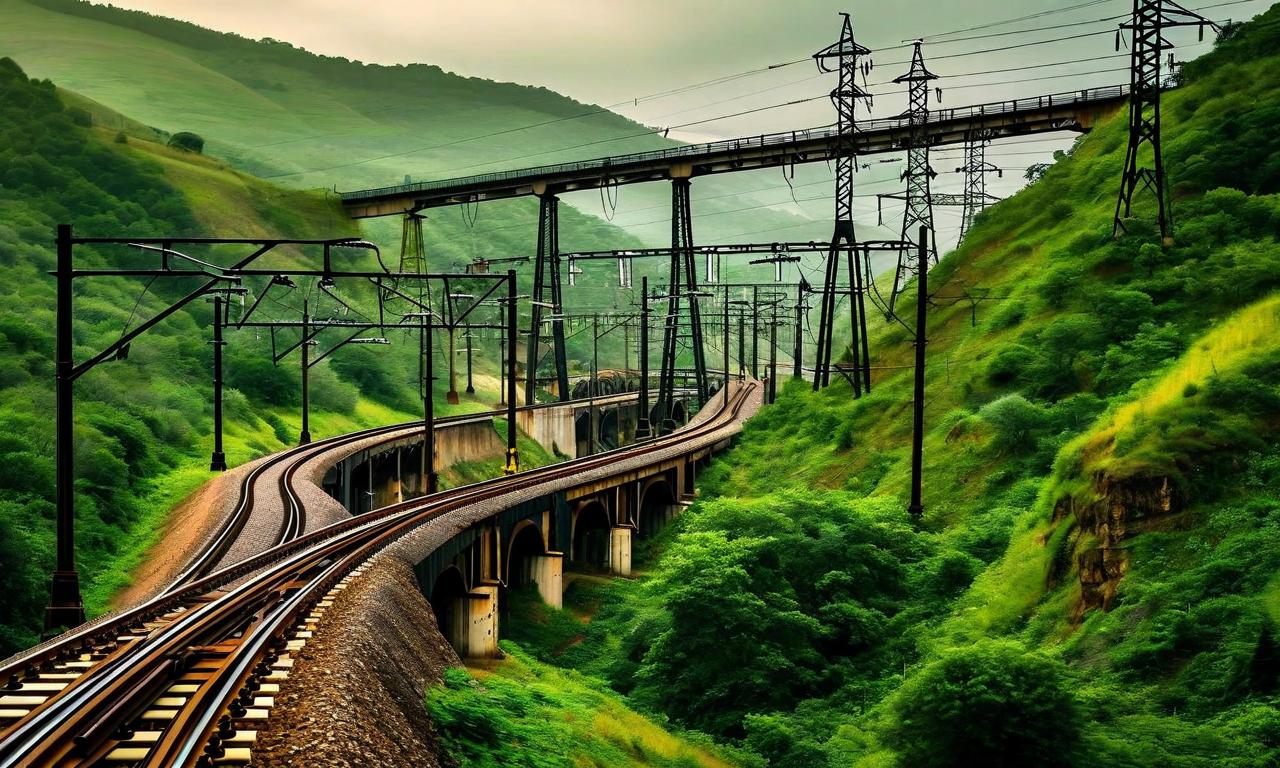

*this image is generated using AI for illustrative purposes only.
Indian Railways has achieved a significant milestone with the completion of track electrification on one of the country's most challenging rail stretches. The Sakleshpur-Subramanya Road ghat section in the Mysuru Division of South Western Railway has been successfully electrified, marking the completion of this complex infrastructure project.
Project Overview and Investment
The electrification project represents a substantial investment in railway infrastructure modernization. Key project parameters demonstrate the scale and complexity of this undertaking:
| Parameter | Details |
|---|---|
| Total Cost | ₹93.55 crores |
| Section Length | 55 km |
| Route | Hassan-Mangaluru (Western Ghats) |
| Maximum Speed | 120 kmph |
Engineering Challenges and Terrain Complexity
The Sakleshpur-Subramanya Road section stands among the most challenging stretches on the Indian Railways network due to its demanding geographical and operational conditions. The route traverses the Western Ghats with formidable engineering obstacles that required specialized solutions.
The terrain features present significant operational challenges:
- Steep gradients: 1-in-50 inclines requiring additional locomotive power
- Tunnel network: 57 tunnels requiring specialized electrification
- Bridge crossings: 258 bridges across varied topography
- Sharp curves: 108 curves demanding precise engineering
- Landslide vulnerability: High susceptibility to monsoon-related disruptions
Technical Infrastructure and Installation
The electrification work encompassed comprehensive infrastructure development designed to meet safety and operational requirements in difficult terrain. Engineers constructed five switching stations and installed overhead equipment throughout the entire ghat section.
Specialized technical specifications were implemented to address the challenging conditions:
| Technical Aspect | Specification |
|---|---|
| Traction Pole Distance | 67.5 metres (limited for safety) |
| Main Brackets Installed | 419 units |
| Spare Brackets | 419 units |
| Tunnel Sections | 57 locations |
| Operating Speed Design | 120 kmph maximum |
Tunnel Electrification and Safety Measures
The project required extensive work within the 57 tunnels along the route, presenting unique engineering challenges. Engineers installed 419 main brackets and an equal number of spare brackets inside the tunnel sections, ensuring redundancy and safety.
Comprehensive geological studies were conducted for both lined and unlined tunnel sections, with support from the National Institute of Rock Mechanics and Bangalore University. Pull-out tests were performed at every bracket location to assess anchoring and grouting strength, ensuring structural integrity under operational loads.
Implementation Challenges and Solutions
Project execution faced significant environmental and logistical obstacles throughout the construction period. Heavy monsoon rains, landslides, soil erosion, and rockfalls caused repeated disruptions to the electrification work, according to Mysuru Divisional Commercial Manager Girish Dharmaraj Kalagonda.
Transporting materials to remote and inaccessible locations presented additional challenges, with most supplies moved by rail to reach construction sites. The completion of this project despite these obstacles demonstrates the engineering capabilities and determination of the railway infrastructure teams.
Strategic Importance and Connectivity
The Sakleshpur-Subramanya Road ghat section serves as a crucial link connecting the Bengaluru-Hassan region with Mangaluru. The route passes through scenic landscapes, forests, and multiple engineering structures, making it one of Karnataka's most recognizable rail stretches.
The electrification completion enables electric locomotives to operate on the ghat section, eliminating the previous requirement for additional banking locomotives on steep gradients. This advancement moves Indian Railways closer to its target of complete network electrification while improving operational efficiency on this strategically important corridor.
 15
15







 Create Custom Screeners
  Access 200+ Pre-built Filters
  Use 50+ Readymade Screener





