

India's Deep Tech Sector Shows Growth as Funding Rises


India's deep tech sector has shown resilience, attracting $1.57 billion in funding, a 25.8% increase year-over-year, despite broader tech sector challenges. Early-stage funding dominated, raising $966 million. Generative AI led growth with $417.6 million raised, up 201.8% from the previous year. The sector is shifting focus to revenue visibility, IP-led innovation, and execution discipline. Government initiatives, including a ₹1 lakh crore RDI scheme and a ₹10,000 crore Deep Tech Fund of Funds, are supporting the ecosystem. Investors are now prioritizing commercialization, early revenue traction, and sustainable unit economics in their funding decisions.


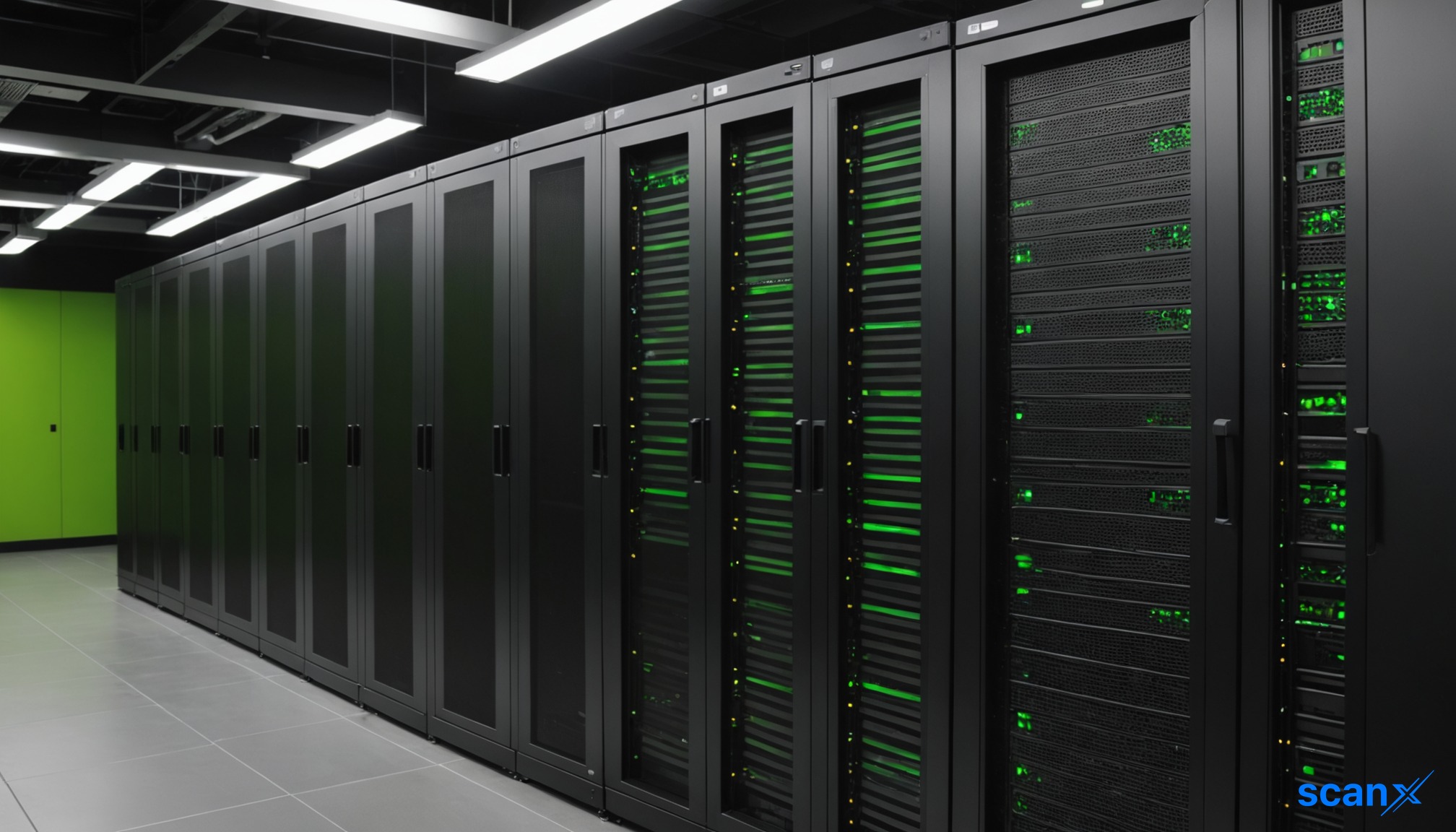
*this image is generated using AI for illustrative purposes only.
India's deep tech ecosystem is entering a more consequential phase where revenue visibility, intellectual property-led innovation, and execution discipline are taking precedence over grand narratives. The sector has demonstrated remarkable resilience, attracting $1.57 billion in funding, marking a 25.8% increase over the previous year, even as the broader Indian technology sector faced headwinds.
Funding Performance and Sector Leadership
The deep tech sector's performance stands in stark contrast to the overall technology funding landscape, which recorded a 15% year-on-year decline. Investment activity was predominantly concentrated at the early stage, which raised $966 million and accounted for 61% of total deep tech funding.
| Funding Stage | Amount Raised | Share of Total Funding |
|---|---|---|
| Early Stage | $966 million | 61% |
| Late Stage | $345 million | 22% |
| Seed Stage | $262 million | 17% |
Generative AI clearly outperformed other segments, raising $417.6 million, representing a 201.8% year-on-year increase. According to Neha Singh, Co-founder of Tracxn, this strong traction is being driven by rapid advances in AI capabilities and accelerating enterprise adoption.
| Sector | Funding Raised | Growth Rate |
|---|---|---|
| Generative AI | $417.6 million | +201.8% YoY |
| Drones | $179.3 million | Strong growth |
| Space Technology | $172.8 million | Strong growth |
Commercial Viability Takes Center Stage
Anand Sri Ganesh, CEO of NSRCEL at IIM Bangalore, identified several deep tech segments showing genuine commercial promise, including AI and GenAI, robotics, IoT, drones and defence technology, medical devices, and biotech and life sciences. What differentiated successful startups was not novelty but preparedness, with founders increasingly validating both business and technical propositions before going to market.
For investors like Ashish Taneja, Founding Partner and CEO at growX ventures, the real signal was not capital inflows but revenue behavior. Defence and aerospace systems, space-tech subsystems, industrial robotics, AI-led enterprise infrastructure, and climate-resilient agri-tech stood out as sectors with strong fundamentals.
"The strongest signal was pilots converting into repeat contracts, procurement-led demand from government and large enterprises, and early visibility on unit economics despite low production volumes," Taneja noted.
Policy Support and Infrastructure Development
The government's commitment to deep tech development is evident through significant policy initiatives. Jogin Desai, Founder and CEO of Eyestem, pointed to the launch of the RDI fund as a catalyst that could shape a new generation of globally competitive deep tech companies over the next five years.
| Policy Initiative | Investment Amount | Purpose |
|---|---|---|
| RDI Scheme | ₹1 lakh crore | Research and development support |
| Deep Tech Fund of Funds | ₹10,000 crore | Venture funding ecosystem |
| Anusandhan National Research Foundation | - | Long-term R&D capacity building |
Anjali Bansal highlighted three key areas demonstrating commercial readiness: the energy value chain, precision engineering and manufacturing, and space technology. She noted that startups like Agnikul, Pixxel Space, and Skyroot are demonstrating that Indian innovation can lead in space tech with quality, ambition, and cost-competitiveness.
Investment Discipline and Future Outlook
The funding environment has become more disciplined, with startups being evaluated with a sharper focus on commercialization, early revenue traction, and sustainable unit economics. Singh observed that valuations are increasingly milestone-linked, with capital flowing largely from specialized funds, corporate investors, and government-backed platforms.
"Funding shifted from valuation-led rounds to milestone-based capital, with a sharper focus on capital efficiency, technical depth, and speed of iteration," Taneja explained.
Corporate participation from groups like L&T and Tata is creating credible pathways to market through partnerships and offtake commitments. The sector has attracted over $8.51 billion in funding over the last decade, according to Tracxn data, indicating sustained investor interest despite market volatility.
The consensus among experts suggests that India's deep tech story is no longer about capital attraction but about converting technology into durable businesses. As regulatory clarity improves and shared testing and manufacturing infrastructure expands, the gap between narrative-driven ventures and execution-led companies is expected to widen, with success increasingly dependent on proof, patience, and performance.






 Create Custom Screeners
  Access 200+ Pre-built Filters
  Use 50+ Readymade Screener





