

E-Commerce Jewellery Market Finds Success in Affordable Luxury Segment Below ₹50,000


Deloitte India's latest report reveals that over 80% of online jewellery purchases occur below ₹50,000, focusing on lightweight, standardised pieces for gifting and self-purchase. Wedding jewellery, representing more than half the market, remains predominantly offline due to high-involvement decision-making processes. The study identifies milestone-driven purchases as a growth opportunity, positioned between casual gifting and wedding purchases, while emphasising the need for stronger digital trust infrastructure to expand online market penetration.

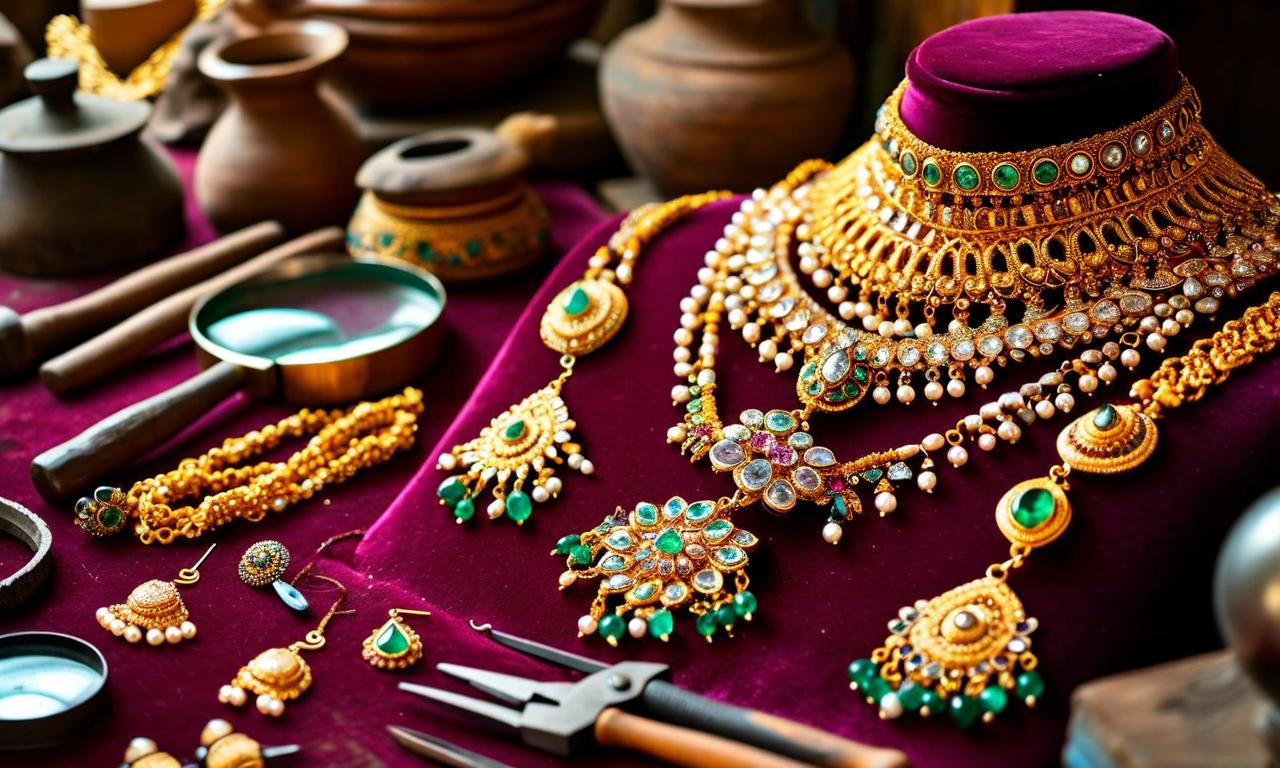

*this image is generated using AI for illustrative purposes only.
India's jewellery market is experiencing a digital transformation with distinct boundaries, according to a new industry report by Deloitte India. The comprehensive study reveals that while product discovery has moved decisively online, high-value transactions continue to depend on physical store experiences, creating a clear 'affordable luxury' segment where e-commerce platforms are achieving significant scale.
Online Purchases Concentrate in Affordable Segment
The Deloitte consumer survey presents compelling data about online jewellery purchasing patterns:
| Purchase Category | Details |
|---|---|
| Online Price Threshold | Over 80% of purchases below ₹50,000 |
| Product Type | Lightweight, standardised pieces |
| Purchase Motivation | Low-involvement gifting and self-purchase |
| Market Share | Wedding jewellery accounts for more than half of total market |
| Wedding Purchase Channel | Predominantly offline |
These findings highlight a fundamental divide in consumer behaviour, where convenience-driven purchases migrate online while trust-intensive transactions remain anchored in traditional retail environments.
Physical Stores Dominate High-Value Transactions
Praveen Govindu, Partner at Deloitte India, explains the persistence of offline channels for significant purchases: "Wedding jewellery is one of the highest-involvement purchases, typically made by couples and families together. The store experience — trials with wedding attire, bespoke customisation, and collective decision-making — makes offline far more engaging and productive."
This dynamic explains why digital platforms, despite increasing traffic volumes, struggle to convert large-basket purchases. The Deloitte data demonstrates that digital channels increasingly function as discovery and lead-generation engines, while physical stores remain the primary conversion hubs for high-trust purchases.
Milestone Purchases Present Growth Opportunity
The report identifies a promising middle segment between low-involvement gifting and high-involvement wedding purchases. This category encompasses milestone-driven purchases including:
- Anniversary celebrations
- Professional promotions
- Educational graduations
- Personal achievement rewards
These occasions carry emotional significance without the ceremonial intensity associated with weddings, potentially making them more suitable for online purchasing channels.
Digital Trust Infrastructure Key to Expansion
Govindu emphasises the importance of robust digital infrastructure for market expansion: "The unlock is a stronger digital trust and convenience stack. Verifiable authenticity, transparent product information, and hassle-free returns — ideally including return-to-store — can eliminate the fear of making a wrong decision."
Strategic Implications for Retailers
The Deloitte analysis cautions against expecting jewellery e-commerce to replicate fashion retail patterns. Instead, the research suggests that many retailers are strategically positioning digital platforms primarily as brand-building and discovery layers, while maintaining physical retail as the primary closing channel for high-value transactions.
For India's jewellery brands, the immediate opportunity lies in scaling affordable luxury offerings — lightweight, design-focused jewellery that combines digital convenience with offline assurance, converting discovery engagement into sustained customer relationships.
 17
17






 Access Market Heat-map & Insights
  Create, Save & Share your Screener
  Use 200+ Screening Filters





