NewsStocksCapital Goods Stocks Decline for Third Day on Chinese Contract Participation Concerns
Capital Goods Stocks Decline for Third Day on Chinese Contract Participation Concerns


Capital goods stocks declined for the third consecutive day on January 12, with companies like BHEL, Hitachi Energy, and Cummins India falling up to 5% amid reports of potential Chinese company participation in government contracts. Hitachi Energy India touched a one-month low of ₹16,840.00, declining 14% over three sessions. While Reuters reported the government may roll back 2020 procurement restrictions limiting Chinese firms, brokerages including Systematix and PL Capital expect limited impact on Indian companies due to localization mandates, strategic infrastructure considerations, and existing order book visibility exceeding seven years for major players.
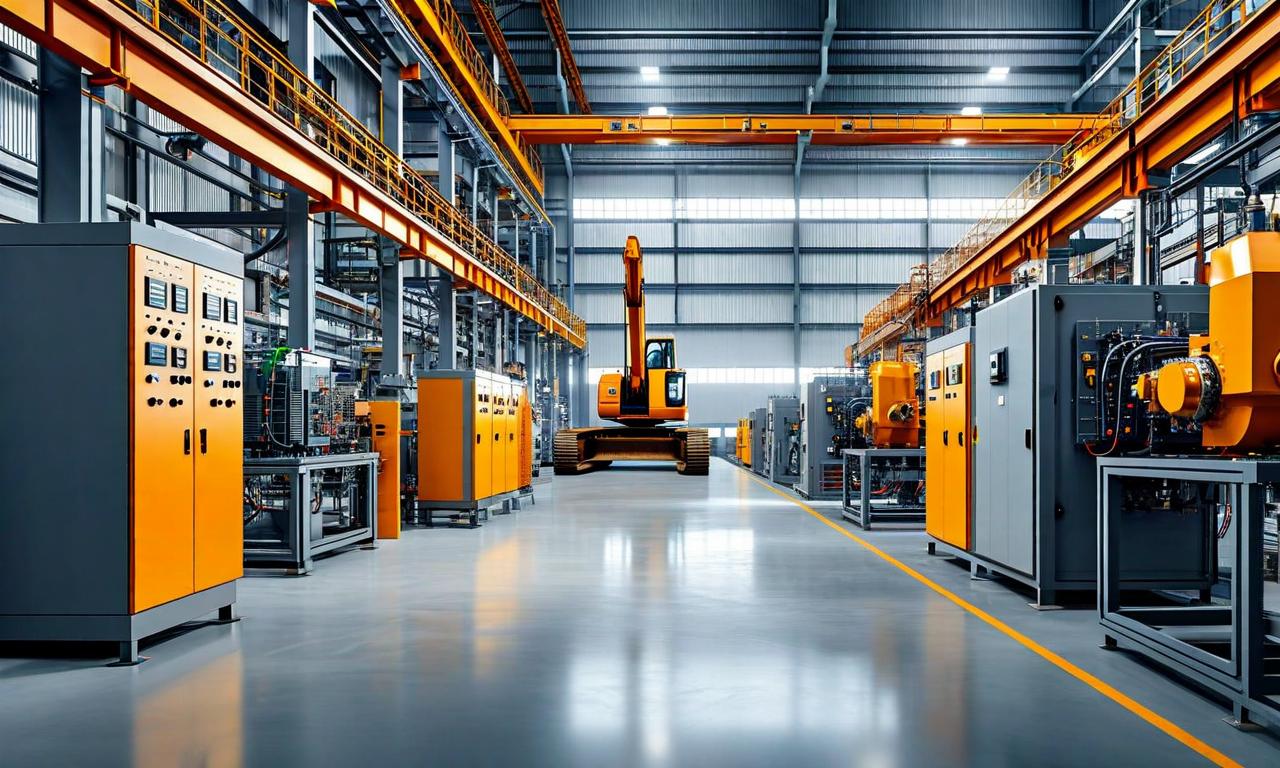
*this image is generated using AI for illustrative purposes only.
Capital goods stocks experienced significant pressure for the third consecutive trading session on January 12, as market participants reacted to reports suggesting the government may allow Chinese companies to participate in bidding for government contracts across infrastructure, power, and manufacturing sectors.
Stock Performance and Market Impact
Major capital goods companies witnessed substantial declines during the trading session:
| Company | Price Movement | Key Details |
|---|---|---|
| Hitachi Energy India | Down 6% | Touched one-month low of ₹16,840.00 |
| BHEL | Down up to 5% | Third consecutive session decline |
| Cummins India | Down up to 5% | Affected by sector-wide concerns |
| Transformers and Rectifiers (India) Ltd | Down up to 5% | Pressure from policy speculation |
Hitachi Energy India was particularly affected, with the stock declining 14% over the three-day period. A partial recovery was observed later in the trading session following comments from US Ambassador to India Sergio Gor, which triggered broader market recovery.
Policy Background and Concerns
The market reaction stemmed from Reuters reports indicating the Centre is considering rolling back 2020 procurement restrictions that previously limited Chinese companies from bidding for government contracts. This potential policy shift follows easing diplomatic and border tensions with China. The proposed changes aim to revive competition, reduce project costs, and accelerate execution of public and private projects, particularly in infrastructure, power, and manufacturing sectors.
Brokerage Analysis: Limited Impact Expected
Despite market concerns, leading domestic brokerages have provided reassuring assessments regarding the potential impact on Indian capital goods companies.
Systematix Perspective
Systematix highlighted several factors that could limit the impact on domestic players:
- Localization Focus: The government's aggressive push for localization in power equipment over recent years
- Capacity Investments: Substantial capital expenditure announcements from power generation and transmission equipment players
- Strategic Considerations: The strategic importance of power grids to national security
The brokerage expects limited impact on transformer, switchgear, substation and grid automation businesses, including companies like GE Vernova T&D, Siemens Energy, Hitachi Energy, TARIL and CG Power.
Sector-Specific Impact Assessment
| Segment | Expected Impact | Rationale |
|---|---|---|
| BHEL | Limited despite product overlap | Order book visibility exceeds 7 years |
| L&T | Minimal impact expected | Existing Middle East competition with Chinese players |
| Transmission Players | Limited exposure | Strategic sensitivity of power grid infrastructure |
| T&D Manufacturers | Structural benefits | CEA localization mandates for 16 critical components |
Strategic Infrastructure Considerations
Systematix emphasized the critical nature of power grid infrastructure, noting that power grids represent strategically important national assets and high-value targets. The increasing digitization and automation of grid systems, including sensitive areas like grid automation systems and SCADA/EMS platforms, reinforces the strategic importance of maintaining domestic control.
The brokerage noted that TBEA, the globally third-largest Chinese player, has a capacity of 200 GVA, representing less than 5% of India's transformer industry capacity.
PL Capital Assessment
PL Capital provided additional perspective on potential competitive dynamics, suggesting that while BHEL and L&T could face incremental competitive pressure in the BTG (Boiler, Turbine, and Generator) segment, Chinese participation is likely to remain limited due to strategic sensitivity and control risks associated with critical infrastructure projects.
The brokerage expects that even if Chinese players are permitted to participate, the government would likely mandate local manufacturing requirements. Recent CEA notifications to localize 16 critical components, including switchgear, insulators, and voltage transformers, are expected to support the domestic transmission and distribution cycle while reducing import dependence.
The current market reaction reflects investor concerns about increased competition, though brokerage analysis suggests the impact on established Indian capital goods manufacturers may be more limited than initial market fears indicate, particularly given ongoing localization initiatives and strategic infrastructure considerations.
 20
20