NewsStocksCapital Goods Stocks Decline on Reports of Chinese Companies Allowed in Government Bids
Capital Goods Stocks Decline on Reports of Chinese Companies Allowed in Government Bids


Capital goods stocks including BHEL, ABB India, CG Power declined 1-6% on January 12 amid reports of Chinese companies potentially being allowed to bid for government contracts. Industry experts suggest Chinese manufacturer TBEA may participate in reactor bids from FY27, though no official government notification has been issued. Analysts expect valuation corrections due to increased competition concerns, but foresee limited earnings impact due to capacity constraints.
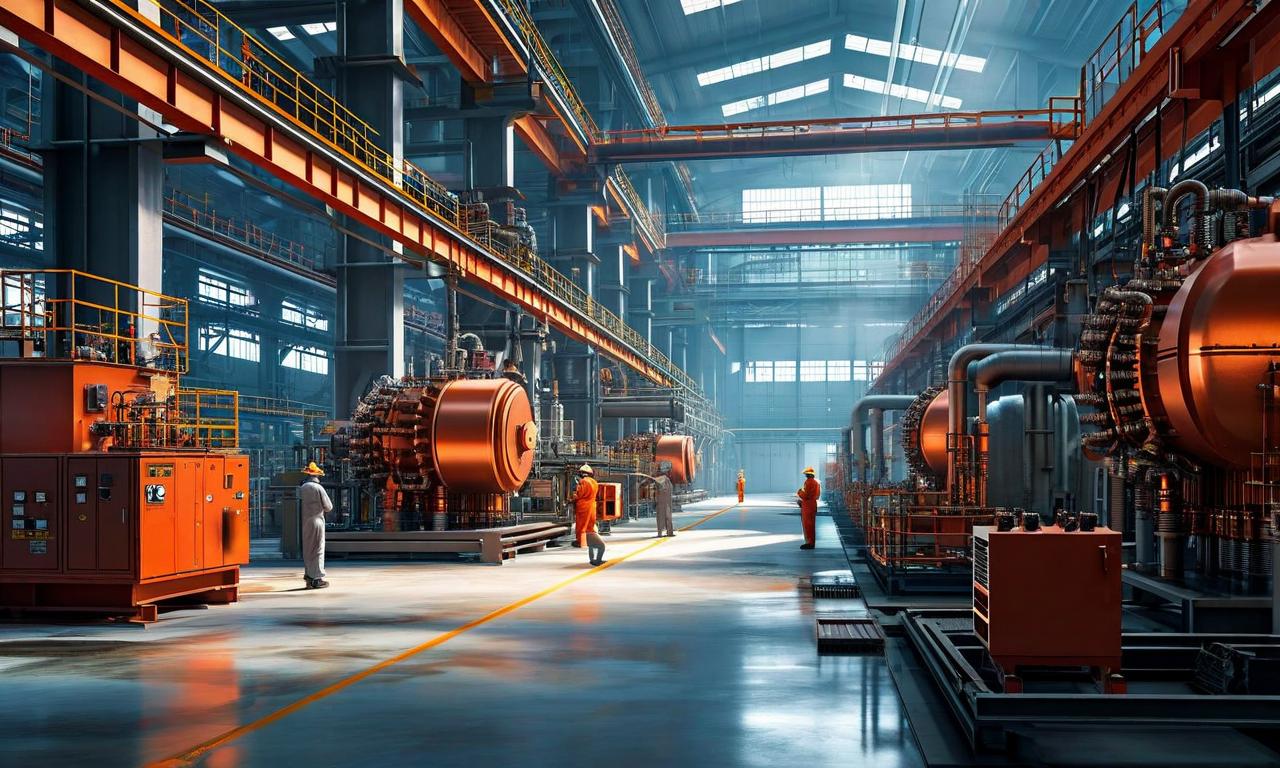
*this image is generated using AI for illustrative purposes only.
Capital goods stocks faced significant selling pressure on Monday, January 12, with major companies including BHEL, ABB India, CG Power, and others declining between 1% to 6%. The weakness extended losses from the previous week as concerns mounted over reports suggesting Chinese companies may be allowed to bid for government contracts in the transmission sector.
Market Performance and Stock Movements
The capital goods sector witnessed broad-based selling across key players. The following table shows the performance of major stocks:
| Company: | Current Price | Decline (%) |
|---|---|---|
| BHEL: | ₹264.00 | 3.8% |
| Hitachi Energy India: | ₹17,363.00 | 2.9% |
| ABB India: | ₹5,000.00 | 1.8% |
| CG Power: | ₹587.00 | 1.3% |
Within the high voltage and extra high voltage space, stocks like Hitachi Energy, GE Vernova T&D, CG Power, and Transformers and Rectifiers emerged as some of the most active names during the trading session.
Industry Expert Analysis
According to Renu Baid Pugalia of IIFL, industry interactions indicate that within the transmission space, power transmission, and high voltage reactor category, Chinese manufacturer TBEA has reportedly been approved to participate in bids for reactors starting from financial year 2027. However, she clarified that restrictions have not been completely lifted, suggesting no immediate risk of imports.
"It's not that the restrictions are lifted. So there is no risk of imports here at the moment. But yes, in the transmission space, where players were constrained on capacities and the average pricing in the market have shot very sharply. There we are hearing Chinese players, or they are factories which are based out in India are now being allowed to participate in future bids," Pugalia explained during an interaction with CNBC-TV18.
Market Outlook and Valuation Impact
IIFL's analysis suggests that valuations are expected to correct for capital goods companies as the market factors in increased competition and associated risks. However, the impact on earnings may be limited due to existing capacity constraints in the sector.
Pugalia noted that market prices were expected to correct regardless of TBEA's entry, but the announcement of Chinese-owned manufacturers being re-allowed in the market will create a sentiment overhang. "We don't perceive or foresee any material impact on earnings or sudden crackdown on the market pricing, because capacities are constrained," she added.
Government Position
It is important to note that no official notification from the government has been issued regarding the allowance of Chinese companies to bid for government contracts. The market reaction appears to be based on industry reports and expert interactions rather than confirmed policy changes.
 16
16