Budget Session 2026 Begins January 28: All-Party Meeting Expected Ahead of Union Budget Presentation

2 min read     Updated on 25 Jan 2026, 02:10 PM
scanx
Reviewed by
Suketu GScanX News Team
Overview

Parliament's Budget Session 2026 will run from January 28 to April 2, 2026, in two phases with 30 total sittings. An all-party meeting is expected on January 27 or 28 to discuss session priorities and ensure smooth proceedings. The session begins with President Droupadi Murmu's address, followed by the Economic Survey on January 31 and Union Budget 2026-27 presentation by Finance Minister Nirmala Sitharaman on February 1, 2026.
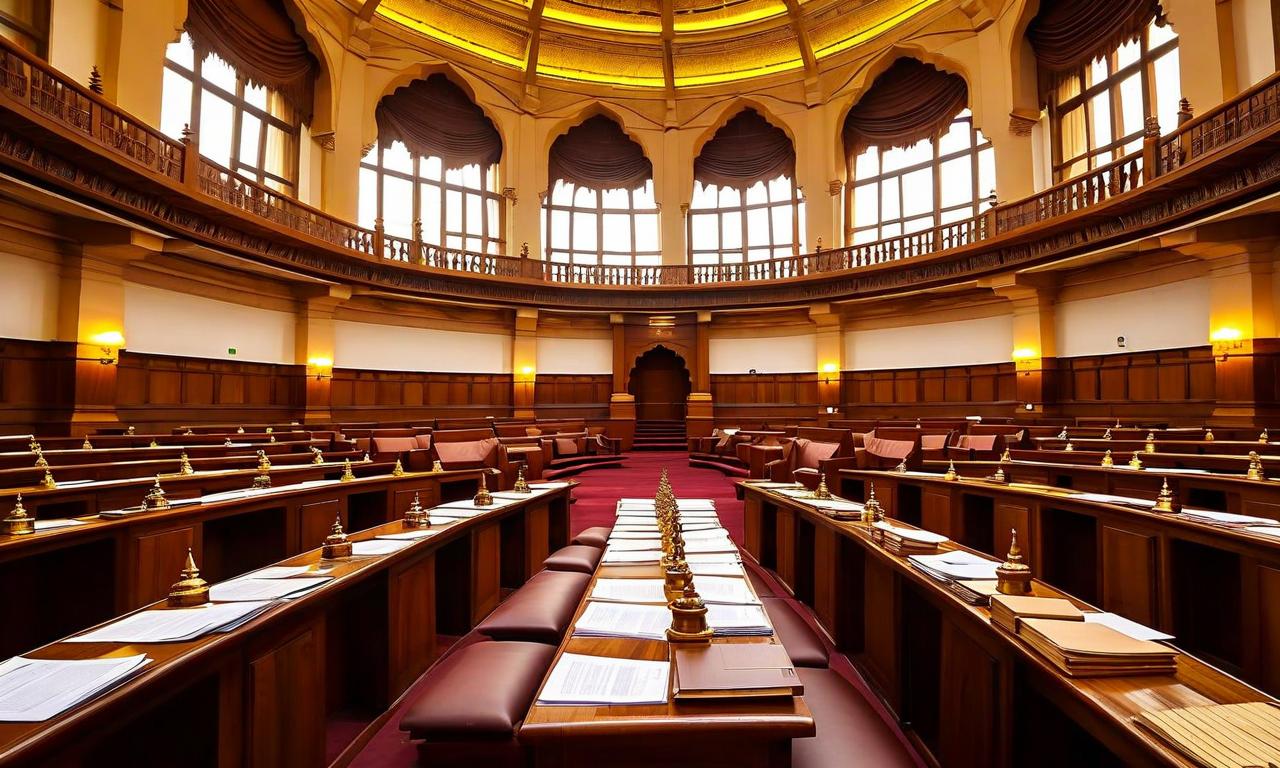
30876038

*this image is generated using AI for illustrative purposes only.

India's Budget Session of Parliament 2026 is set to begin next week, marking the start of one of the most crucial legislative periods of the year. The government is expected to convene an all-party meeting ahead of the session to discuss the agenda and ensure smooth parliamentary functioning before the presentation of Union Budget 2026-27. These pre-session discussions follow established parliamentary tradition, allowing political parties to align on key issues and enabling the Opposition to raise concerns before major financial announcements.

Session Schedule and Duration

The Budget Session will span from January 28 to April 2, 2026, organized in two distinct phases to accommodate legislative requirements and parliamentary procedures.

Phase: Duration Details
First Phase: January 28 - February 13 Initial proceedings and budget presentation
Recess Period: February 14 - March 8 Parliamentary break
Second Phase: March 9 - April 2 Budget debates and passage
Total Sittings: 30 Complete session duration

The session will commence with President Droupadi Murmu's address to the joint sitting of both Houses, where she will outline the government's legislative and policy priorities for the year ahead.

All-Party Meeting Preparations

Following parliamentary tradition, an all-party meeting is likely to be held on January 27 or January 28, just before the session begins. While the Lok Sabha Secretariat has not officially confirmed the exact date, such meetings are typically chaired by senior ministers and attended by floor leaders of major political parties.

The meeting agenda is expected to cover several key areas:

  • Priorities for the Budget Session
  • Discussion on the President's address
  • The tabling of the Economic Survey
  • The presentation and passage of Union Budget 2026-27
  • Ensuring smooth proceedings amid potential opposition demands and debates

Key Dates and Budget Timeline

The session's highlight will be Finance Minister Nirmala Sitharaman's presentation of Union Budget 2026-27, scheduled for February 1, 2026.

Date: Event
January 27/28: All-party meeting
January 28: Budget Session begins; President's address
January 31: Economic Survey tabled in Parliament
February 1: Union Budget 2026-27 presented at 11 AM
February 14-March 8: Parliamentary recess
March 9-April 2: Second phase; Budget debates and passage

Expected Parliamentary Focus

The Budget Session 2026 is anticipated to feature intensive debates on critical economic issues. Parliamentary discussions are expected to center on economic growth, inflation, taxation policies, welfare spending allocations, and fiscal consolidation measures. These debates will provide a platform for comprehensive examination of the government's financial policies and economic direction for the upcoming fiscal year.

like18
dislike

WhiteOak Capital CEO Calls for Review of Securities Transaction Tax and Dividend Double Taxation

2 min read     Updated on 25 Jan 2026, 01:44 PM
scanx
Reviewed by
Jubin VScanX News Team
Overview

WhiteOak Capital CEO Aashish Somaiyaa has called for a comprehensive review of India's securities transaction tax and dividend taxation framework ahead of Budget 2026. He highlighted that STT was originally introduced to replace capital gains tax, but now both taxes exist simultaneously, creating double taxation. Somaiyaa noted that dividend taxation is particularly onerous as companies pay from post-tax profits and shareholders are taxed again, potentially discouraging dividend payouts and weakening corporate governance.

30874441

*this image is generated using AI for illustrative purposes only.

Aashish Somaiyaa, CEO of WhiteOak Capital Management, has identified structural taxation issues that require urgent attention ahead of Budget 2026, particularly focusing on securities transaction tax and dividend taxation frameworks that he describes as creating double taxation scenarios.

Taxation Framework Concerns

Speaking at the ETMarkets Budget Roundtable in Mumbai, Somaiyaa highlighted significant concerns with India's current taxation structure for market participants. He emphasized that securities transaction tax was originally introduced as a substitute for long-term capital gains tax, but the current framework now imposes both taxes simultaneously.

Tax Issue Current Problem Impact
Securities Transaction Tax Originally replaced capital gains tax, now both exist Creates additional transaction friction
Dividend Taxation Companies pay from post-tax profits, shareholders taxed again Constitutes double taxation
Relative Tax Burden Higher taxation compared to other global markets Affects FII investment decisions

Foreign Investment Perspective

As CEO of WhiteOak Capital, which manages about $7 billion as a Foreign Institutional Investor, Somaiyaa provided insights into how taxation affects foreign investment flows. He noted that when managing an emerging market fund domiciled in Dublin, investments in most global markets do not incur taxes, but investments in India require tax provisions upon exit.

Key challenges for foreign investors:

  • Higher relative taxation compared to other markets
  • Need for tax provisions when exiting Indian investments
  • Lack of parity with global investment destinations

Dividend Taxation Structure

Somaiyaa expressed particular concern about India's dividend taxation framework, describing it as "quite onerous" due to its double taxation nature. Companies declare dividends from post-tax profits, and when these dividends reach shareholders, they face taxation again.

Potential Governance Impact

The current dividend taxation structure may have unintended consequences on corporate governance:

  • Disincentivizes dividend payouts: Companies may prefer retaining earnings rather than distributing them
  • Weakens shareholder returns: Double taxation reduces effective dividend yields
  • Contrasts with global practices: Countries like Brazil have minimum dividend obligations, while India appears to discourage dividend declarations

FII Flow Analysis

Somaiyaa attributed recent Foreign Institutional Investor outflows to two primary factors rather than taxation issues alone. The domestic economic slowdown became evident in 2024, with GDP growth moderating to around 5% and flat earnings growth, while RBI policy remained restrictive.

Simultaneously, the AI-driven rally in the US attracted capital to markets perceived as more central to the AI theme, including China, South Korea, and Taiwan. This led to inevitable rebalancing within emerging market allocations.

Budget 2026 Expectations

From a market perspective, Somaiyaa outlined specific expectations for the upcoming budget:

  • Review of double taxation areas: Particularly dividends from listed companies
  • Securities transaction tax evaluation: Given that long-term capital gains tax has been reintroduced and raised multiple times
  • Reduction of transaction friction: Addressing layers of taxation that impede market efficiency

Somaiyaa emphasized that while taxation is not the primary driver of recent FII outflows, addressing these structural issues would improve India's competitiveness as an investment destination and create a more equitable framework for both domestic and foreign investors.

like20
dislike

More News on Union Budget 2026-27