

Budget 2026: Khemani Expects Higher Capex, R&D Push and Tax Reforms for Growth Momentum


Vikas Khemani expects Budget 2026 to feature capex allocation exceeding ₹11 lakh crore, supported by higher tax collections and capacity building focus. He anticipates 2026 will outperform 2025, citing current Nifty PE of 20-21 times as reasonable and highlighting strong fundamentals including 14.00% credit growth. His key Budget expectations include R&D investment incentives, elimination of double taxation in capital markets, dividend tax relief, and support for export-oriented sectors facing tariff challenges.



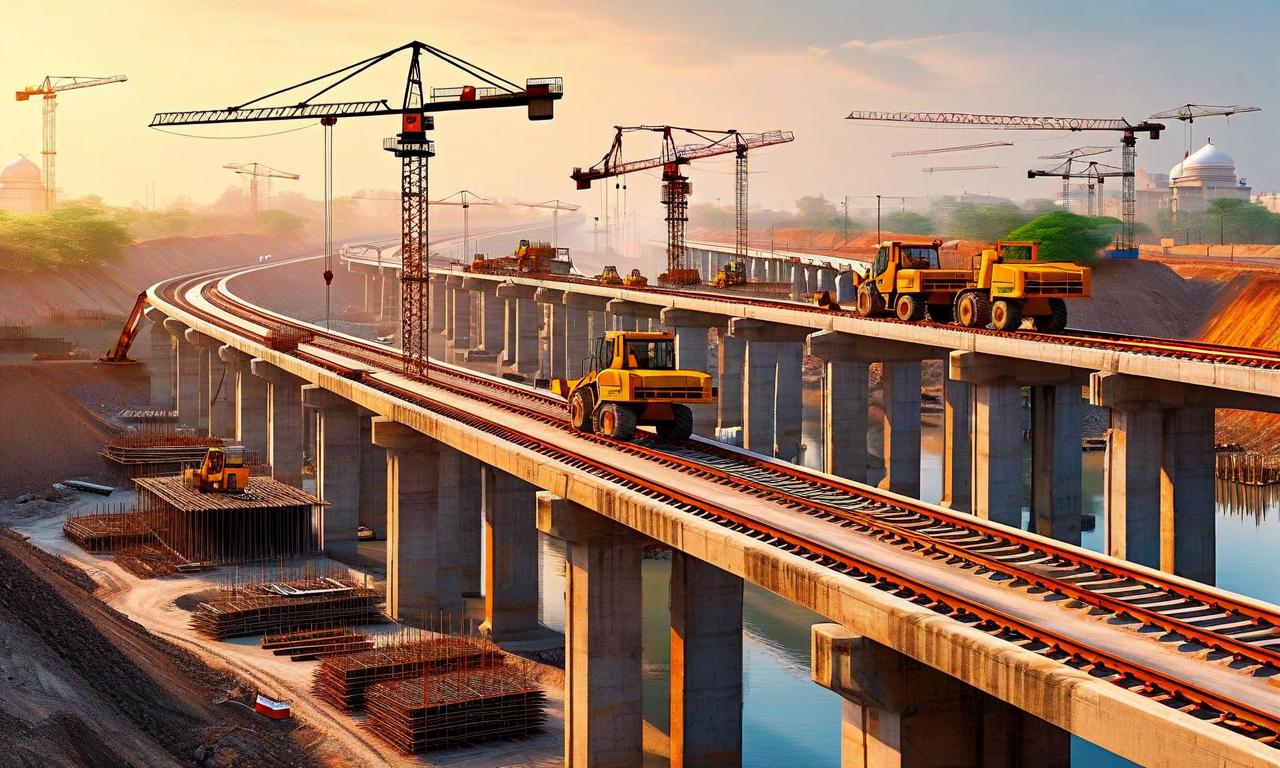
*this image is generated using AI for illustrative purposes only.
Vikas Khemani, Founder and CIO of Carnelian Asset Management & Advisors, has outlined comprehensive expectations for Budget 2026, emphasizing the need for sustained capex execution, enhanced R&D investment, and meaningful tax reforms to maintain India's growth trajectory. Speaking on market valuations and policy priorities, Khemani presents a measured outlook for India's economic prospects amid global uncertainties.
Capex Allocation Expected to Exceed ₹11 Lakh Crore
Khemani expects the government's capex allocation to surpass the previous ₹11.11 lakh crore benchmark, supported by higher tax collections and continued focus on capacity building. He emphasizes that government capex extends beyond direct budgetary allocations through SPV-led projects and PPP models.
| Focus Area: | Details |
|---|---|
| Expected Capex: | Above ₹11 lakh crore |
| Funding Sources: | Direct budget, SPV-led capex, PPP models |
| Primary Constraint: | Execution capacity rather than financing |
| Growth Driver: | Capacity building and efficiency improvements |
"More than allocations, the real challenge today is execution capacity," Khemani noted, highlighting that India faces greater constraints in project implementation than in securing financing across private sector, PPP, and government-led initiatives.
SIP Growth and Financial Market Dynamics
With SIP contributions reaching ₹30,000-31,000 crore, Khemani acknowledges the positive trend in household savings financialization while noting structural challenges. He points out that household exposure to financial assets remains in single digits, with potential to reach 15-20.00%.
The shift toward SIPs, combined with new tax regimes, has reduced attractiveness of bank fixed deposits, creating challenges for the banking system. Banks' loan-to-deposit ratios are approaching peak levels, potentially constraining credit flow despite RBI rate cuts.
Equity Market Outlook for 2026
Khemani maintains an optimistic stance on India's equity markets, drawing parallels to the recovery pattern seen in 2022-2023. He views current Nifty PE ratios of 20-21 times as reasonable, neither expensive nor cheap.
| Market Indicator: | Current Status |
|---|---|
| Nifty PE Ratio: | 20-21 times |
| Credit Growth: | 14.00% as of December |
| Market Recovery Pattern: | Similar to 2022 vintage |
| Risk-Reward Assessment: | Attractive for increased allocation |
"Fundamentally, there is nothing negative from a directional perspective," Khemani stated, citing strong monetary stimulus, supportive fiscal measures, robust government spending, and healthy GDP growth as positive factors.
Key Budget 2026 Expectations
Khemani has outlined four specific policy recommendations for the upcoming budget:
R&D Investment Initiative: Implementation of a CSR-like mechanism requiring companies to contribute a fixed percentage of profits toward research and development, supporting long-term nation-building objectives.
Capital Markets Tax Reform: Elimination of double taxation by removing either STT or capital gains tax, addressing the current burden on investors and market participants.
Dividend Taxation Relief: Revision of dividend taxation structure, suggesting either zero tax or a flat 10.00% rate instead of the current maximum marginal rate applied after corporate tax payments.
Export Sector Support: Provision of incentives, rebates, and credit support for sectors directly impacted by tariff uncertainties, particularly textiles and export-oriented segments, to prevent permanent damage and job losses.
Economic Fundamentals and Growth Prospects
Khemani emphasizes that India's long-term growth story remains intact, supported by multiple positive indicators including strong GST collections, pickup in private capex, and healthy insurance premium collections. He expects 2026 to outperform 2025, contingent on global conditions evolution.
The current market environment represents a "tug of war between strong domestic macros and global concerns," which historically tends to resolve favorably over time. Khemani notes India's significant underperformance versus other emerging markets creates opportunities for capital deployment, with the current vintage potentially delivering strong outcomes similar to the successful 2022 investment cycle.
 15
15









 Access Market Heat-map & Insights
  Create, Save & Share your Screener
  Use 200+ Screening Filters





