
 NewsPTC Industries' Aerolloy Technologies Signs MoUs with Ministry of Steel Under PLI Scheme 1.2 for Strategic Materials
PTC Industries' Aerolloy Technologies Signs MoUs with Ministry of Steel Under PLI Scheme 1.2 for Strategic Materials


Aerolloy Technologies Limited, PTC Industries' wholly owned subsidiary, signed two MoUs with the Ministry of Steel under PLI Scheme 1.2 for Specialty Steel on February 10, 2026, covering Titanium Alloys and Super Alloys manufacturing. The company stands as India's only fully integrated manufacturer with end-to-end capability across both material categories, encompassing alloy development, melting, conversion, casting, and final machining within a single ecosystem. These strategic materials are foundational for aerospace, defence, space, and advanced energy applications, with the PLI incentives expected to enhance capital returns, improve operating leverage, and accelerate capital efficiency across Aerolloy's integrated manufacturing platform.

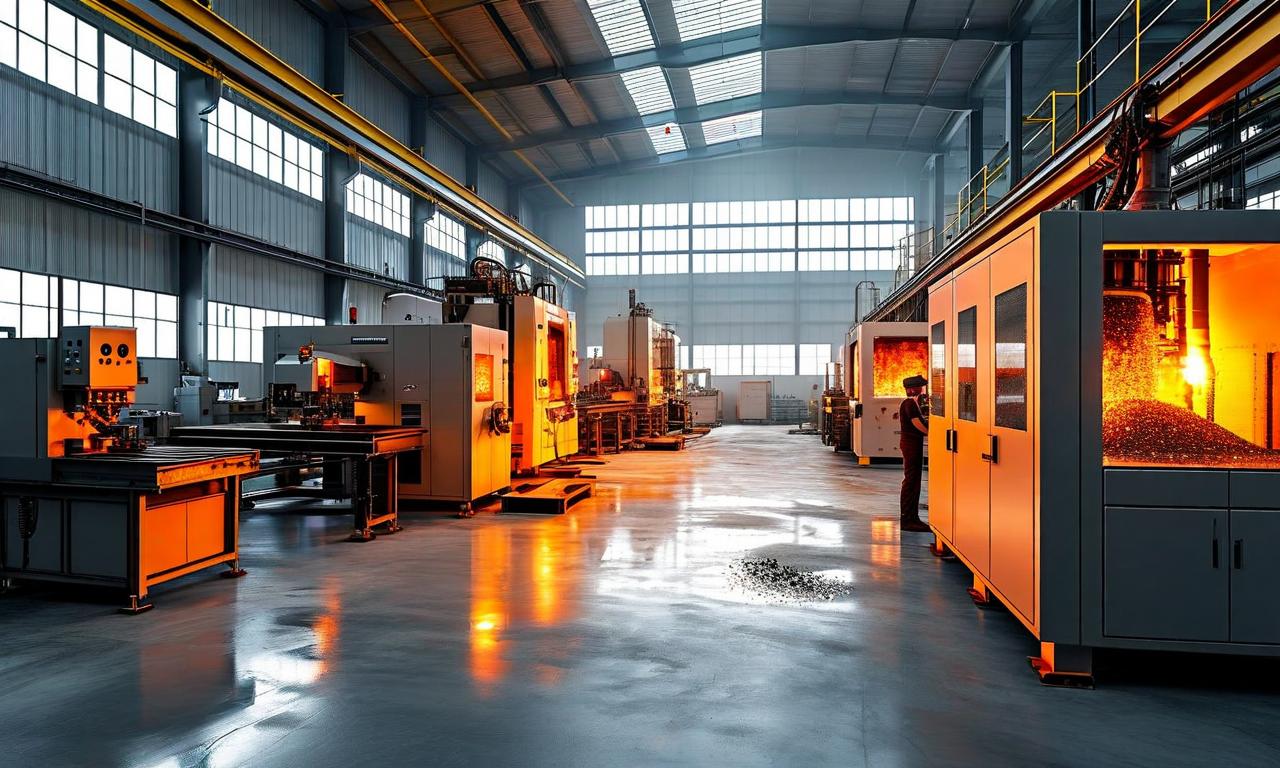

*this image is generated using AI for illustrative purposes only.
PTC Industries ' wholly owned subsidiary Aerolloy Technologies Limited has secured a significant milestone by signing two Memoranda of Understanding with the Ministry of Steel under the Production Linked Incentive Scheme 1.2 for Specialty Steel. The agreements, signed on February 10, 2026, cover manufacturing capabilities for Titanium Alloys and Super Alloys, positioning the company at the forefront of India's strategic materials manufacturing sector.
Strategic Partnership Under PLI Scheme 1.2
The MoUs were formalized at an official signing ceremony organized by the Ministry of Steel, attended by the Honourable Union Minister of Steel. This partnership represents a crucial step in India's initiative to develop domestic manufacturing capability for high-value, strategic material categories that are essential for national security and industrial advancement.
| Parameter: | Details |
|---|---|
| Scheme: | PLI Scheme 1.2 for Specialty Steel |
| Materials Covered: | Titanium Alloys and Super Alloys |
| Category: | Steel Grades for Strategic Sector |
| Incentive Structure: | Highest rates under the scheme |
| Application: | Incremental annual sales during PLI period |
Titanium Alloys and Super Alloys fall under the "Steel Grades for Strategic Sector" category and attract among the highest incentive rates under the scheme, applicable on incremental annual sales for the duration of the PLI period.
Unique Manufacturing Capabilities
Aerolloy Technologies distinguishes itself as the only company in India with fully integrated, end-to-end manufacturing capability across both Titanium Alloys and Super Alloys. The company's comprehensive manufacturing ecosystem encompasses multiple critical processes within a single vertically integrated platform:
- Alloy development and melting into aerospace-grade ingots
- Conversion into billets, bars, rods, sheets, and plates through forging and rolling
- Remelting and near-net-shape precision investment casting
- Final machining of complex, flight-critical components
This depth of integration proves critical for strategic sectors where traceability, process control, quality assurance, and long-term reliability are paramount requirements.
Strategic Materials for National Capability
Titanium alloys and super alloys serve as foundational materials for aerospace, defence, space, and advanced energy applications, where performance, reliability, and metallurgical integrity are critical factors. Indigenous capability in these materials is essential for reducing import dependence, ensuring supply chain security, and supporting India's long-term strategic and industrial objectives.
The PLI Scheme for Specialty Steel represents a key Government of India initiative aimed at catalysing investment in advanced material categories, enabling the development of globally competitive manufacturing capacities, and strengthening domestic value chains for strategic sectors.
Financial and Strategic Impact
The PLI incentives under Scheme 1.2 are expected to provide meaningful financial benefits to Aerolloy and PTC Industries through several key mechanisms:
| Benefit Area: | Impact |
|---|---|
| Capital Returns: | Enhanced returns on substantial infrastructure investments |
| Operating Leverage: | Improved cost competitiveness as volumes scale |
| Earnings Visibility: | Long-term visibility in high-entry-barrier segments |
| Capital Efficiency: | Accelerated efficiency across integrated platform |
Management Commentary
Mr. Sachin Agarwal, Chairman & Managing Director of PTC Industries Limited, emphasized the significance of this development: "The signing of these MoUs under PLI Scheme 1.2 is a significant milestone for Aerolloy and PTC. Titanium alloys and super alloys are core to next-generation aerospace, defence, and space platforms, and sovereign capability in these materials is essential for India's long-term strategic autonomy."
He further acknowledged the policy framework: "We are grateful to the Ministry of Steel for its sustained policy focus on advanced and strategic materials and for creating an enabling framework to support long-gestation, technology-led investments. We also acknowledge the Ministry of Defence's continued emphasis on indigenisation and its recognition that leadership in strategic materials is fundamental to India's aerospace and defence preparedness."
Company Background
PTC Industries Limited operates as a leading Indian manufacturer of precision metal components and strategic materials for critical applications, with over six decades of experience. Through Aerolloy Technologies Limited, the group manufactures Titanium and Super Alloy materials and components for aerospace, defence, and space applications in India and globally. The company continues to make substantial investments in building a fully integrated advanced materials ecosystem at the Uttar Pradesh Defence Industrial Corridor.
Historical Stock Returns for PTC Industries
| 1 Day | 5 Days | 1 Month | 6 Months | 1 Year | 5 Years |
|---|---|---|---|---|---|
| +0.27% | +11.40% | +3.39% | +55.23% | +53.65% | +699.15% |
 19
19




 Access Market Heat-map & Insights
  Create, Save & Share your Screener
  Use 200+ Screening Filters





