
 NewsDefence Ministry to weigh ₹3.25 lakh crore plan for 114 Rafale jets at key meeting this week
Defence Ministry to weigh ₹3.25 lakh crore plan for 114 Rafale jets at key meeting this week


India's Defence Ministry will discuss a ₹3.25 lakh crore proposal to procure 114 Rafale fighter jets from France this week, featuring local manufacturing with 30% indigenous content. The deal includes 12-18 fly-away jets and would expand India's total Rafale fleet to 176 aircraft, making it the country's largest defence procurement if approved.

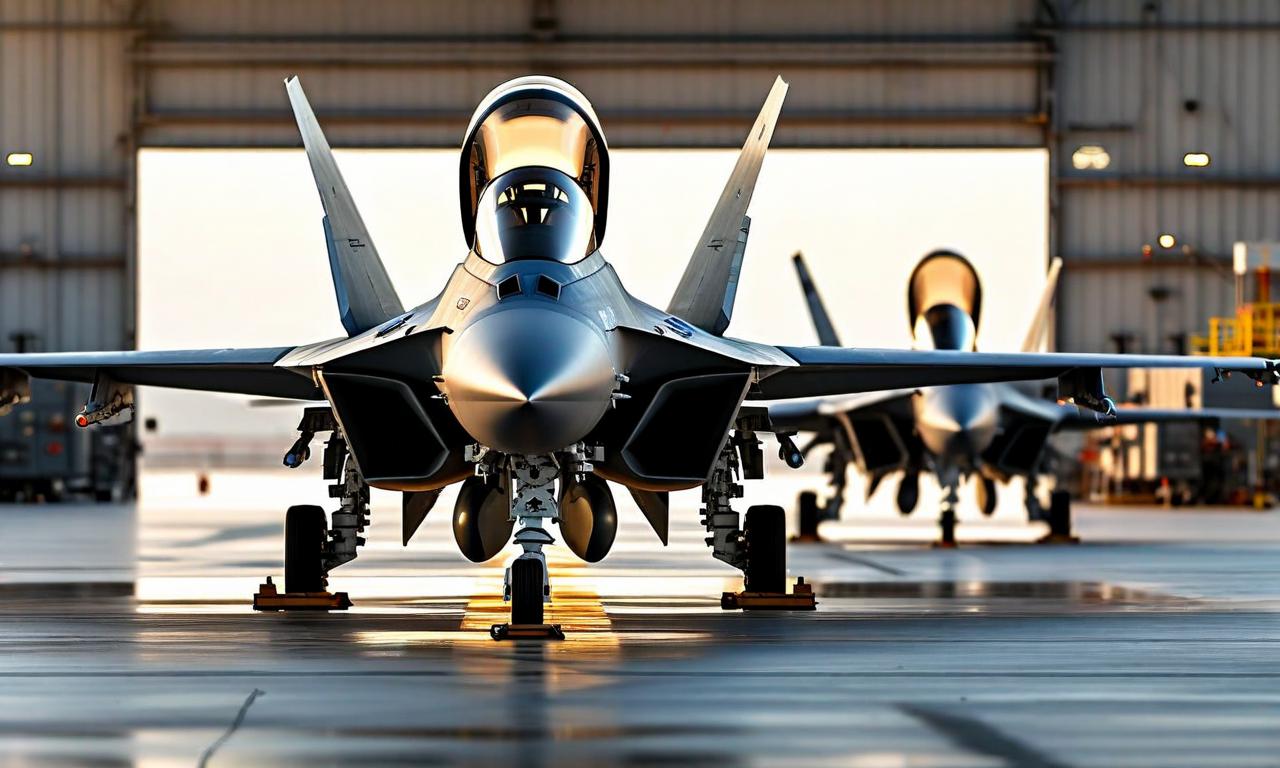

*this image is generated using AI for illustrative purposes only.
India's Defence Ministry is preparing to review one of the country's most significant defence procurement proposals during a high-level meeting scheduled for this week. The ₹3.25 lakh crore deal involves acquiring 114 Rafale fighter jets from France, marking a substantial expansion of the Indian Air Force's combat capabilities.
Deal Structure and Manufacturing Plans
The proposed agreement encompasses both local manufacturing and direct procurement components. The aircraft will be manufactured in India with an indigenous content requirement of approximately 30%, though this falls below the typical 50-60% mandated under Make in India norms. Additionally, the proposal includes acquiring 12-18 Rafale jets for the Indian Air Force in fly-away condition for immediate operational requirements.
| Component | Details |
|---|---|
| Total Deal Value | ₹3.25 lakh crore |
| Aircraft Quantity | 114 jets |
| Indigenous Content | ~30% |
| Fly-away Jets | 12-18 aircraft |
| Manufacturing Location | India |
Technical Integration and Specifications
The proposal seeks integration of indigenous weapons and systems on the French aircraft under the government-to-government agreement framework. However, defence sources indicate that source codes will remain with the French side. This technical arrangement reflects the balance between local capability development and maintaining the aircraft's proprietary systems.
France is planning to establish a maintenance, repair and overhaul facility for Rafale's M-88 engines in Hyderabad, supporting the long-term operational sustainability of the fleet. Dassault has already established an entity to support French-origin fighter jets in India, with domestic aerospace firms such as Tata expected to participate in the manufacturing process.
Approval Process and Timeline
The Indian Air Force submitted the Statement of Case for the 114 Rafale jets to the Defence Ministry several months ago. The matter is expected to be discussed at a senior-level Defence Ministry meeting over the next two to three days. Following Ministry approval, the proposal will require final clearance from the Cabinet Committee on Security.
Fleet Expansion and Strategic Context
If cleared, this deal would become India's largest-ever defence procurement, significantly expanding the country's Rafale fleet. The acquisition would bring the total number of Rafale jets in Indian service to 176 aircraft.
| Current Fleet Status | Quantity |
|---|---|
| Operational Rafales (IAF) | 36 jets |
| Navy Order (2023) | 26 jets |
| Proposed Procurement | 114 jets |
| Total Fleet Size | 176 jets |
The push to advance the deal gained momentum following the Rafale's performance during Operation Sindoor against Pakistan, where its Spectra electronic warfare suite reportedly countered Chinese PL-15 air-to-air missiles. This operational validation has strengthened the case for expanding the Rafale fleet.
Competitive Landscape and Future Plans
The Rafale proposal comes amid competing offers from other nations. The United States and Russia have offered their fifth-generation fighter jets, including the F-35 and Su-57 respectively, to the Indian Air Force. Despite these alternatives, the Rafale deal appears to be progressing through the approval process.
India's future air force structure is expected to center on Su-30 MKIs, Rafales, and indigenous fighter programmes. The country has already ordered 180 LCA Mk-1A jets and plans to induct an indigenous fifth-generation fighter aircraft in large numbers beyond 2035, addressing urgent requirements to bolster the fighter fleet amid rising regional security challenges.
 19
19







 Access Market Heat-map & Insights
  Create, Save & Share your Screener
  Use 200+ Screening Filters





