

Raksan Transformers IPO DRHP: ₹104.42 Cr fresh issue; revenue ₹363.11 Cr in FY26


- Raksan Transformers files DRHP for ₹104.42 crore fresh issue IPO.
- Revenue grew to ₹363.11 crore in FY26 with PAT at ₹33.60 crore.
- Proceeds fund new Sonepat plant, working capital, and debt repayment.
- Strong order book of ₹329.68 crore supports near-term visibility.
- Key risks include customer concentration and raw material volatility.

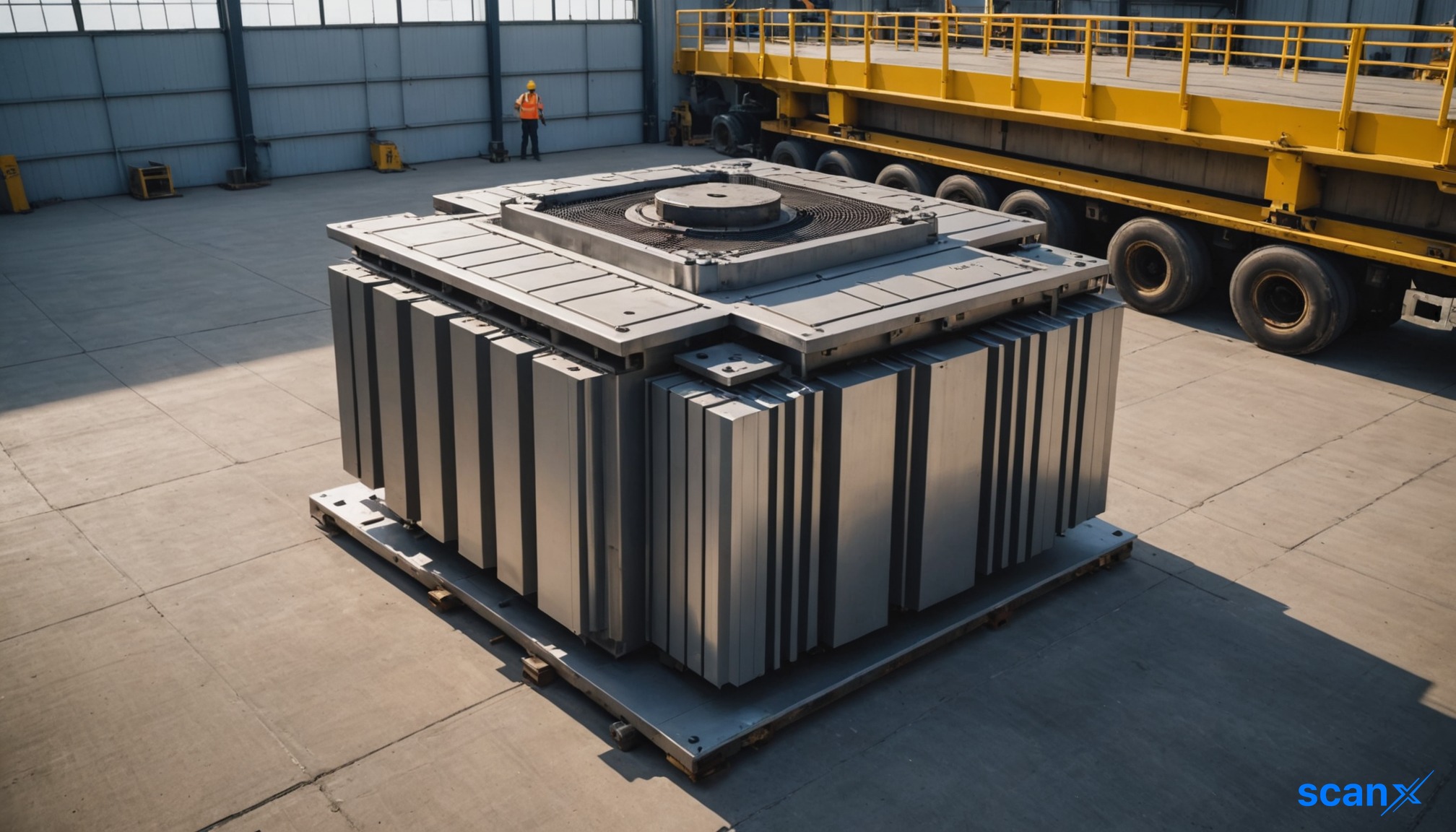

*this image is generated using AI for illustrative purposes only.
Raksan Transformers Limited, an ISO 9001:2015 certified transformer manufacturer based in New Delhi, has filed its Draft Red Herring Prospectus (DRHP) for an initial public offering. The company is raising ₹104.42 crore through a fresh issue, with the IPO scheduled to open on September 10, 2026, and close on September 15, 2026.
About the Company
Incorporated in 1995, Raksan Transformers transitioned from repair and servicing to full-scale manufacturing in 2005–06. Headquartered in Rohini, New Delhi, the company operates two manufacturing facilities in Sonepat, Haryana. These facilities span 3,037.5 sq. mtrs and hold a combined installed capacity of 15,00,000 KVA for distribution transformers and 1,350 MVA for power transformers. The company maintains in-house capabilities for core cutting, wire drawing, and tank fabrication.
The product portfolio includes distribution transformers, power transformers, transformers for solar applications, and special-purpose transformers. Raksan serves a broad customer base comprising government entities, public sector undertakings (PSUs), power utilities, EPC contractors, and industrial clients. As of FY2026, the company had approximately 121 customers and is an approved vendor for over 20 government and public sector entities. It holds BIS approval for transformers up to 2,500 kVA and BEE certification for Level 2/3 energy efficiency ratings.
Financial Performance
Raksan Transformers demonstrated significant growth in recent fiscal years. Revenue from operations increased from ₹160.95 crore in FY2024 to ₹324.21 crore in FY2025, and further to ₹363.11 crore in FY2026. Profit after tax (PAT) rose from ₹7.59 crore in FY2024 to ₹20.38 crore in FY2025, reaching ₹33.60 crore in FY2026. The PAT margin expanded from 4.72% in FY2024 to 9.25% in FY2026. The EBITDA margin for FY2026 was reported at 12.87%.
| Particulars | FY2024 (₹ Cr) | FY2025 (₹ Cr) | FY2026 (₹ Cr) |
|---|---|---|---|
| Revenue from Operations | 160.95 | 324.21 | 363.11 |
| Total Expenses | 152.12 | 297.03 | 318.44 |
| Profit Before Tax | 10.40 | 27.75 | 45.19 |
| Profit After Tax | 7.59 | 20.38 | 33.60 |
| Total Assets | 67.02 | 117.90 | 155.59 |
| Total Equity | 23.74 | 44.12 | 77.42 |
As of March 31, 2026, the company reported total borrowings of ₹20.74 crore against total equity of ₹77.42 crore, resulting in a debt-to-equity ratio of 0.27:1. Operating cash flow improved to ₹14.89 crore in FY2026 from ₹5.36 crore in FY2025.
Why the Company Is Raising Funds
The company intends to utilize the proceeds from the ₹104.42 crore fresh issue for the following purposes:
- Manufacturing Facility Expansion: ₹62.14 crore for setting up a new manufacturing facility at Liwaspur, Sub-Tehsil Rai, Distt. Sonepat, Haryana, including factory shed construction and plant machinery installation.
- Working Capital Requirements: ₹35.00 crore to meet trade receivables, inventories, and day-to-day operational needs.
- Repayment of Borrowings: ₹7.28 crore for partial or full repayment of certain existing borrowings.
- General Corporate Purposes: The residual amount will be used for operating expenses, business development, and other Board-approved purposes.
Business Strengths
- Established Manufacturing Infrastructure: Two facilities in Sonepat with comprehensive in-house capabilities, reducing external dependency.
- Strong Order Book: An order book of ₹329.68 crore comprising 83 orders as of June 30, 2026, providing near-term revenue visibility.
- Government and PSU Relationships: Approved vendor status with over 20 government entities and PSUs, benefiting from power sector investments and rural electrification programs.
- Quality Certifications: ISO 9001:2015, BIS, and BEE Level 2/3 certifications, which are critical for participating in government tenders.
- Experienced Management: Led by promoter Sanjeev Kanda, who brings approximately 31 years of industry experience.
Key Risks
- Customer Concentration: The company derives 50.73% to 72.99% of its revenue from government and public utility customers. Top 10 customers accounted for 83.52% of revenue in FY2024, 82.82% in FY2025, and 71.49% in FY2026.
- Competitive Bidding Risks: Revenue depends on winning competitive tenders. The company was previously abstained from bidding for three consecutive tenders by Paschimanchal Vidyut Vitran Nigam Limited in 2019.
- Raw Material Volatility: Raw material costs constitute 80.18% of revenue from operations in FY2026. The company has no long-term supply agreements, exposing it to price fluctuations.
- Working Capital Pressure: Net working capital increased from ₹897.22 lakhs in FY2024 to ₹4,468.07 lakhs in FY2026, reflecting capital-intensive operations and lengthy payment cycles.
- Geographic Concentration: In FY2026, 97.13% of total revenue was derived from just six states: Uttar Pradesh, Bihar, Madhya Pradesh, West Bengal, Haryana, and Jammu & Kashmir.
- Execution Delays: Delayed delivery charges rose significantly from ₹16.49 lakhs in FY2024 to ₹320.17 lakhs in FY2025 and ₹263.84 lakhs in FY2026.
Important IPO Dates
- IPO Opening Date: 10-Sep-2026
- IPO Closing Date: 15-Sep-2026
- Allotment Date: 16-Sep-2026
- Listing Date: 18-Sep-2026
Offer Details
- Issue Type: Initial Public Offering (IPO)
- Fresh Issue Size: ₹104.42 Crore
- Offer for Sale (OFS): Nil
- Price Band: Not Available
- Lot Size: Not Available
Bottom Line
Raksan Transformers is leveraging strong financial growth and a robust order book to raise ₹104.42 crore for capacity expansion and working capital. While the company benefits from India’s power sector investments and maintains a conservative leverage profile, high customer concentration, geographic reliance on six states, and rising working capital requirements remain key risks.

How will the new manufacturing facility in Sonepat alter Raksan Transformers' capacity utilization rates and address current execution delays?
What strategies will the company employ to mitigate margin compression risks given that raw materials constitute over 80% of operating costs without long-term supply agreements?
Will the IPO proceeds enable Raksan to diversify its geographic revenue base beyond the six states that currently account for 97% of its income?
 16
16





 Access 50+ Readymade Screeners
  Use 200+ Custom Filters
  Get Full Market Insights





