Helio files S-1 for $8M Nasdaq IPO to fund space tech R&D

scanx
Reviewed by
Riya DScanX News Team
Key Highlights
  • Helio Corporation filed Form S-1 with the SEC for a proposed public offering
  • The company intends to raise approximately $8 million in the underwritten deal
  • Shares are slated for listing on Nasdaq under the ticker symbol HLEO
  • R.F. Lafferty & Co., Inc. acts as the sole book-running manager
powered bylight_fuzz_icon
54129874

*this image is generated using AI for illustrative purposes only.

Helio Corporation (OTCID: HLEO) filed a registration statement on Form S-1 with the U.S. Securities and Exchange Commission (SEC) for a proposed underwritten public offering. The company intends to raise approximately $8 million through the sale of common stock.

The developer of space-based solar power and lunar hardware has applied to list its shares on The Nasdaq Stock Market LLC under the symbol "HLEO." Completion of the offering is contingent upon Nasdaq's approval of the listing application, with no assurance provided regarding final approval or completion.

Offering Structure and Underwriters

R.F. Lafferty & Co., Inc. serves as the sole book-running manager for the firm commitment offering. The number of shares to be offered and the price per share have not yet been determined. These securities may not be sold, nor may offers to buy be accepted, prior to the time the registration statement becomes effective.

Use of Proceeds

The company plans to allocate net proceeds from the offering toward several strategic initiatives, including debt reduction and operational expansion. The specific intended uses are:

  • Research and development
  • Sales and marketing efforts
  • Facilities and manufacturing capabilities
  • Repayment of certain outstanding promissory notes
  • Working capital and general corporate purposes

Company Profile

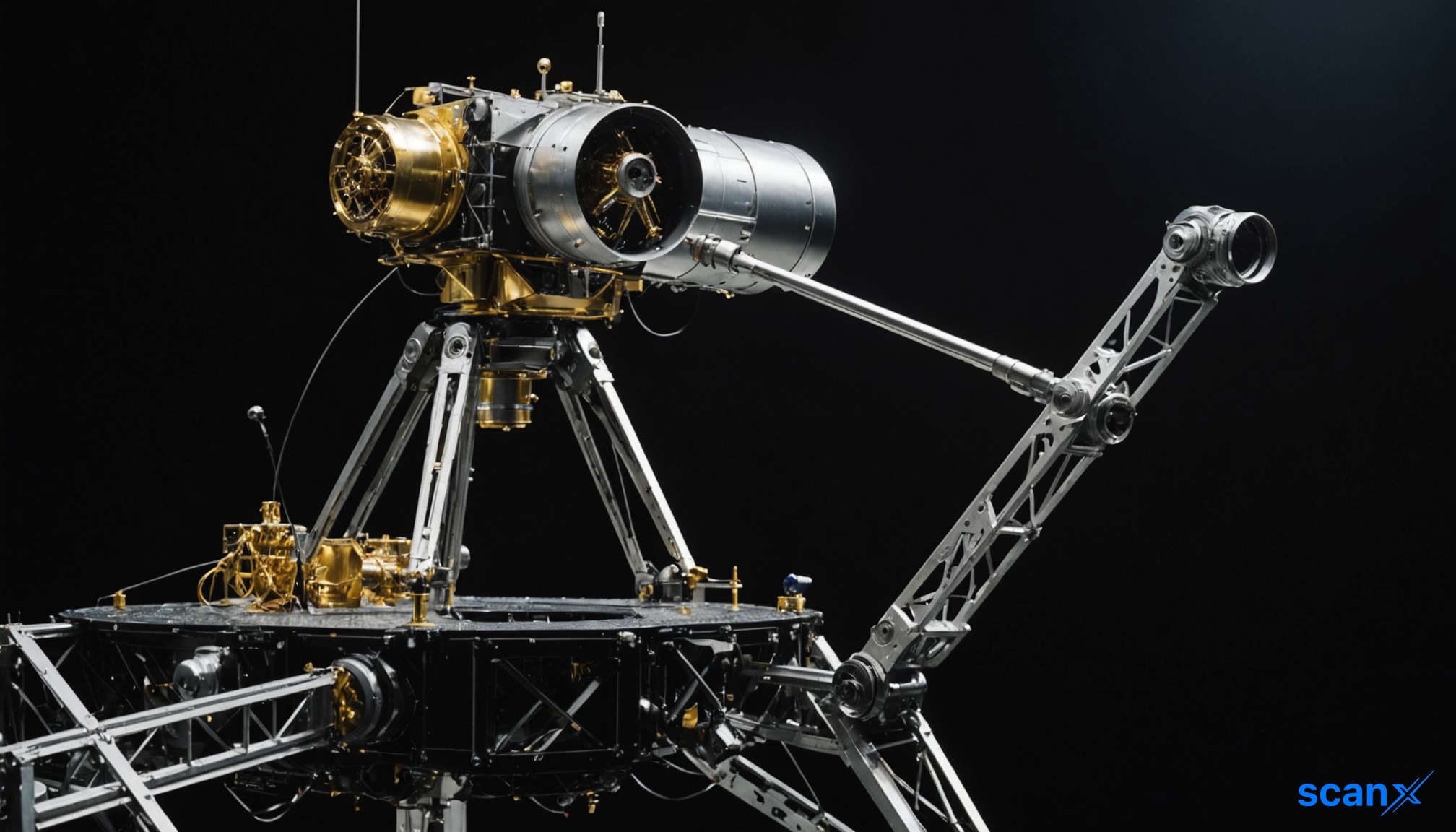
Founded in 2018, Helio Corporation designs and delivers space mechanisms, antenna systems, and space systems engineering services. The company is currently developing technologies for space-based solar power, described in the filing as an early-stage initiative. The company's Chairman and CEO is Ed Cabrera.

Regulatory Status

The registration statement has been filed but has not yet become effective. This announcement does not constitute an offer to sell or a solicitation of an offer to buy these securities. Investors are encouraged to review reports filed with the SEC for further details on risk factors, including the ability to obtain financing on acceptable terms.

Disclaimer: This article is AI-generated using data from ViewTrade. ScanX is not liable for any inaccuracies.

How will the specific allocation of the $8 million proceeds impact Helio Corporation's timeline for achieving commercial viability in space-based solar power?

What are the potential dilution effects on existing shareholders once the final share count and price per share are determined for this offering?

How does Helio's current debt structure and reliance on promissory notes affect its financial flexibility post-offering compared to peers in the space hardware sector?

like16
dislike

Helio links Starship orbital success to sub-$0.10 space solar power

scanx
Reviewed by
Jubin VScanX News Team
Key Highlights
  • Helio projects levelized cost of energy below $0.10 per kWh using Starship data
  • SpaceX Starship flew 26 Starlink V3 satellites in first meaningful orbital payload test
  • Elon Musk cited China’s electricity production as roughly three times that of the US
  • Helio’s satellite design mimics Starlink stacking but requires fewer units for power transmission
powered bylight_fuzz_icon
52745865

*this image is generated using AI for illustrative purposes only.

Helio Corporation (OTCID: HLEO) stated that SpaceX’s recent Starship orbital flight significantly lowers the economic barriers to Space-Based Solar Power (SBSP). The company projects a levelized cost of energy below $0.10 per kilowatt hour when factoring in Starship’s anticipated reusability and launch cadence.

This assessment follows SpaceX’s September 28, 2026, flight, which the firm described as its first orbital mission delivering meaningful payload, specifically 26 Starlink V3 satellites. Helio views this volume deployment capability as critical infrastructure for its compact satellite design, which mirrors the stacking architecture used by Starlink but requires fewer units to achieve power transmission thresholds.

Industry demand and energy constraints

The company pointed to recent remarks by industry leaders as evidence of rising energy needs. At an event on September 29, Elon Musk noted that China’s electricity production is roughly three times that of the United States, identifying power generation as a potential constraint on AI competitiveness. NVIDIA CEO Jensen Huang similarly described energy as the foundation of the AI computing stack. Helio positions its technology as a direct response to this growing demand for new energy supply.

Launch economics and cost reduction

Launch costs remain the largest variable in determining whether SBSP can compete with terrestrial energy sources. Each satellite launched carries a cost that must be recovered through delivered electricity. Musk has indicated expectations for Starship to achieve a weekly or twice-weekly launch cadence next year. Helio argues that increased frequency and reusability directly reduce the cost per kilowatt hour, moving the industry closer to viable commercial operations.

Factor Detail Impact on SBSP Economics
Launch Vehicle SpaceX Starship Enables high-volume payload delivery
Payload Capacity 26 Starlink V3 satellites Demonstrates stacking and deployment model
Target LCOE Below $0.10 per kWh Achievable with projected launch cadence
Energy Demand China produces 3x US electricity Highlights urgency for new supply sources

What the numbers show

A direct correlation exists between the disclosed launch cadence targets and Helio’s internal cost estimates. The projection of a sub-$0.10 per kilowatt hour levelized cost is explicitly contingent on Starship achieving the stated weekly or twice-weekly launch frequency. This indicates that Helio’s commercial viability model is not solely dependent on technological maturity of its solar arrays, but is heavily leveraged against the operational efficiency and reusability rates of third-party launch providers. Without the specific cadence improvements mentioned, the current cost structure for orbital infrastructure would likely remain prohibitive for competitive energy generation.

Disclaimer: This article is AI-generated using data from ViewTrade. ScanX is not liable for any inaccuracies.

How might regulatory hurdles regarding orbital debris and spectrum allocation impact the timeline for commercial SBSP deployment?

What specific milestones must Helio Corporation achieve to secure funding before SpaceX reaches the projected weekly launch cadence?

How will potential competition from other reusable launch providers affect Helio's dependency on SpaceX for cost competitiveness?

like15
dislike

More News on Helio Corporation