

Helio files fourth patent for lunar instrument deployment tech


- Helio filed its fourth provisional patent application on September 9, 2026
- The patent covers a launcher for deploying lunar instruments without moving the lander
- The technology operates without explosive charges to protect sensitive equipment
- Lunar hardware currently represents approximately 60% of Helio's overall business

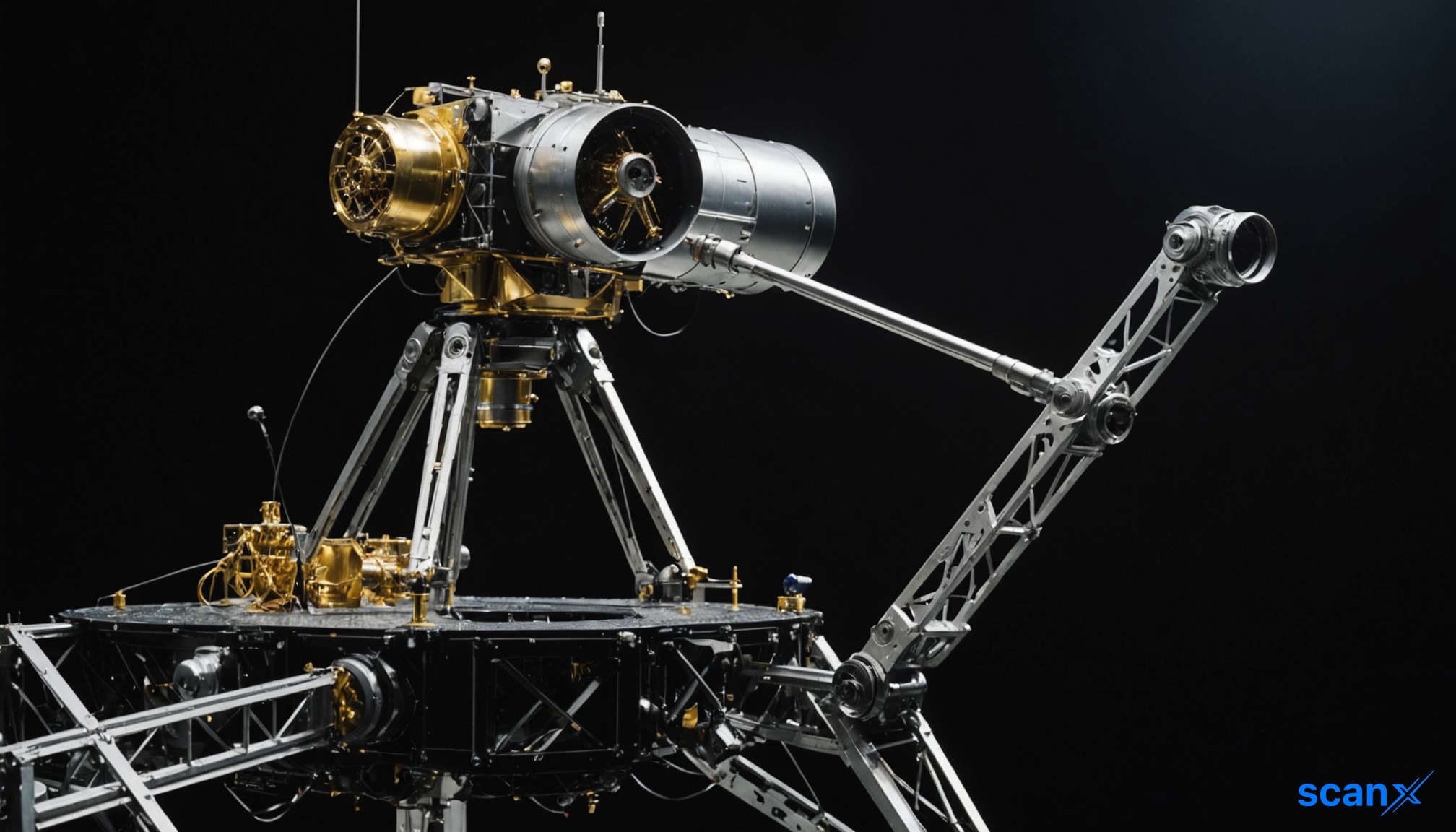

*this image is generated using AI for illustrative purposes only.
Helio has filed its fourth provisional patent application with the United States Patent and Trademark Office, covering a launcher technology designed to deploy scientific instruments across the lunar surface.
The filing, submitted on September 9, 2026, protects a system developed by Helio's Heliospace subsidiary. The technology enables the movement of instruments from a lander to multiple points on the surrounding terrain without repositioning the lander or using separate rovers.
Technical Design and Safety
The launcher is engineered to minimize interference from the lander's own equipment and electrical systems. By allowing precise placement of instruments, the design helps capture a broader picture of the landing site while adhering to tight space and engineering constraints.
Safety is a core component of the mechanism. The system operates without explosive charges to reduce shock to sensitive equipment during deployment. This approach gives mission designers greater freedom to position instruments exactly where scientific requirements dictate.
Mission Heritage and Scope
The underlying launcher design has been utilized in prior space missions, providing Helio with practical experience in real mission environments. The current filing seeks to protect this proven technology for future lunar and planetary applications.
While focused on lunar operations, the patent's scope extends to instrument deployment from spacecraft, rovers, and other planetary platforms. This positions the technology for potential use across a wide range of future space missions.
Intellectual Property Strategy
Vikas Parti, Board Director and Head of Intellectual Property, leads Helio's patent program. Under his direction, the company has embedded patent strategy directly into its engineering process, systematically identifying inventions emerging from research and development.
"Reaching our fourth filing in a short period is a concrete result of that effort," Parti said. "We are identifying the inventions within our existing R&D and pursuing protection with future products and customer needs in mind."
Business Context
Lunar hardware currently represents approximately 60% of Helio's overall business. The new patent filing reinforces the company's commitment to translating research and development investment into durable, protectable value.
What the Numbers Show
With lunar hardware accounting for 60% of the company's business, the focus on protecting deployment technology highlights a strategic alignment between revenue concentration and intellectual property generation. This suggests that IP protection is being prioritized specifically for the segment driving the majority of the company's commercial activity.

How might Helio's non-explosive deployment technology influence the design constraints and payload capabilities of upcoming commercial lunar landers?
Given that lunar hardware comprises 60% of Helio's business, will this patent strategy encourage diversification into other planetary markets to mitigate revenue concentration risks?
What are the potential licensing opportunities for Helio to monetize this launcher technology with other aerospace contractors or government agencies?
 16
















 Access 50+ Readymade Screeners
 Use 200+ Custom Filters
 Get Full Market Insights





