Tesla Inc. faces avoidance from most institutional investors because its stock is considered too expensive relative to expected profit growth, according to The Future Fund LLC's Gary Black. He argued that the technological advantages of Full Self-Driving (FSD) are insufficient to justify the current valuation, which he described as stretched.
Valuation metrics deter investment
In an X post on Wednesday, Black pointed to Tesla’s 2026 price-to-earnings ratio of 205 times. This compares with projected earnings-per-share growth of 35% from 2026 through 2030. These figures produce a PEG ratio of 6.0 times, a metric that compares valuation with expected growth. Black also cited declining forward earnings estimates, noting that 2027 EPS estimates are down 17% year-to-date.
"$TSLA‘s stretched valuation (2026 P/E of 205x vs 2026-2030 eps growth of +35%, PEG 6.0x) and declining forward earnings estimates (2027 EPS est -17% YTD) are why most institutional investors avoid the stock," Black wrote.
Earnings revisions and market performance
Black supported his assessment with charts showing quarterly and annual earnings-per-share forecasts through 2030, alongside consensus 2027 adjusted earnings estimates that have fallen steadily in recent months. He stated that valuation and negative earnings revisions explain why Tesla continues to underperform the Nasdaq 100. Black emphasized that while the unique technological advantages of Tesla FSD are recognized, valuation and falling analyst estimates are critical factors often overlooked.
Product lineup and sales drivers
Beyond valuation, Black questioned whether FSD is driving sales, noting that consumers have little awareness of the technology. He contrasted this with Rivian Automotive Inc., which recently rallied following a delivery beat without relying on autonomy hype. Additionally, Black suggested that Tesla’s second-quarter delivery beat was aided by a spike in gas prices to $3.86 per gallon over the July Fourth weekend, up from $2.98 before the conflict in Iran. He indicated that Tesla shares could rebound if analysts raise second-quarter and full-year 2026 earnings estimates.
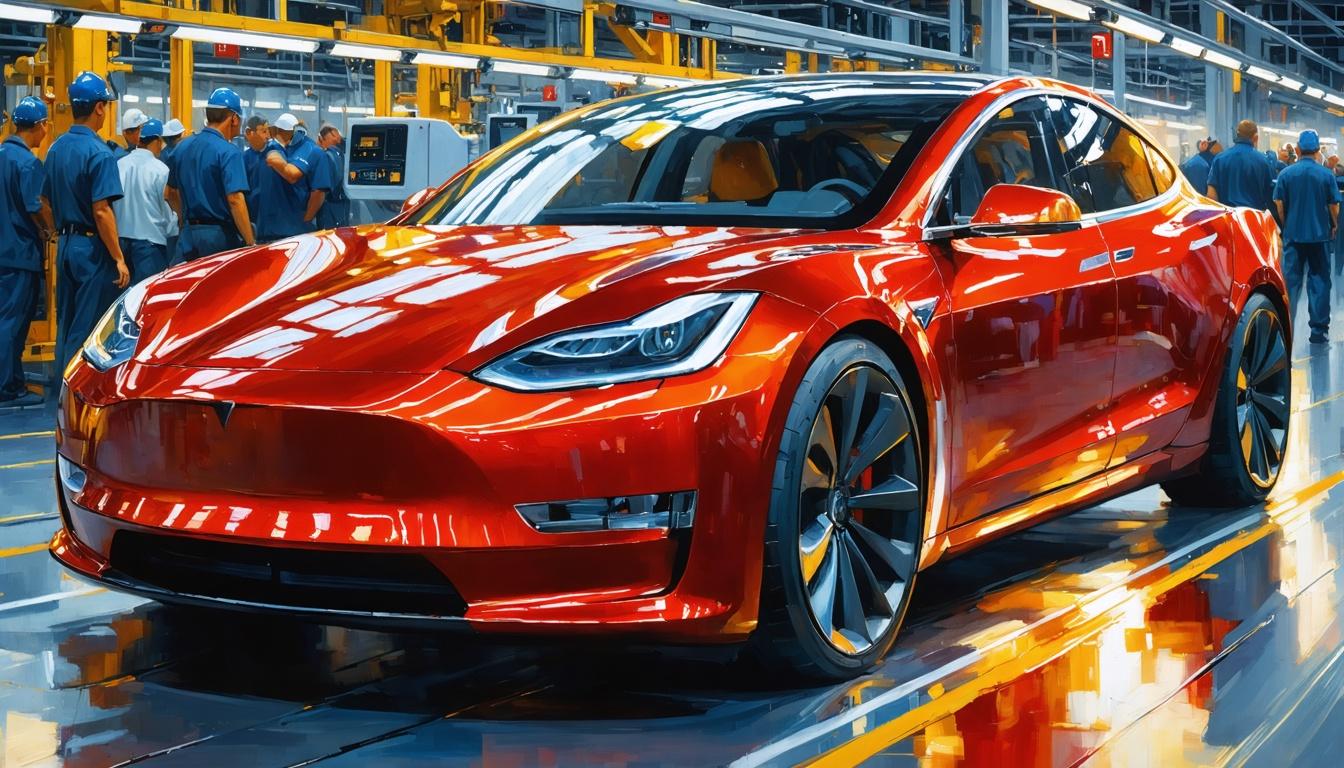
To address concerns about an aging lineup, Tesla recently launched the three-row Model Y L in the U.S. at $61,990, with deliveries expected around September or October. Investor Ross Gerber of Gerber Kawasaki noted that the post-delivery stock decline has renewed focus on lineup challenges and falling gas prices.
| Metric |
Value |
| 2026 P/E Ratio |
205 times |
| 2026-2030 EPS Growth |
35% |
| PEG Ratio |
6.0 times |
| 2027 EPS Estimate Change |
-17% YTD |
| Model Y L Price |
$61,990 |





 20
20












 Create Custom Screeners
  Access 200+ Pre-built Filters
  Use 50+ Readymade Screener





