

Zhejiang Electric Power opens zero-carbon library in Laos


- Zhejiang Electric Power Corporation opened Laos' first zero-carbon library at Luang Prabang Peace Secondary School on August 29
- The facility uses an integrated photovoltaic-storage-charging microgrid to overcome local grid limitations and hydropower seasonal constraints
- Prefabricated cabins were assembled in four days, providing air conditioning and digital resources to students who previously traveled 200 kilometers for books
- An "Air Classroom" linked the school with Hangzhou, offering cross-border educational exchanges on culture and science
- Future plans include 21 class hours delivered by partners including the Zhejiang Provincial Science Popularization Association

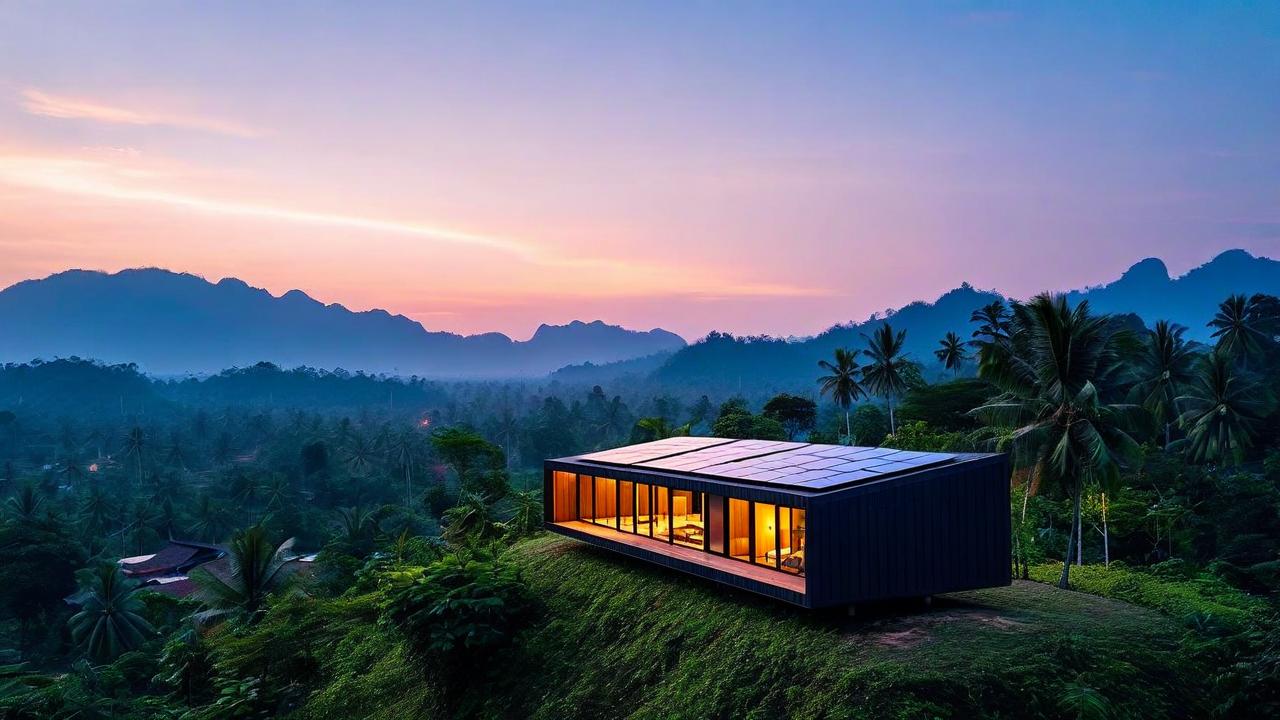

*this image is generated using AI for illustrative purposes only.
Laos' first zero-carbon library opened at Luang Prabang Peace Secondary School on August 29. Built with support from Zhejiang Electric Power Corporation, the facility integrates solar power, energy storage, and charging facilities to address local electricity challenges.
The project coincides with the 65th anniversary of China-Laos diplomatic relations and the jointly declared "China-Laos Friendship Year." It follows a June visit by Thongloun Sisoulith, General Secretary of the Lao People's Revolutionary Party and President of Laos, to Zhejiang, where both sides agreed to deepen their community with a shared future.
Infrastructure and Technology
Laos relies heavily on hydropower, with seasonal water flow changes straining supply during the dry season. Luang Prabang also faces limited grid infrastructure. To address this without upgrading the main grid, State Grid Zhejiang Electric Power Co., Ltd. deployed an integrated photovoltaic-storage-charging microgrid solution.
The library was manufactured as prefabricated cabins in Zhejiang factories and assembled in Laos in four days. Rooftop photovoltaic panels generate electricity during the day, storing surplus power for nighttime use to ensure a stable energy supply.
| Feature | Detail |
|---|---|
| Location | Luang Prabang Peace Secondary School |
| Technology | Integrated photovoltaic-storage-charging microgrid |
| Construction Time | Four days (assembly) |
| Support Entity | State Grid Zhejiang Electric Power Co., Ltd. |
Educational Impact
The facility provides a cool, air-conditioned environment with computers, televisions, and Chinese-Lao bilingual books. Students previously traveled over 200 kilometers to Vientiane for extracurricular reading resources. The library now offers immediate access to digital libraries and quiet study spaces.
On the same day, an "Air Classroom" connected Luang Prabang Peace Secondary School with Gaoqiao Junior High School in Xiaoshan District, Hangzhou. The session covered Chinese culture, science, and new-type power systems. Volunteers helped students assemble a robot dog, while Lao students shared traditions like the Water Splashing Festival.
Future Initiatives
Zhang Jun, head of the "Green Energy TO" public welfare team, described the model as "new energy + new education." The library will partner with the Zhejiang Provincial Science Popularization Association, the Abin Volunteer Service Center of State Grid Hangzhou Power Supply Company, and the Xiaoshan District Library of Hangzhou.
These partners will provide 21 class hours across five dimensions, including natural science and traditional culture. A UN Sustainable Development Goals science base beside the library features power-generating bicycles and photovoltaic benches to demonstrate green development concepts.

How scalable is the prefabricated microgrid model for other remote schools in Laos facing similar grid infrastructure deficits?
What specific metrics will be used to evaluate the long-term educational impact of the 'Air Classroom' and bilingual resources on student performance?
Will this pilot project influence broader bilateral energy agreements between State Grid Zhejiang and Lao utilities beyond educational facilities?
 17
17




 Access Market Heat-map & Insights
  Create, Save & Share your Screener
  Use 200+ Screening Filters





