South Korea says Iran seeks clarification on Hormuz role; talks not linked to US deals

scanx
Reviewed by
Shraddha JScanX News Team
Key Highlights
  • South Korea and France discussed security contributions for the Strait of Hormuz
  • Seoul clarified that troop deployment was not part of the bilateral discussions
  • Iran has sought clarification regarding reports of a South Korean role in the region
  • The Hormuz security review is not linked to US investment talks
powered bylight_fuzz_icon
50447959

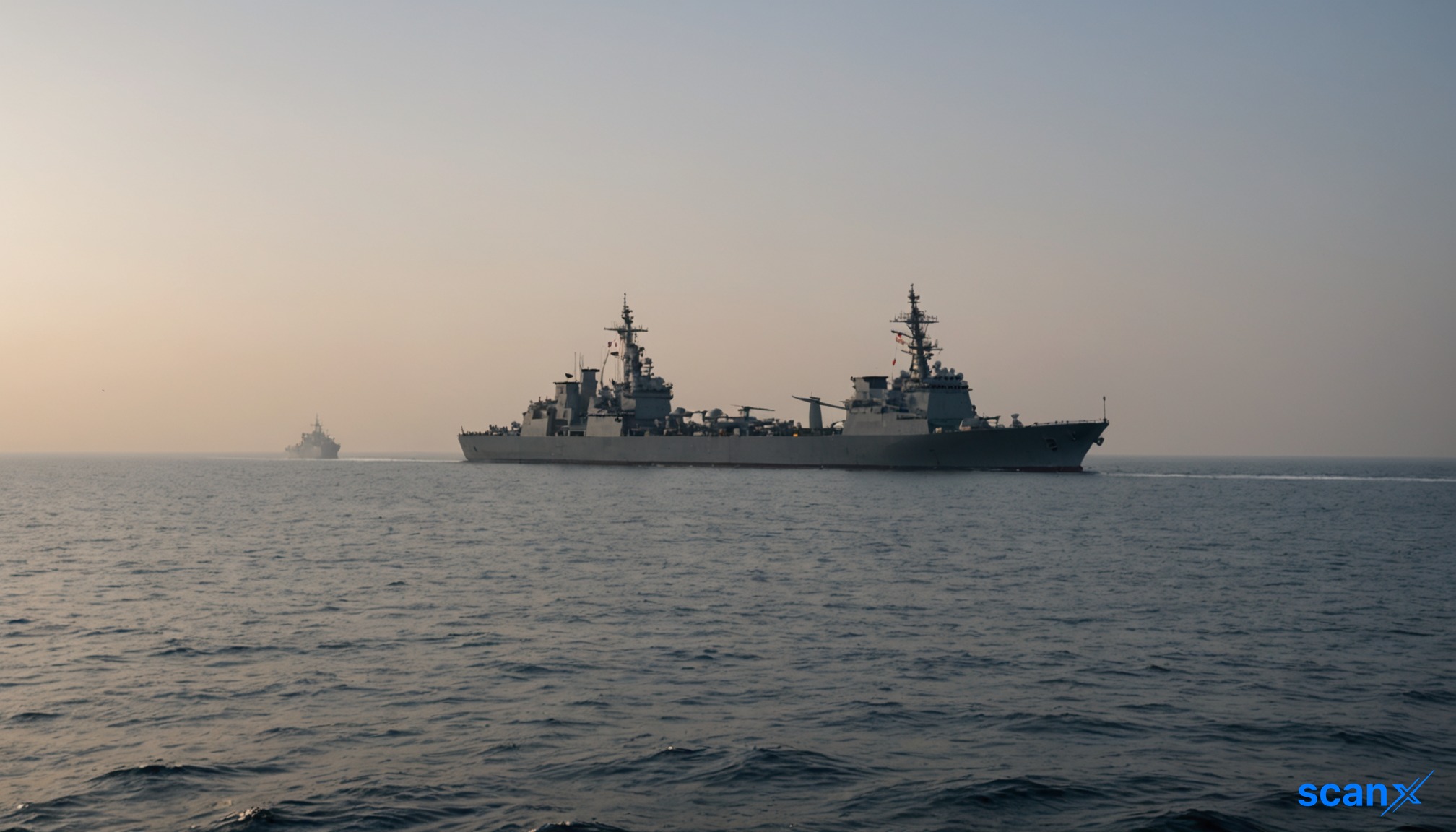
*this image is generated using AI for illustrative purposes only.

South Korea stated that Iran has sought clarification regarding reports of a South Korean role in the Strait of Hormuz. The presidential office confirmed this development while discussing security contributions with France.

Key points from the talks

The South Korean presidential office confirmed the bilateral exchange focused on contributions to Strait of Hormuz security. The office was explicit that the question of deploying troops was not raised or discussed during the engagement.

Topic Status
Strait of Hormuz security contributions Discussed
Troop deployment Not discussed

Iran has separately sought clarification over reports concerning a potential South Korean role in the region. The presidential office emphasized that the review of Hormuz security matters is not linked to ongoing investment talks with the United States.

The Strait of Hormuz is a strategically critical waterway through which a significant share of global energy shipments pass, making its security a matter of international concern. The nature and scope of any prospective contributions by either country were not detailed in the statement from Seoul's presidential office.

How might Iran's request for clarification influence future diplomatic negotiations between Tehran and Seoul regarding energy or trade agreements?

Could the discussion of Strait of Hormuz security with France signal a broader shift in South Korea's foreign policy towards increased international security cooperation?

What are the potential market implications for global oil prices if South Korea's role in Hormuz security remains ambiguous or escalates?

like18
dislike

South Korea reportedly targets $22.3 billion Texas gas project

scanx
Reviewed by
Ritika DScanX News Team
Key Highlights
  • South Korea reportedly agreed to a $22.3 billion investment in a 6.3-gigawatt Texas gas plant
  • The project aims to meet electricity demand from AI data centers in Encinal, Texas
  • Officials state details are unconfirmed as negotiations and parliamentary approvals remain ongoing
  • The investment is part of a broader $350 billion commitment under a new U.S.-South Korea trade deal
  • Seoul also pledged to purchase $100 billion of U.S. LNG under the agreement
powered bylight_fuzz_icon
50333571

*this image is generated using AI for illustrative purposes only.

South Korea has reportedly reached an understanding to invest $22.3 billion in a Texas gas-fired power plant, marking its first U.S. investment under last year’s trade agreement.

The proposed project involves developing a 6.3-gigawatt facility in Encinal, Texas, aimed at addressing rising electricity demand from AI data centers. According to reports cited by Reuters from South Korean media outlet Edaily, the deal was finalized on Monday.

Official Caution on Deal Status

Despite the media reports, South Korea’s Industry Ministry stated that details regarding the Texas project were inaccurate and that discussions with Washington remain ongoing. The ministry emphasized that specific terms cannot be confirmed until negotiations conclude and required procedures, including parliamentary approval, are completed.

Additionally, the ministry clarified that no decision has been made on constructing a nuclear power plant in the United States, contradicting earlier speculation about broader energy investments.

Broader Trade Commitments

The potential investment is part of a larger trade framework announced last July, where South Korea committed to investing in the U.S. in exchange for favorable tariff treatment. Under this deal:

  • The U.S. imposed a 15% tariff on South Korean imports, reduced from a previously threatened 25% rate.
  • Seoul pledged to purchase $100 billion of U.S. liquefied natural gas (LNG) and other energy commodities.
  • South Korea committed to providing $350 billion through loans, loan guarantees, and equity investments rather than direct cash payments.

President Donald Trump previously described the $350 billion commitment as "upfront," though South Korean security advisors have noted complexities in immediate payment structures.

What the Numbers Show

The reported $22.3 billion investment for the Texas gas plant represents approximately 6.4% of the total $350 billion investment commitment South Korea made under the trade pact. This suggests the Texas project is a significant initial component of the broader financial arrangement, though it constitutes only a fraction of the total pledged capital.

The structure of the $350 billion commitment—primarily through loans, guarantees, and equity rather than direct cash—indicates that the actual liquidity impact on South Korea’s balance sheet may differ significantly from the headline figure, depending on the leverage and guarantee ratios employed.

How might the ongoing parliamentary approval process in South Korea impact the timeline for breaking ground on the Encinal facility?

What are the potential regulatory hurdles for a 6.3-gigawatt gas plant in Texas given current environmental policies and local zoning laws?

How will the structure of the $350 billion commitment as loans and guarantees rather than direct cash affect South Korea's sovereign credit rating and fiscal flexibility?

like16
dislike