

South Korea commits over $50 billion to Alaska LNG pipeline project


- South Korea pledged over $50 billion for an 807-mile Alaska LNG pipeline under a 2025 trade agreement
- Construction will take three years, with exports starting two years later; commercial viability assessment is ongoing
- Seoul also committed up to $120 billion for eight U.S. nuclear reactors and $22.3 billion for a Texas gas plant
- Profit split is 50:50 until investment recovery, shifting to 90:10 in favor of the U.S. thereafter

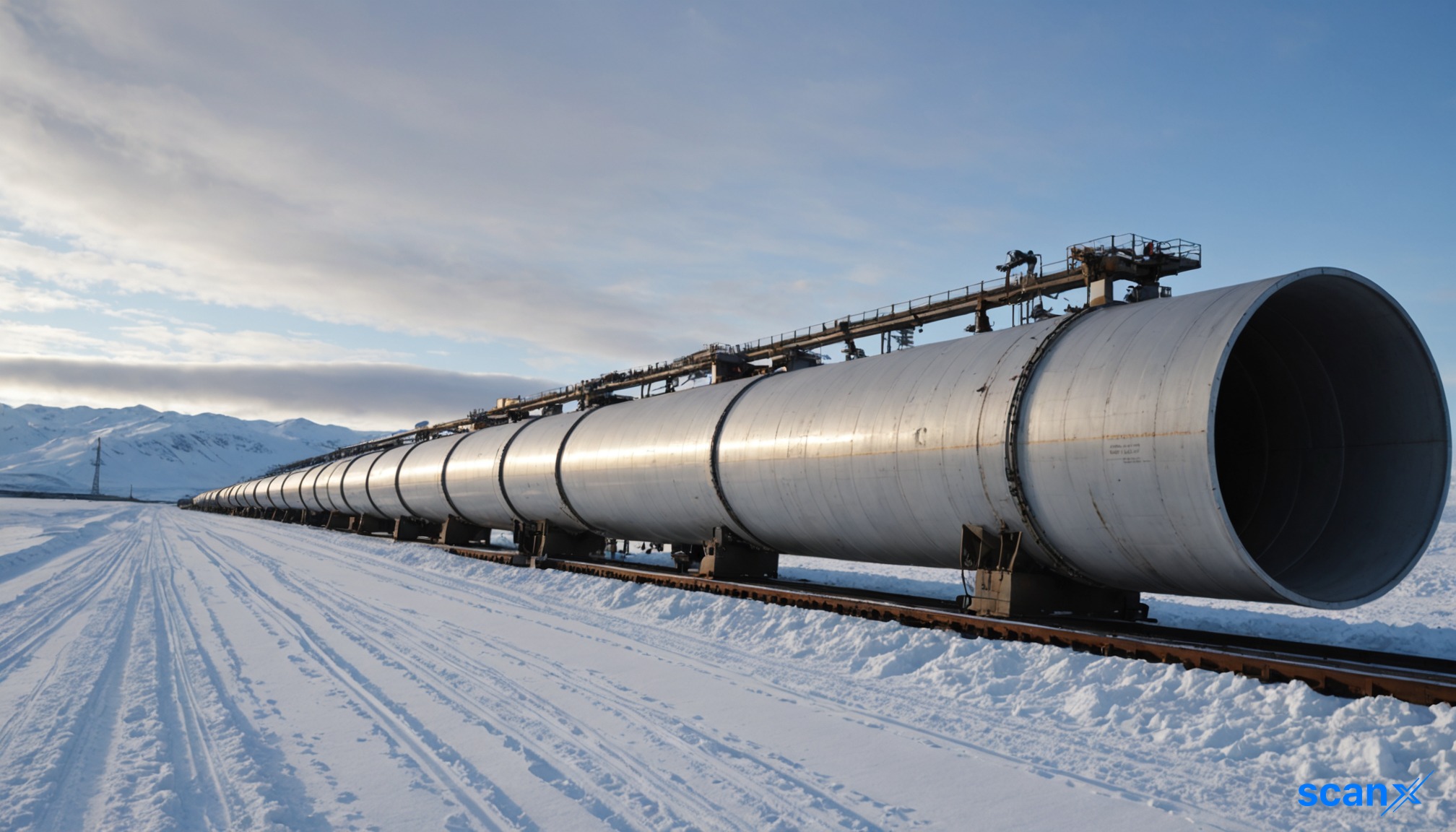

*this image is generated using AI for illustrative purposes only.
President Donald Trump unveiled an investment exceeding $50 billion from South Korea for a natural gas pipeline in Alaska. The initiative, part of a 2025 trade agreement, aims to link Alaska’s North Slope to a liquefied natural gas export terminal in southern Alaska.
Commerce Secretary Howard Lutnick confirmed the scale of the commitment, while Trump described the plans as one of the largest energy infrastructure investments in American history. The White House stated the project will decrease energy costs for Alaskans by ensuring a reliable and secure supply.
Project timeline and scope
The project entails an 807-mile natural gas pipeline. Construction is expected to span three years, with exports of liquefied natural gas starting two years after completion.
South Korean Trade and Industry Minister Kim Jung-kwan stated that Seoul is prioritizing project viability and national interests because the initiative involves taxpayers’ money. Both countries will assess the project’s commercial viability before deciding whether to move forward.
Broader US energy commitments
This announcement follows other major energy deals under the same trade framework. Earlier in September, South Korea and the U.S. reached an agreement on a Texas gas project worth around $22.3 billion. Known as "Project Star," this involves building a 6,472-MW gas-fired combined-cycle power plant to supply AI data centers.
Additionally, South Korea launched "Project Power," committing up to $120 billion to build eight U.S. nuclear reactors. This includes $100 billion for construction and $20 billion in contingency funding.
Investment structure and profit sharing
The investments are part of a broader $350 billion pledge by South Korea to secure better tariff terms. Under the trade deal, the U.S. lowered tariffs on South Korean imports to 15% from a threatened 25%. Seoul also committed to purchasing $100 billion in U.S. LNG and other energy products.
South Korean President Lee Jae Myung clarified that the LNG project and nuclear reactors must first be proven commercially viable. The profit split is structured as follows:
| Phase | Profit Split (US : South Korea) |
|---|---|
| Until principal and interest repaid | 50:50 |
| After investment recouped | 90:10 |
According to Nikkei Asia, the U.S. is entitled to 90% of the profit after Seoul recoups the investment. The White House did not immediately respond to requests for comments on specific project details.

How will the 90:10 profit split structure after investment recoupment impact South Korea's long-term return on investment and future energy cooperation with the U.S.?
What specific regulatory and environmental hurdles could delay the three-year construction timeline for the 807-mile Alaska pipeline?
How might the $350 billion South Korean investment pledge influence tariff negotiations and trade dynamics between the U.S. and other Asian allies?
 15
15



 Access Market Heat-map & Insights
  Create, Save & Share your Screener
  Use 200+ Screening Filters





