China Suspends Nvidia H200 Chip Orders as Beijing Pushes Domestic AI Alternatives

2 min read     Updated on 08 Jan 2026, 12:11 AM
scanx
Reviewed by
Shriram SScanX News Team
Overview

Beijing has instructed Chinese tech companies to halt Nvidia H200 chip orders while considering a domestic AI chip mandate. The move reflects broader US-China semiconductor tensions, with Nvidia caught between Washington's export controls and Beijing's push for technological independence. Recent US policy allowed H200 exports to China with a 25% revenue-sharing tax requirement.

29356856

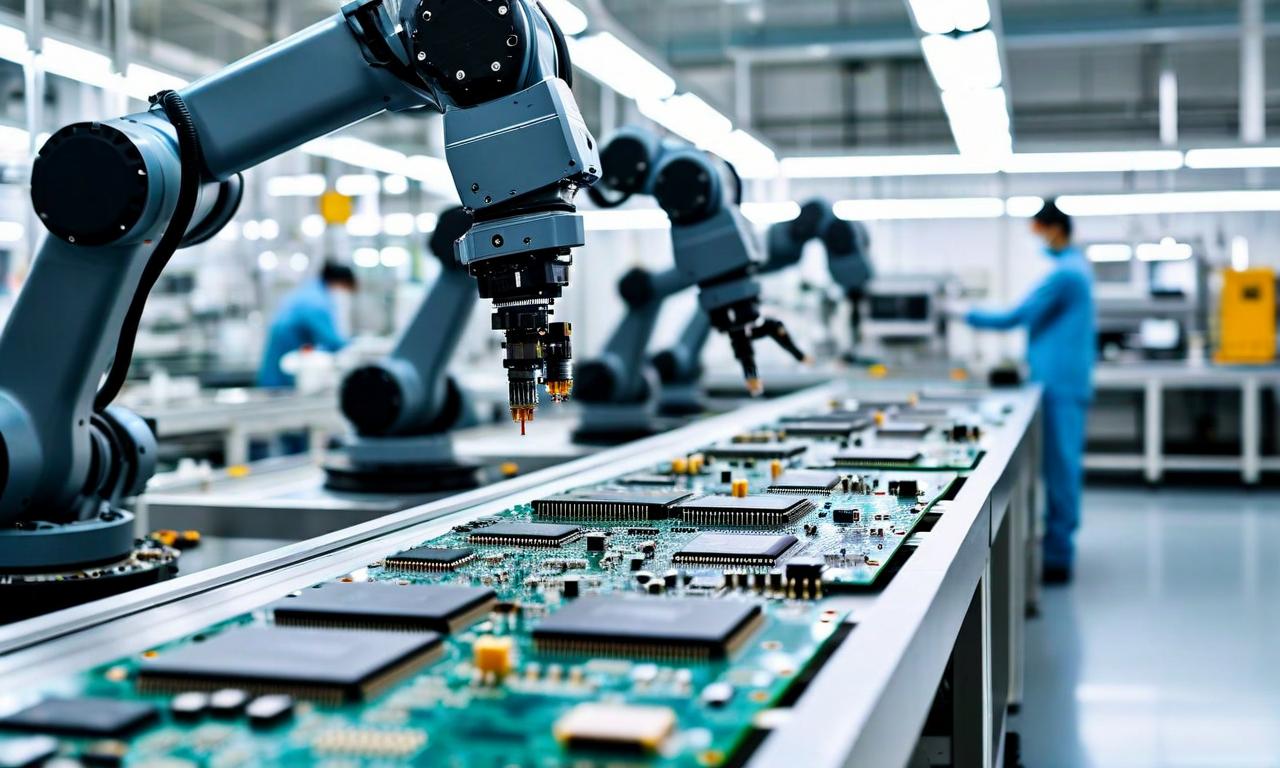
*this image is generated using AI for illustrative purposes only.

Beijing has directed Chinese technology companies to suspend orders for Nvidia's H200 artificial intelligence chips as the government considers implementing a mandate for domestic chip purchases. The move represents the latest development in escalating US-China tensions over semiconductor trade and technological independence.

Government Directive and Strategic Considerations

The suspension order was issued as Beijing evaluates whether to allow continued access to Nvidia's high-performance chips and under what specific conditions. According to sources familiar with the matter, the government aims to prevent local technology companies from rushing to stockpile US-designed chips before reaching a final decision on import policies.

Development: Details
Action Taken: Halt on Nvidia H200 chip orders
Scope: Chinese technology companies
Government Focus: Domestic AI chip mandate consideration
Strategic Goal: Reduce reliance on US semiconductor designs

Nvidia's Position Between Two Powers

Nvidia has found itself caught between competing pressures from Washington and Beijing. The United States continues tightening controls on exports of advanced semiconductors used in artificial intelligence applications, while Chinese companies simultaneously seek to reduce their dependence on American chip technology. This positioning has created significant challenges for the semiconductor giant's operations in one of its largest markets.

Nvidia CEO Jensen Huang acknowledged strong demand for the H200 chip in China during the Consumer Electronics Show, stating the company views purchase orders as signals of approval rather than expecting formal announcements from Beijing.

US Export Controls and Recent Policy Changes

The semiconductor trade dispute has evolved significantly under recent US policy adjustments. The previous administration approved exports of H200 chips to China, marking a notable reversal from earlier bans on advanced AI hardware. However, this approval came with a unique condition requiring Nvidia to pay a 25% revenue-sharing tax to the US government.

Policy Element: Status
US Export Licenses: Currently being processed
Processing Timeline: No set deadline
Revenue-Sharing Tax: 25% to US government
Chip Generation: H200 (predecessor to Blackwell)

Broader Technology Trade Tensions

Tensions over technology trade have emerged as a central feature of broader US-China conflicts, with semiconductors becoming a critical strategic flashpoint. Both nations view artificial intelligence capabilities and the underlying chip technology as essential to national competitiveness and security interests.

Liu Pengyu, spokesperson for the Chinese Embassy in the US, emphasized China's commitment to self-reliance while maintaining openness to international cooperation. "China is committed to basing its national development on its own strengths, and is also willing to maintain dialogue and cooperation with all parties to safeguard the stability of global industrial and supply chains," Liu stated.

Market Implications and Industry Response

The H200 represents Nvidia's previous-generation flagship technology, serving as the predecessor to the company's current Blackwell chip architecture. The suspension of orders affects a significant portion of global AI hardware demand, as Chinese technology companies have been major consumers of advanced semiconductor products.

US export licenses for the affected chips remain under processing, with regulatory authorities providing no definitive timeline for completion. This uncertainty adds complexity to both Nvidia's business planning and Chinese companies' technology procurement strategies, as the industry navigates evolving trade restrictions and national policy priorities.

like19
dislike

Nvidia Confronts Rising Competition and Market Challenges Despite AI Leadership

3 min read     Updated on 06 Jan 2026, 07:03 PM
scanx
Reviewed by
Anirudha BScanX News Team
Overview

Nvidia's stock has declined 9.1% from October record highs, losing $460 billion in market value amid growing competition from AMD and tech giants developing custom chips. Despite maintaining 90% AI chip market share, the company faces pressure from clients like Alphabet and Amazon creating proprietary solutions. Wall Street remains bullish with 76 of 82 analysts recommending buy, projecting 57% profit growth for fiscal 2027 and 37% stock price upside potential.

29251979

*this image is generated using AI for illustrative purposes only.

Nvidia, the world's most valuable company, faces mounting challenges as its stock experiences significant volatility despite maintaining dominance in the artificial intelligence chip market. The semiconductor giant's shares have declined 9.1% since reaching record highs on October 29, underperforming the broader S&P 500 Index as investors express concerns about AI spending sustainability and competitive pressures.

Market Performance and Valuation Impact

The recent decline represents a substantial shift for the AI chipmaker, which had achieved extraordinary growth over the past three years. The company's market performance tells a compelling story of both remarkable success and current uncertainty.

Metric Current Status Previous Peak
Stock Performance Since Oct 29: -9.1% Record high
Three-Year Gain: Nearly 1,200% Over 1,300%
Market Cap Lost: $460 billion From $5+ trillion peak
S&P 500 Contribution: 16% of bull run Since October 2022

The Santa Clara, California-based company's influence on broader market performance cannot be understated, with its contribution to the S&P 500's advance significantly exceeding Apple's 7% contribution during the same period.

Intensifying Competitive Landscape

Nvidia's dominance in AI accelerators, commanding over 90% market share, faces unprecedented challenges from multiple fronts. Advanced Micro Devices has secured significant data center orders from OpenAI and Oracle, with projections showing AMD's data center revenue jumping approximately 60% to nearly $26 billion in 2026.

Major technology companies representing over 40% of Nvidia's revenue are developing proprietary chip solutions:

  • Alphabet: Tensor processing units optimized for Gemini AI chatbot, with chip deal with Anthropic valued in tens of billions
  • Amazon, Meta, Microsoft: Building custom chips to reduce dependency on Nvidia's $30,000+ processors
  • Meta: Reportedly in talks to rent Google Cloud chips for 2026-2027 deployment

Broadcom has emerged as a significant beneficiary of this trend, with its application-specific integrated circuit (ASIC) business growth propelling the company to $1.6 trillion valuation, surpassing Tesla.

Strategic Response and Future Outlook

Nvidia has responded to competitive pressures through strategic acquisitions and technology licensing. The company's December 24 move to license technology and hire executives from startup chipmaker Groq demonstrates acknowledgment of growing demand for specialized, cost-effective chips. This acquisition provides access to low-latency semiconductors, offering alternative approaches for AI software deployment.

Financial Projections Fiscal 2027 Targets
Profit Growth: 57%
Sales Increase: 53%
Gross Margin Target: ~75%
Current Gross Margin (FY26): 71.2%

Wall Street Sentiment and Investment Outlook

Despite recent challenges, analyst sentiment remains overwhelmingly positive. Wall Street maintains strong confidence in Nvidia's prospects, with 76 of 82 analysts holding buy ratings and only one recommending selling. The average price target implies 37% gains over the next 12 months, potentially pushing market value above $6 trillion.

The company's valuation remains attractive relative to peers, trading at 25 times expected 12-month profits—cheaper than most Magnificent Seven stocks except Meta and less expensive than over 25% of S&P 500 companies.

Market Dynamics and Capital Investment

The AI infrastructure investment cycle continues expanding, with projected capital expenditures by Amazon, Microsoft, Alphabet, and Meta exceeding $400 billion in 2026, primarily targeting data-center equipment. OpenAI's commitment to $1.4 trillion spending over coming years, despite questions about the startup's funding capacity, illustrates the scale of planned AI investments.

CEO Jensen Huang emphasized continued strong demand during CES presentations, stating that "demand for Nvidia GPUs is skyrocketing" as AI models increase by an order of magnitude annually. The upcoming Rubin chip generation nears release, with customer trials expected soon.

While Nvidia faces increased competition and market scrutiny, Bloomberg Intelligence analysts project the company will maintain market share dominance for the foreseeable future, supported by the vast scale of AI computing demand and the company's technological leadership position.

like19
dislike
Explore Other Articles
Power Mech Projects Subsidiary Secures ₹1,563 Crore BESS Contract from WBSEDCL 4 hours ago
Elpro International Acquires Additional Stake in Sundrop Brands for ₹39.18 Crores 5 hours ago
Transformers & Rectifiers Targets ₹8000 Crore Order Book by FY26 End 6 hours ago
Reliance Industries Schedules Board Meeting for January 16, 2026 to Approve Q3FY26 Financial Results 7 hours ago
Krishival Foods Limited Completes Rights Issue Allotment of 3.33 Lakh Partly Paid-Up Equity Shares 6 hours ago
Raymond Realty Board Approves Employee Stock Option Plan 2025 Following Demerger 6 hours ago