
 NewsAustralia, India Invited to G7 Finance Ministers Meeting on Critical Minerals Supply Chains
Australia, India Invited to G7 Finance Ministers Meeting on Critical Minerals Supply Chains


US Treasury Secretary Scott Bessent announced Australia and India's invitation to a G7 finance ministers meeting on critical minerals supply chains. The meeting addresses China's 47-87% dominance in refining copper, lithium, cobalt, graphite and rare earths used in defense and technology sectors. Australia has signed an ₹71,400 crore project pipeline with the US, while recent Chinese export restrictions on Japanese companies highlight supply chain vulnerabilities.

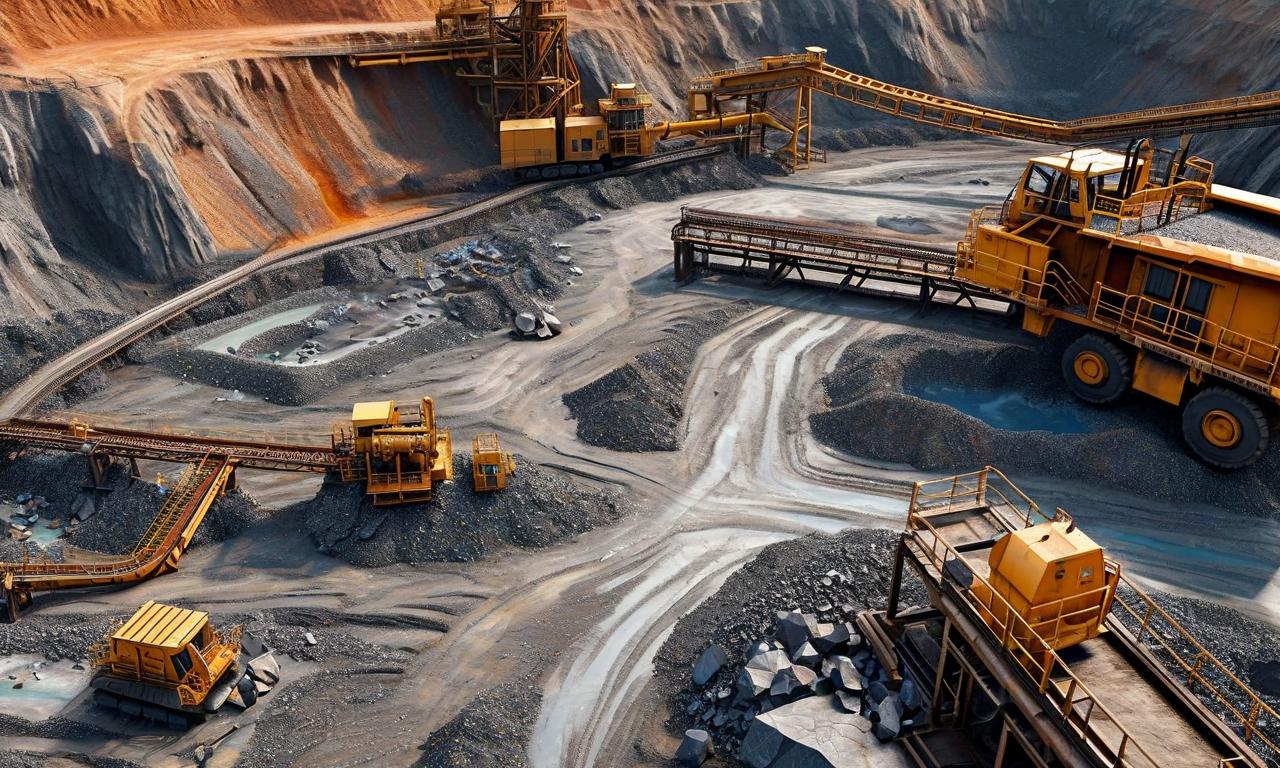

*this image is generated using AI for illustrative purposes only.
US Treasury Secretary Scott Bessent has announced that Australia and India will be invited to participate in a crucial G7 finance ministers meeting focused on critical minerals supply chains. The meeting, hosted by Bessent in Washington, represents a significant step in addressing Western nations' heavy dependence on China for essential minerals used in defense technologies, semiconductors, and renewable energy components.
Meeting Details and Participants
The G7 finance ministers meeting builds upon previous discussions, including a virtual session held in December. Bessent revealed that he had been advocating for a dedicated meeting on critical minerals since the G7 leaders' summit last summer. While Australia's participation has been confirmed, Bessent indicated uncertainty about India's acceptance of the invitation during his interview with Reuters.
| Meeting Details: | Information |
|---|---|
| Host: | US Treasury Secretary Scott Bessent |
| Location: | Washington |
| Previous Session: | Virtual meeting in December |
| Focus Area: | Critical minerals supply chains |
| Confirmed Invitees: | Australia, India |
China's Market Dominance
The urgency of this meeting stems from China's overwhelming control of the global critical minerals supply chain. According to International Energy Agency data, China dominates the refining of essential minerals across multiple categories. This dominance has created significant vulnerabilities for Western economies and their strategic industries.
| Mineral Type: | China's Refining Share |
|---|---|
| Copper: | 47-87% range |
| Lithium: | 47-87% range |
| Cobalt: | 47-87% range |
| Graphite: | 47-87% range |
| Rare Earths: | 47-87% range |
These minerals are critical components in defense technologies, semiconductors, renewable energy systems, batteries, and various refining processes, making their secure supply essential for national security and economic stability.
Strategic Partnerships and Agreements
Australia has emerged as a key partner in efforts to diversify critical minerals supply chains. The country signed a significant agreement with the US in October, featuring an ₹71,400 crore ($8.50 billion) project pipeline designed to counter China's market dominance. This partnership leverages Australia's proposed strategic reserve, which will supply vulnerable metals including rare earths and lithium.
Following the US agreement, Australia has reported receiving interest from multiple regions and countries, including Europe, Japan, South Korea, and Singapore, indicating growing international recognition of the need for supply chain diversification.
Recent Developments and Export Restrictions
The timing of Monday's meeting coincides with escalating tensions over critical minerals trade. Recent reports indicate that China has begun implementing restrictions on rare earth exports to Japanese companies, including powerful magnets containing these materials. Additionally, China has banned exports of dual-use items to the Japanese military, demonstrating the strategic weaponization of critical minerals supply chains.
Despite these restrictions affecting other nations, Bessent noted that China continues to fulfill its commitments regarding US soybean purchases and critical mineral shipments to American firms, suggesting a differentiated approach to trade relationships.
G7 Action Plan Implementation
The G7 group, comprising the United States, Britain, Japan, France, Germany, Italy, Canada, and the European Union, established an action plan in June aimed at securing supply chains and strengthening their economies. Most G7 members face significant dependence on Chinese rare earth supplies, making the development of alternative sources a strategic priority for the alliance.
The inclusion of Australia and India in these discussions reflects the G7's recognition that addressing critical minerals supply chain vulnerabilities requires broader international cooperation beyond the traditional advanced economy grouping.
 17
17






 Access Market Heat-map & Insights
  Create, Save & Share your Screener
  Use 200+ Screening Filters





