FTAI Aviation 10-year return turns $1,000 into $17,147

scanx
Reviewed by
Ritika DScanX News Team
Key Highlights
  • A $1,000 investment in FTAI Aviation 10 years ago is now worth $17,147.92
  • FTAI Aviation produced an average annual return of 32.98% over the last decade
  • The stock outperformed the market by 19.36% on an annualized basis
  • Current market capitalization stands at $18.03 billion with a share price of $175.72
powered bylight_fuzz_icon
51898823

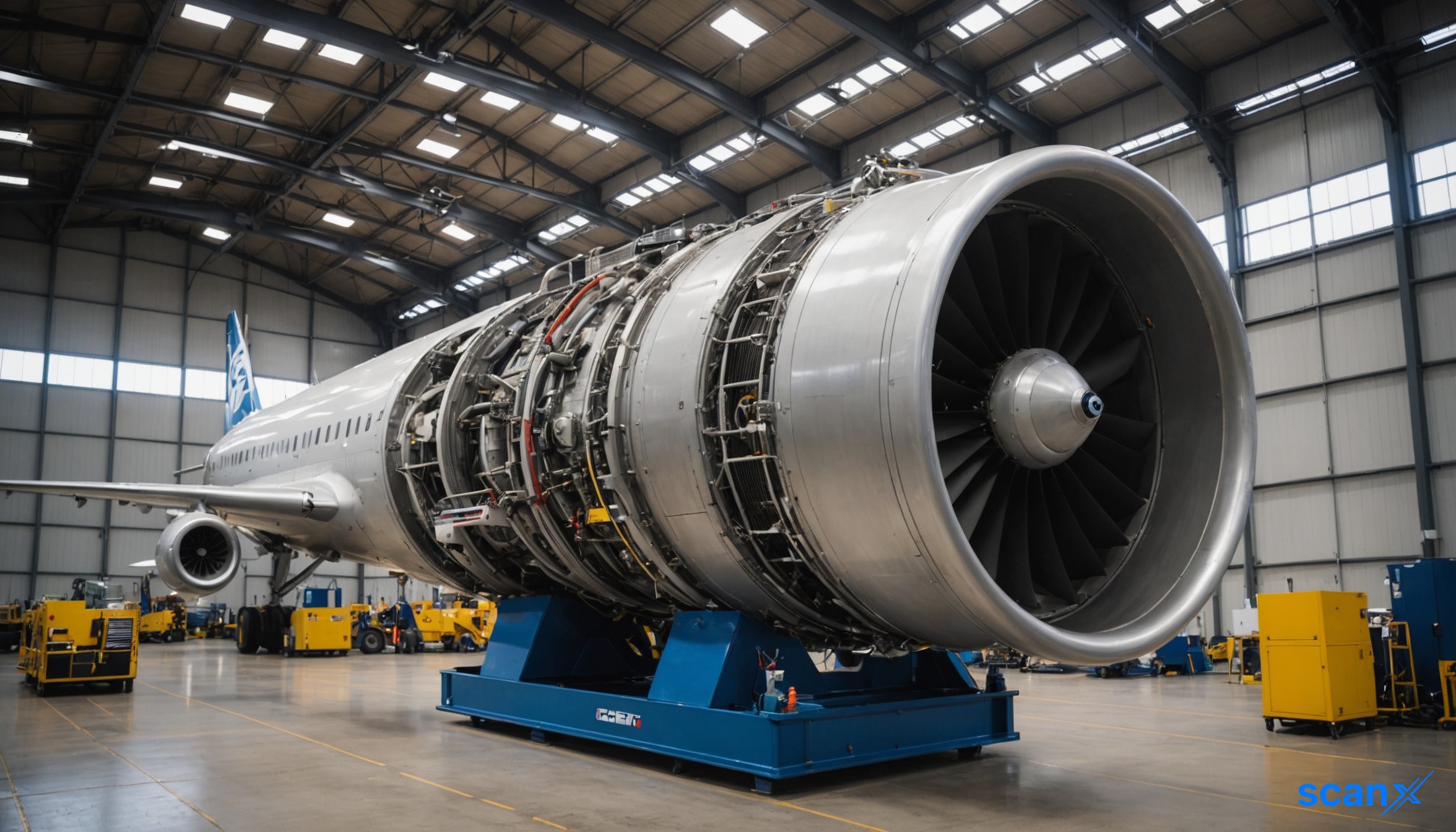
*this image is generated using AI for illustrative purposes only.

FTAI Aviation (NASDAQ: FTAI) has delivered a 32.98% average annual return over the past decade, significantly outperforming the broader market by 19.36% on an annualized basis.

An initial investment of $1,000 made 10 years ago would have grown to $17,147.92 as of the current reporting period. This substantial appreciation reflects the power of compounded returns over a long holding period.

Current valuation and performance metrics

The company currently holds a market capitalization of $18.03 billion. The stock price at the time of writing was $175.72, serving as the basis for the calculated current value of the historical investment.

Metric Value
Initial Investment $1,000
Current Value $17,147.92
Average Annual Return 32.98%
Market Outperformance 19.36% (annualized)
Market Capitalization $18.03 billion
Current Share Price $175.72

Impact of compounded growth

The data highlights the significant difference compounded returns can make in cash growth over an extended period. While the source does not provide quarterly breakdowns or operational drivers for this specific performance, the magnitude of the increase from $1,000 to over $17,000 underscores the long-term impact of the stock's trajectory.

This article was generated by Benzinga's automated content engine and reviewed by an editor.

Disclaimer: This article is AI-generated using data from ViewTrade. ScanX is not liable for any inaccuracies.

How will rising interest rates impact FTAI Aviation's cost of capital and future asset acquisition strategies?

What specific operational efficiencies or fleet expansion plans are driving the sustainability of FTAI's recent high returns?

How does FTAI's current valuation compare to peers in the aerospace leasing sector amid shifting travel demand?

like16
dislike

FTAI stock dips 0.36% despite 5-year GMF maintenance deal

scanx
Reviewed by
Jubin VScanX News Team
Key Highlights
  • FTAI Aviation shares fell 0.36% to $189.06 despite a new deal announcement
  • Partnership with GMF secures 5-year engine maintenance capacity in Asia-Pacific
  • Initial scope covers CFM56 engines and GTCP131-9 APUs, expanding to LEAP series
  • Wall Street maintains Buy consensus with average price target of $339
powered bylight_fuzz_icon
51703673

*this image is generated using AI for illustrative purposes only.

FTAI Aviation Ltd. (NASDAQ: FTAI) shares traded lower by 0.36% at $189.06 on Wednesday, despite the company formalizing a five-year strategic collaboration with PT Garuda Maintenance Facility Aero Asia Tbk (GMF). The agreement, signed during MRO Asia-Pacific 2026 in Singapore, guarantees maintenance capacity for FTAI while positioning GMF as a key regional partner.

The partnership builds on an existing relationship where GMF provides engine maintenance services for FTAI. The new framework initially covers CFM56-5B and CFM56-7B engines and GTCP131-9 series APUs. It aims to progressively expand into deeper module and piece-part capabilities, as well as next-generation engines including the CFM LEAP series. This move leverages GMF’s established facility and qualified workforce alongside FTAI’s technical expertise.

Component Initial Focus Area Future Expansion
Engines CFM56-5B, CFM56-7B CFM LEAP
APUs GTCP131-9 Series Deeper module capabilities
Duration 5 Years Long-term partnership

Strategic Objectives

David Moreno, President of FTAI, stated that the region holds a large and growing share of the company's customer base. By committing engine volumes to GMF, the partnership aims to place maintenance capacity closer to these customers, thereby reducing turnaround times. The collaboration is also expected to strengthen the engine MRO supply chain by improving access to materials, spare parts, and components, which may enhance availability and cost efficiency.

Andi Fahrurrozi, CEO of GMF, noted that the collaboration responds to growing demand from FTAI and the broader aviation market. He emphasized that the partnership will help broaden GMF’s customer base across Asia-Pacific and globally while strengthening its technical capabilities. GMF is Indonesia’s largest MRO provider and has served more than 190 customers across over 70 countries.

Market Reaction and Technical Outlook

Despite the operational news, FTAI shares faced selling pressure. At $189, the stock trades 1.5% below its 20-day SMA and 7.9% below its 50-day SMA, keeping the intermediate trend under pressure. Shares also remain 17.4% below the 100-day SMA and 20.3% below the 200-day SMA. The RSI stands at 46.50, signaling neutral momentum, with resistance near $194.50 and support around $179.

Wall Street maintains a bullish consensus on FTAI with an average price target of $339. Barclays maintained an Overweight rating and lowered its target to $310 on Sept. 16. Morgan Stanley maintained an Overweight rating and raised its target to $360 on Aug. 21, while BTIG maintained a Buy rating and lowered its target to $350 on Aug. 4.

ETF Exposure and Passive Fund Flow Risk

FTAI carries significant weight in several small and mid-cap ETFs, which may influence trading volumes through automatic rebalancing:

  • Morgan Stanley Pathway Small-Mid Cap Equity ETF (NYSE: MSSM): 0.94% Weight
  • Sofi Next 500 ETF (NYSE: SFYX): 2.11% Weight
  • Virtus Silvant Small/Mid Growth ETF (NYSE: SSMG): 2.19% Weight

Because FTAI carries significant weight in these funds, any major inflows or outflows for these ETFs will likely trigger automatic buying or selling of the stock.

What the Numbers Show

While specific financial values for the contract are not disclosed, the five-year guaranteed capacity term indicates a shift from transactional service agreements to a long-term structural dependency. This duration suggests FTAI is securing stable maintenance slots to mitigate regional capacity constraints, while GMF gains predictable revenue visibility from a major asset owner. The focus on CFM56 engines highlights a strategy to extend the life of current-generation assets even as the industry transitions toward LEAP engines. The divergence between the strategic nature of the deal and the immediate stock decline suggests the market may be pricing in broader sector headwinds or technical resistance rather than reacting negatively to the specific partnership.

Disclaimer: This article is AI-generated using data from ViewTrade. ScanX is not liable for any inaccuracies.

How might the transition from CFM56 to CFM LEAP engine maintenance impact FTAI's long-term capital expenditure requirements and margin structure?

What specific regulatory or geopolitical risks in Indonesia could affect the reliability of GMF as a primary maintenance hub for FTAI's global fleet?

Given the significant weight of FTAI in small and mid-cap ETFs, how sensitive is the stock's price action to broader sector outflows versus company-specific fundamentals?

like15
dislike

More News on FTAI Aviation