

West Fraser Timber Q2 Results: EPS misses estimate, sales drop 6.4%


West Fraser Timber's Q2 results showed an EPS of $(0.78), missing the $(0.54) estimate by 44.44%. Sales dropped 6.40% YoY to $1.434 billion, also missing the $1.528 billion forecast. The widening loss indicates margin pressure.

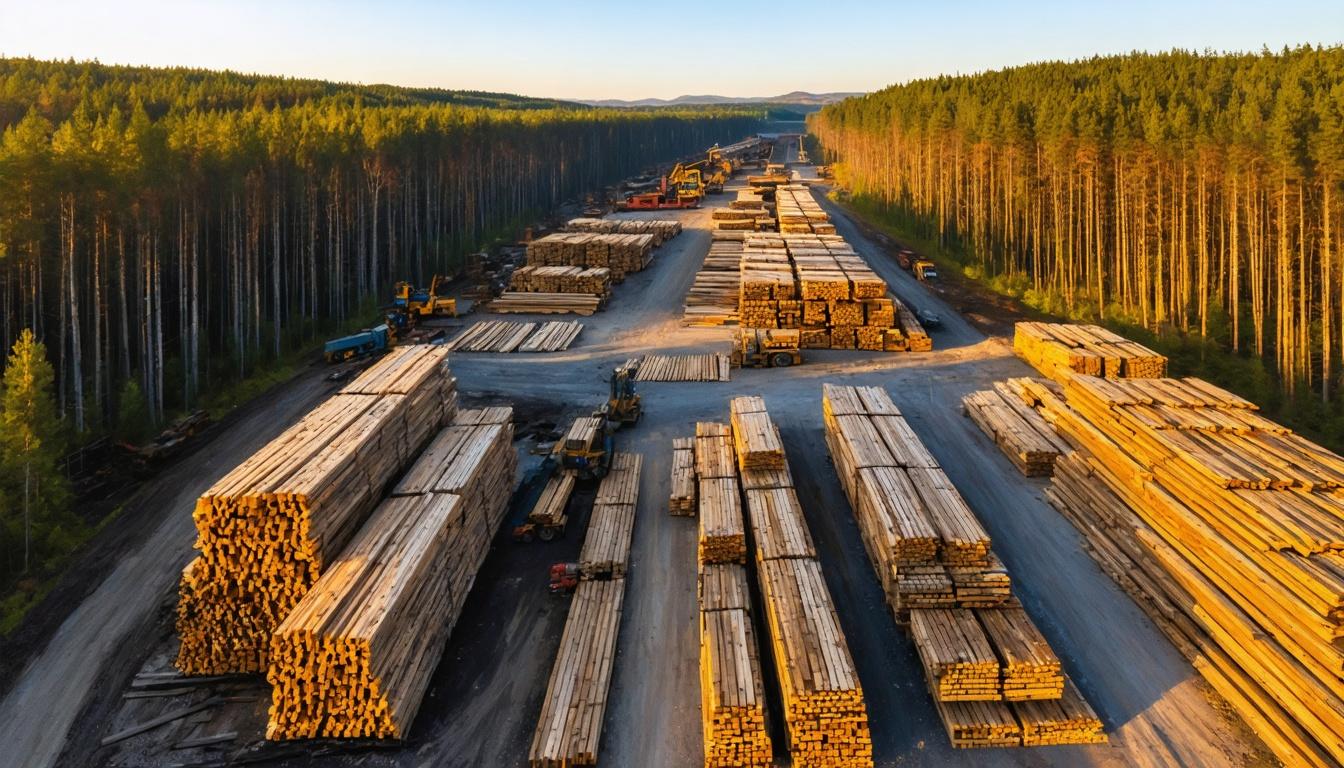

*this image is generated using AI for illustrative purposes only.
West Fraser Timber (NYSE: WFG) reported second-quarter earnings that missed analyst expectations on both profitability and revenue fronts, signaling continued pressure on its operational performance. The company posted a loss per share (EPS) of $(0.78), which missed the consensus estimate of $(0.54) by 44.44 percent. This represents a deepening of losses compared to the same period last year, where the EPS was $(0.38), marking a 105.26 percent increase in the loss magnitude year-over-year.
The filing reveals that top-line growth also lagged behind market projections. West Fraser Timber reported quarterly sales of $1.434 billion, missing the analyst consensus estimate of $1.528 billion by 6.14 percent. Compared to the prior year period, sales decreased by 6.40 percent from $1.532 billion. The dual miss on earnings and revenue highlights a challenging operating environment for the timber producer.
Financial Performance Overview
The following table details the key financial metrics for Q2 against analyst estimates and the previous year's performance:
| Metric | Reported Value | Analyst Estimate | YoY Change |
|---|---|---|---|
| Earnings Per Share | $(0.78) | $(0.54) | Loss widened 105.26% |
| Sales | $1.434 billion | $1.528 billion | Down 6.40% |
What the Numbers Show
The divergence between the reported EPS and the estimate is substantial. While analysts anticipated a loss of $(0.54), the actual loss of $(0.78) indicates that cost structures or margin compression were more severe than projected. The 44.44 percent miss on the EPS estimate suggests that operational inefficiencies or lower-than-expected pricing power impacted the bottom line disproportionately to the revenue miss. Furthermore, the widening of the loss from $(0.38) to $(0.78) year-over-year, despite only a modest 6.40 percent decline in sales, points to significant margin erosion during the quarter.

What specific operational inefficiencies or cost structure changes drove the disproportionate widening of EPS losses compared to the modest decline in sales?
How might West Fraser Timber's management adjust its pricing strategy or production volumes in Q3 to mitigate further margin erosion?
Are there indications that the broader softwood lumber market is experiencing a sustained downturn, or is this miss specific to West Fraser's regional operations?
 16
16






 Access 50+ Readymade Screeners
  Use 200+ Custom Filters
  Get Full Market Insights





