Verizon offers $25,000 reward to curb network vandalism

scanx
Reviewed by
Anirudha BScanX News Team
Key Highlights

Verizon Communications Inc. launched a $25,000 reward program on Aug. 11, 2026, to combat network vandalism causing service outages in Southern California. The initiative responds to 6,297 attacks in California in 2025, which resulted in $252.6M in economic losses. The company is collaborating with law enforcement to identify perpetrators threatening critical communications infrastructure.


powered bylight_fuzz_icon
48039210

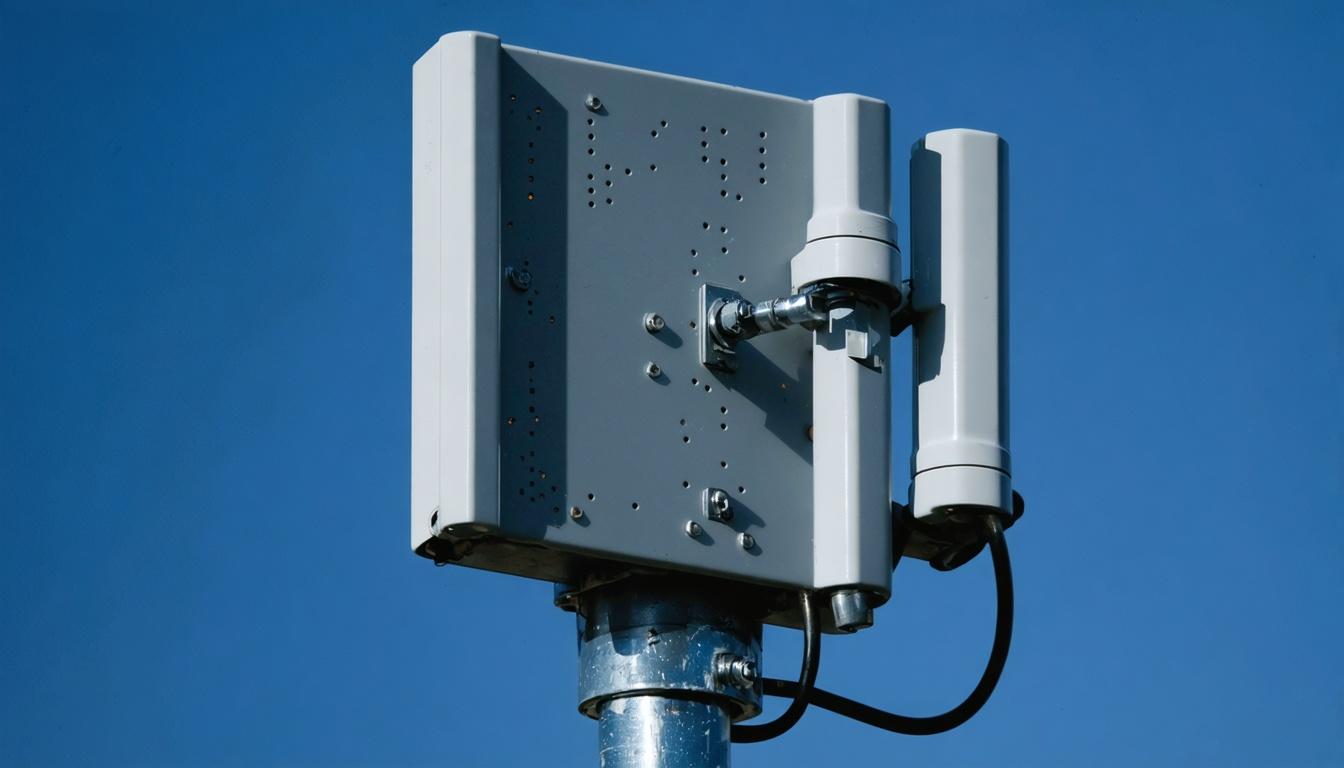
*this image is generated using AI for illustrative purposes only.

Verizon Communications Inc. announced a $25,000 reward program on Aug. 11, 2026, targeting individuals responsible for vandalizing its network infrastructure. The initiative aims to secure information leading to the arrest and conviction of perpetrators who have cut fiber cables, causing service interruptions for thousands of customers in Los Angeles and parts of Southern California. This move addresses a growing threat to community safety, emergency services, and healthcare connectivity, as well as the personal safety risks faced by vandals during these criminal acts.

The announcement follows a series of incidents over the past several days where vandals severed multiple fiber cables. Vandana Venkatesh, Verizon’s chief legal officer, described these acts as criminal threats to public safety. "We are actively investigating several recent incidents and are pursuing all avenues to assist law enforcement in finding and convicting the perpetrators of these acts," Venkatesh said. Joe Russo, EVP & President of Global Networks and Technology, emphasized the critical nature of the network, stating, "Our network and security teams are working with law enforcement at all levels in tracking down the perpetrators and bringing these egregious acts to an end."

Industry data highlights the severity of the issue, particularly in California, which recorded the largest economic losses from such outages at $252.6M. The state is identified as the hardest hit, with 6,297 attacks reported in 2025. Los Angeles alone experienced 1,131 incidents during that period. California and Texas together account for more than half of all reported vandalism incidents nationwide.

Metric Value
Reward Amount $25,000
California Economic Losses $252.6M
Attacks in California (2025) 6,297
Incidents in Los Angeles (2025) 1,131

Verizon generated revenues of $138.2 billion in 2025. The company serves millions of customers worldwide and nearly all of the Fortune 500, headquartered in New York City. Verizon stated its commitment to protecting America’s infrastructure against the thousands of cable vandalism incidents the industry faces annually. The company urges anyone witnessing vandalism to call 911 immediately and then contact Verizon’s Security department at 1-800-997-3287.

What the Numbers Show

The concentration of vandalism incidents in California underscores a regional vulnerability in critical infrastructure. With Los Angeles accounting for nearly 18% of the state's total attacks (1,131 out of 6,297), the economic impact of $252.6M suggests that downtime costs significantly outweigh the value of stolen materials. This disparity indicates that the primary driver for Verizon's reward program is not just asset recovery but mitigating the broader operational and safety risks associated with widespread service disruptions.

Disclaimer: This article is AI-generated using data from ViewTrade. ScanX is not liable for any inaccuracies.

Will Verizon's $25,000 reward program prompt other major telecom providers to implement similar incentives, potentially establishing a new industry standard for infrastructure protection?

How might the high concentration of vandalism in California influence state legislation regarding penalties for critical infrastructure sabotage in 2027?

Could the recurring nature of these attacks accelerate Verizon's investment in underground fiber deployment or AI-driven predictive security systems to reduce physical vulnerability?

like19
dislike

Verizon raises adjusted EPS guidance to $4.99-$5.04 on strong KPIs

scanx
Reviewed by
Riya DScanX News Team
Key Highlights

Verizon reported Q2 revenue of $34.25 billion, missing estimates, but beat adjusted EPS expectations at $1.30. The company raised full-year guidance and showed strong subscriber growth, with postpaid net adds reaching 184,000. Analysts remain positive but emphasize the need for continued subscriber gains in H2.

powered bylight_fuzz_icon
46715190

*this image is generated using AI for illustrative purposes only.

Verizon Communications Inc raised its full-year adjusted earnings per share guidance to a range of $4.99 to $5.04 from $4.95 to $4.99, signaling confidence in operational resilience despite a second-quarter revenue miss. The telecom giant reported Q2 revenue of $34.25 billion, falling short of the $35.11 billion consensus estimate, driven by a material decline in wireless equipment revenue due to slowing upgrade volumes and lower device subsidies. However, the company delivered on key performance indicators (KPIs) critical to investors, including accelerating mobility and broadband service revenue growth of 2.8% year-on-year.

The divergence between GAAP and adjusted metrics highlights the impact of non-recurring items on Verizon’s bottom line. GAAP diluted EPS fell 22% year-over-year to 92 cents, with net income declining 22.9% to $3.9 billion. In contrast, adjusted EPS reached $1.30, beating the $1.27 analyst consensus. This performance suggests that core services remain robust even as hardware sales face headwinds. Following the results, Verizon shares gained 2.6% to trade at $126.56, reflecting investor approval of the revised forward-looking outlook and improved cost efficiencies.

Subscriber Growth and Churn Improvements

Verizon’s operational strength was evident in its subscriber metrics, which showed significant improvement in the second quarter. Postpaid phone net adds surged to 184,000, up from 55,000 in the previous quarter and surpassing the consensus estimate of 111,000. Consumer phone churn improved to 0.84% from 0.90%, while total postpaid phone churn decreased to 0.92% from 0.97% last year. Broadband subscribers grew 12% year-on-year to 348,000, comprising 193,000 fixed wireless net adds and 155,000 fiber net adds, bringing total broadband connections to 17.1 million.

Metric Q2 Result Previous Quarter Consensus Estimate
Postpaid Phone Net Adds 184,000 55,000 111,000
Consumer Phone Churn 0.84% 0.90% —
Total Postpaid Churn 0.92% 0.97% —
Broadband Subscribers 348,000 — —

Analyst Outlook and Future Challenges

Scotiabank analyst Maher Yaghi reiterated a Sector Outperform rating on Verizon, raising the price target from $51.50 to $52.50. Yaghi noted that while Verizon delivered on key KPIs, the company added only 239,000 postpaid phone net adds in the first half of the year, necessitating a significant ramp in the second half to meet annual targets. "We continue to think the cumulative effect of better churn management, lower subsidy intensity, and a more converged go-to-market model should support a more sustainable growth run-rate, but the 2H subscriber ramp still needs to come through," Yaghi stated.

Other analysts also adjusted their targets following the earnings release. Barclays’ Kannan Venkatesh raised his target to $46 from $45, maintaining an Equal-Weight rating. Wells Fargo’s Steven Cahall increased his target to $47 from $43, keeping an Equal-Weight rating. RBC Capital’s Jonathan Atkin raised his target to $47 from $46, maintaining a Sector Perform rating.

What the Numbers Show

The raise in full-year guidance to above $4.99 indicates management’s belief that the revenue miss was temporary or offset by cost efficiencies elsewhere in the business cycle. The acceleration in service revenue growth to 2.8% year-on-year, combined with improved churn metrics, suggests a stabilizing trend in Verizon’s core wireless business. However, the reliance on a second-half subscriber ramp to meet annual postpaid add targets highlights ongoing execution risks. Investors will be closely monitoring whether the company can sustain this momentum amidst competitive pressures and potential fluctuations in device upgrade cycles.

Disclaimer: This article is AI-generated using data from ViewTrade. ScanX is not liable for any inaccuracies.

How might the ongoing decline in wireless equipment revenue and slowing device upgrade cycles impact Verizon's long-term ARPU growth strategy?

What specific operational initiatives is Verizon implementing to ensure it can achieve the necessary second-half subscriber ramp to meet annual postpaid add targets?

Could the widening divergence between GAAP and adjusted earnings metrics signal increasing pressure from non-recurring costs or capital expenditures in future quarters?

like15
dislike

More News on Verizon Communications Inc