

Usha Martin Ltd discloses FY26 BRSR with SGS assurance


Usha Martin Limited’s FY26 BRSR reveals a 2.2 MWp solar installation at Ranchi and voluntary CSR spending of ₹2.89 crore. SGS India provided reasonable assurance on core ESG indicators. The company also reported minor GST penalties totaling ₹2.05 lakh and highlighted progress in water stewardship and waste management.



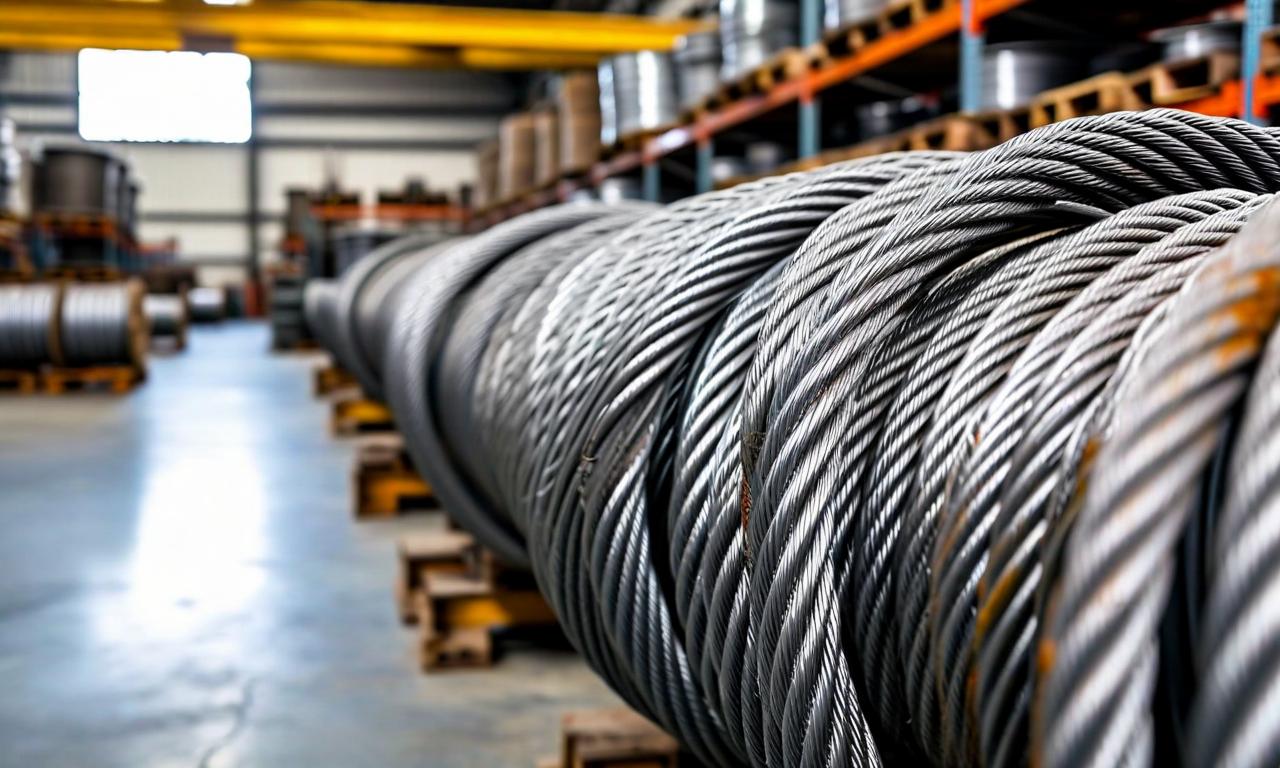
*this image is generated using AI for illustrative purposes only.
Usha Martin Limited submitted its Business Responsibility and Sustainability Report (BRSR) for the financial year 2025-26 to the National Stock Exchange of India Ltd., BSE Limited, and Societe de la Bourse de Luxembourg on July 27, 2026. The filing details the company’s performance across environmental, social, and governance parameters, highlighting key sustainability milestones such as the partial commissioning of renewable energy infrastructure and the implementation of Zero Liquid Discharge systems. SGS India Private Limited conducted an independent assurance engagement, providing reasonable assurance for core BRSR indicators and limited assurance for other indicators in accordance with International Standard on Assurance Engagements (ISAE) 3000 (Revised) and ISAE 3410.
The report outlines the company’s operational footprint, which includes three plants and six offices nationally, alongside four plants and 16 offices internationally. As of March 31, 2026, the workforce comprised 664 employees and 4,394 workers. The Board of Directors approved the policies covering all nine principles of the National Guidelines on Responsible Business Conduct (NGRBC). Oversight is managed by the Sustainability Council, chaired by Whole Time Director S B N Sharma, which reviews performance quarterly alongside the Risk Management Committee.
Environmental Initiatives and Energy Transition
Usha Martin Limited reported significant progress in decarbonization efforts during FY 2025-26. A major milestone was the completion of Phase I of a 4 MWp rooftop solar PV installation at the Ranchi facility, with 2.2 MWp installed. Phase I is scheduled to begin operations in April 2026, while Phase II, covering the remaining 1.8 MWp, is expected to be commissioned within FY 2026-27. This initiative aims to reduce reliance on the coal-based Captive Power Plant and increase the share of renewable energy in the plant’s energy mix.
Additionally, the company transitioned its canteen fuel system from liquefied petroleum gas (LPG) cylinders to piped natural gas (PNG) at the Ranchi facility. Operating at an average consumption of approximately 220 SCM per day, this switch is estimated to reduce associated greenhouse gas emissions by 13–15%. An extensive energy-saving programme at the wire and wire rope plant targeted a 10% reduction in total power consumption through measures such as restructuring the power distribution network and replacing sodium vapour lamps with LED systems, resulting in savings of approximately 2 lakh units of electricity annually.
| Initiative | Location | Impact / Outcome |
|---|---|---|
| Rooftop Solar PV Installation | Ranchi | 2.2 MWp installed (Phase I); reduces grid dependency |
| Canteen Fuel Transition | Ranchi | LPG to PNG; estimated 13–15% GHG reduction |
| Energy Saving Programme | Ranchi | ~2 lakh units electricity saved annually; 1,866 kW load reduction |
| Zero Liquid Discharge | Ranchi | Treated wastewater reused for landscaping and manufacturing |
The company is committed to reducing water withdrawal by 50% by FY 2029-30, using FY 2024-25 as the baseline. A Zero Liquid Discharge (ZLD) system is operational at a section of the Ranchi facility, enabling the reuse of treated wastewater. Life Cycle Assessments (LCA) were completed for wire rope, wire & strands, and LRPC strand products, with Environmental Product Declaration (EPD) certification obtained for Powerform 8P, Minesform 8PVF, and Oceanmax 35.
Social Performance and Governance
On the social front, Usha Martin Limited emphasized workplace safety and inclusivity. The Occupational Health and Safety Management System, aligned with ISO 45001, was implemented across all manufacturing sites. Safety training covered 100% of the workforce, and Behaviour-Based Safety training was conducted for over 3,000 employees. The company reported no high-consequence work-related fatalities, and workers who sustained injuries were redeployed in suitable roles.
Diversity metrics showed that women constituted 4.07% of employees and 0.96% of workers. At the Board level, one out of seven directors was female, representing 14.29%. The company does not have any differently abled employees or workers as of March 31, 2026. Human rights training was conducted on a refresher basis, as FY 2025-26 was designated a non-training year following primary training in FY 2024-25.
Corporate Social Responsibility and Financials
Although not statutorily required to incur CSR spending due to the absence of net profits calculated under Section 198 of the Companies Act, 2013, over the last three financial years, the company voluntarily carried out CSR activities through the Usha Martin Foundation. Voluntary spending in the aspirational district of Ranchi, Jharkhand, amounted to ₹2,88,82,332. Beneficiaries included individuals from health and sanitation, education, livelihood, and skill development projects.
The report also disclosed monetary penalties paid during the year: ₹1,34,935 for GST detention issues in Tamil Nadu, ₹20,000 for ineligible input tax credit claims, and ₹50,000 for non-compliance with GST circulars. No appeals were preferred against these penalties. The company’s turnover for the period was reported at ₹23,120.30 million, with a net worth of ₹17,888.98 million.
Historical Stock Returns for Usha Martin
| 1 Day | 5 Days | 1 Month | 6 Months | 1 Year | 5 Years |
|---|---|---|---|---|---|
| -1.39% | -8.10% | -0.15% | +25.61% | +7.04% | +473.41% |

How will the completion of Phase II of the rooftop solar installation in FY 2026-27 impact Usha Martin's overall carbon intensity and compliance with future regulatory emission standards?
Given the voluntary CSR spending despite no statutory requirement, what strategic rationale drives the company's continued investment in the Ranchi district, and how might this influence local stakeholder relations?
What specific measures is the Sustainability Council planning to address the low representation of women (4.07% of employees) and the absence of differently abled workers in the upcoming fiscal year?
 15
15




 Access 50+ Readymade Screeners
  Use 200+ Custom Filters
  Get Full Market Insights





