
 NewsTata Power and Bhutan's DGPC Expand Clean Energy Partnership, Add 404 MW Nyera Amari Hydropower Project to Portfolio
Tata Power and Bhutan's DGPC Expand Clean Energy Partnership, Add 404 MW Nyera Amari Hydropower Project to Portfolio


Tata Power and Bhutan's DGPC expanded their clean energy partnership by adding the 404 MW Nyera Amari I & II Integrated Hydropower Project, raising total identified capacity to 5,033 MW from 4,500 MW. The amendment, signed on May 8, 2026, also includes plans for 500 MW of solar PV projects, with work already underway on the Khorlochhu and Dorjilung projects accounting for approximately 35% of the committed 5 GW portfolio.

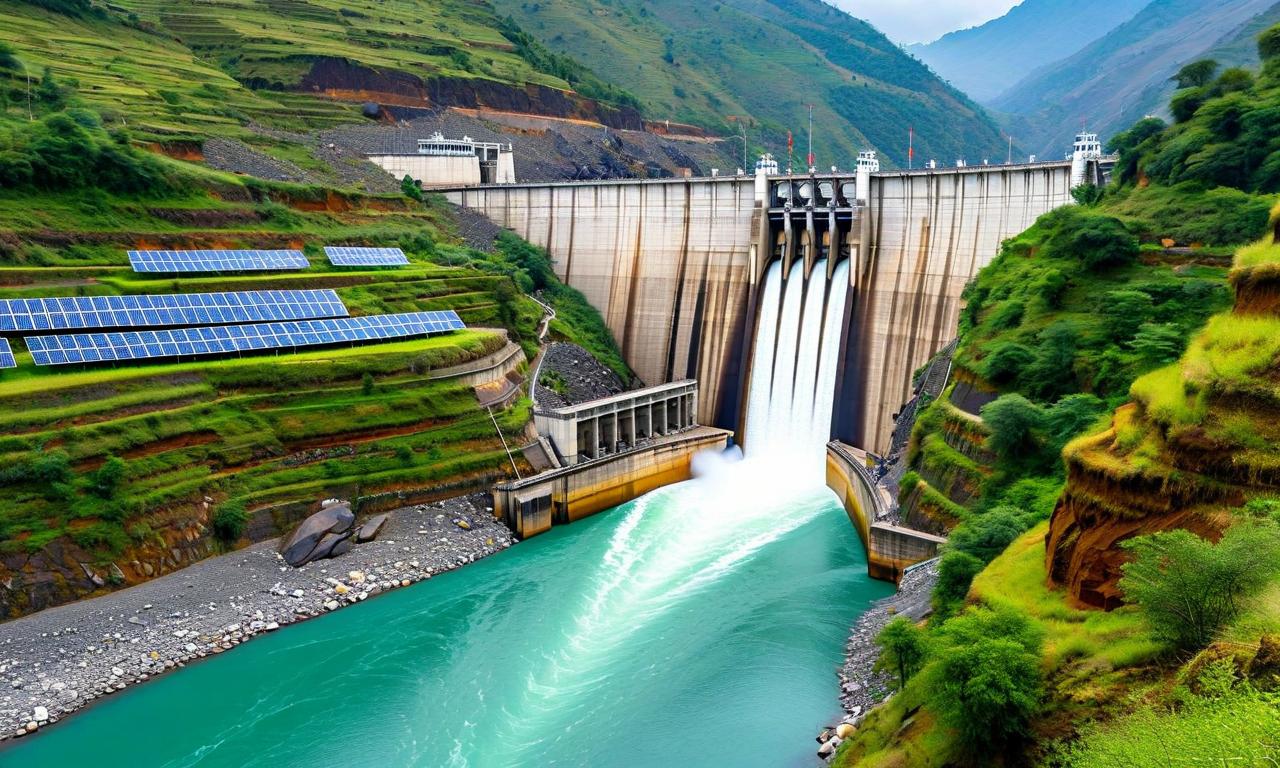

*this image is generated using AI for illustrative purposes only.
Tata Power and Bhutan's Druk Green Power Corporation Limited (DGPC) have expanded their clean energy collaboration through an amendment to their existing Memorandum of Understanding (MoU), adding the 404 MW Nyera Amari I & II Integrated Hydropower Project to their joint development pipeline. The amendment was signed on May 8, 2026, in the presence of Bhutan's Prime Minister Lyonchhen Tshering Tobgay, and was formally executed by Dr. Praveer Sinha, CEO & Managing Director, Tata Power, and Chhewang Rinzin, Managing Director, DGPC. Also present at the ceremony were Ms. Anjali Pandey, President – Generation Business, Tata Power, and senior officials from DGPC and DHPC.
Expanded Hydropower Portfolio
With the addition of the Nyera Amari I & II project, the total identified hydropower capacity under the Tata Power–DGPC partnership has increased to 5,033 MW from 4,500 MW under the original MoU dated November 19, 2024. The collaboration is now described as the largest partnership between two leading power companies of India and Bhutan in Asia's clean energy sector. The following table outlines the full project portfolio under the partnership:
| Project: | Capacity |
|---|---|
| Khorlochhu | 600 MW |
| Dorjilung | 1,125 MW |
| Gongri Reservoir with Jeri Pumped Storage | 2,540 MW (combined) |
| Chamkharchhu IV | 364 MW |
| Nyera Amari I & II (newly added) | 404 MW |
| Total Identified Hydropower Capacity | 5,033 MW |
In addition to hydropower, Tata Power and DGPC also aim to jointly develop 500 MW of solar PV projects in Bhutan.
Project Progress and Strategic Significance
Work has already commenced on the Khorlochhu (600 MW) and Dorjilung (1,125 MW) hydropower projects, together accounting for approximately 35% of the committed portfolio of 5 GW. The projects will be developed with mutually agreed equity participation, and both companies will continue to evaluate and add new hydropower opportunities over time. This expansion is aligned with Bhutan's vision to take its overall generation capacity to 25,000 MW by 2040, supporting the country's energy security and regional energy integration goals.
Leadership Perspectives
Dr. Praveer Sinha, CEO & Managing Director, Tata Power, stated, "This milestone of expanding our joint hydropower portfolio to over 5,000 MW with DGPC marks a significant step in strengthening our clean energy partnership in Bhutan. The addition of the Nyera Amari project reflects the scale, ambition, and long-term commitment of this collaboration. This strategic partnership is not only pivotal for advancing Bhutan's economic growth by unlocking its vast hydropower potential but also plays a critical role in enhancing regional energy security. For India, especially during peak summer months when demand continues to reach record highs, such partnerships ensure access to reliable, clean power."
Dasho Chhewang Rinzin, MD, DGPC, said, "The expansion of our partnership with Tata Power to over 5000 MW hydropower portfolio marks a defining milestone in Bhutan's clean energy journey. The inclusion of the 404 MW Nyera Amari I & II Integrated Hydropower Project, alongside key projects such as Khorlochhu (600 MW), Dorjilung (1,125 MW), Gongri Reservoir with Jeri Pumped Storage (2,540 MW), and Chamkharchhu IV (364 MW), reflects the scale and ambition of this collaboration. This partnership will play a pivotal role in unlocking Bhutan's vast hydropower potential, supporting economic growth, and strengthening regional energy security, while reinforcing Bhutan's position as a leading clean energy nation."
Long-Standing Partnership and Company Profiles
Tata Power's association with DGPC spans over a decade, beginning with the 126 MW Dagachhu Hydropower Project—Bhutan's first public-private hydropower partnership, commissioned in 2008. Both companies have a long-standing relationship, having worked together for over 15 years. The original strategic partnership between Tata Power and DGPC was entered on November 19, 2024, with the support of the Royal Government of Bhutan and the Government of India.
Tata Power owns a diversified portfolio of 16.3 GW, spanning renewable and conventional energy generation, transmission, distribution, trading, storage solutions, and solar cell and module manufacturing. The company has 7.5 GW of clean energy generation, constituting 46% of its total capacity, and serves approximately 13 million customers nationwide. DGPC, a subsidiary of Druk Holding and Investments Limited, currently holds a portfolio of 3,473 MW of hydro capacity in Bhutan and is envisioned to achieve 15,000 MW hydro capacity and 5,000 MW solar capacity within the next 10 years.
Historical Stock Returns for Tata Power
| 1 Day | 5 Days | 1 Month | 6 Months | 1 Year | 5 Years |
|---|---|---|---|---|---|
| -2.47% | -5.11% | -0.48% | -7.55% | -9.91% | +120.57% |

How will the power generated from the 5,033 MW Tata Power–DGPC portfolio be priced and allocated between Bhutan's domestic consumption and export to India's grid?
What financing mechanisms and equity structures are being considered for the larger projects like Gongri Reservoir with Jeri Pumped Storage, and could this attract third-party investors or multilateral development bank funding?
Given India's record peak summer demand, what transmission infrastructure upgrades will be required to efficiently evacuate hydropower from Bhutan to Indian load centers?
 18
18












 Access 50+ Readymade Screeners
  Use 200+ Custom Filters
  Get Full Market Insights





