

Star Cement sets AGM book closure Sep 19-25 amid Q1 profit drop


Star Cement Limited announced the book closure period for its 25th Annual General Meeting, scheduled for September 25, 2026. The register of members will be closed from September 19 to 25, 2026. This update accompanies Q1FY26 financial results, where consolidated net profit fell 25% YoY to ₹739.09 lakhs due to EBITDA margin contraction, despite a slight rise in revenue.


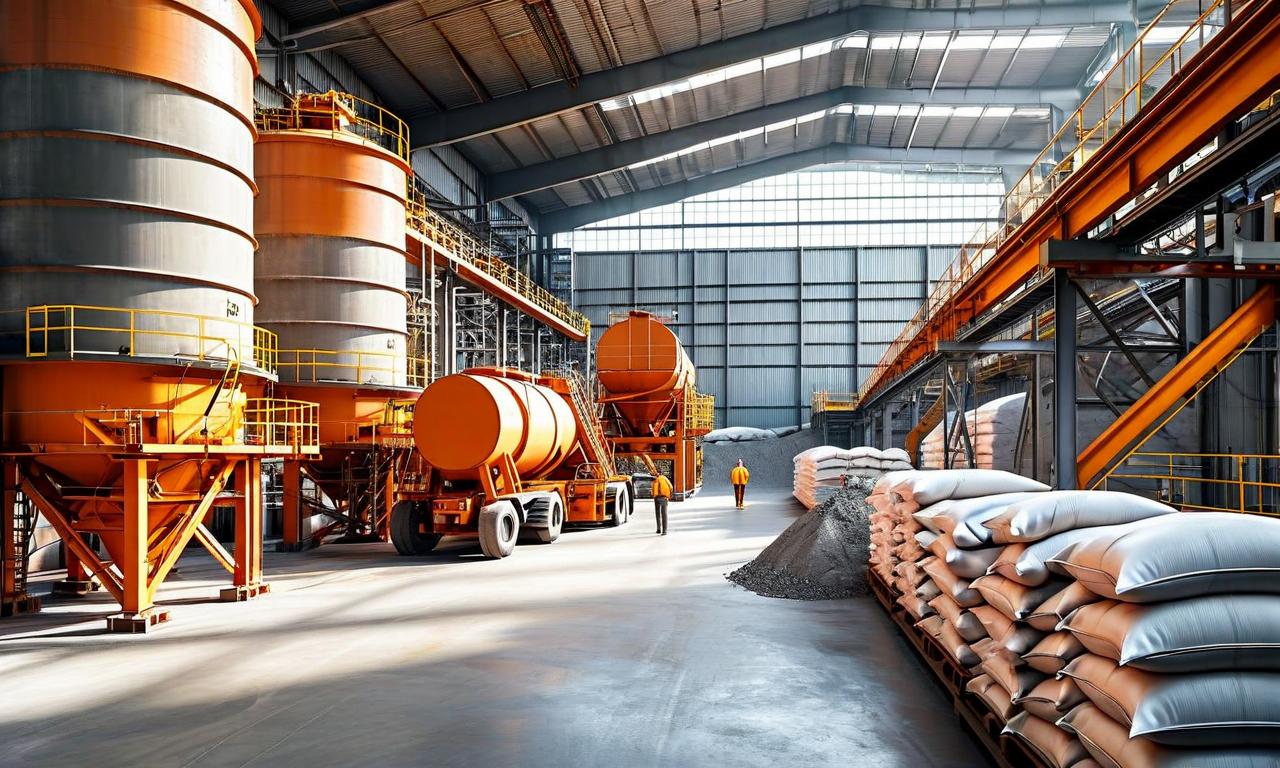
*this image is generated using AI for illustrative purposes only.
Star Cement Limited has confirmed that its Register of Members and Share Transfer Books will remain closed from Saturday, September 19, 2026, to Friday, September 25, 2026, in connection with its 25th Annual General Meeting (AGM). This procedural update coincides with the company’s Q1FY26 financial results, which reported a 25% year-on-year decline in consolidated net profit to ₹739.09 lakhs, driven by contracting EBITDA margins despite a marginal rise in revenue.
The AGM is scheduled to be held on Friday, September 25, 2026, at 11:30 a.m. via Video Conferencing. The notice was issued by Debabrata Thakurta, Company Secretary, on August 7, 2026, and submitted to the Listing Department of BSE Limited. During the meeting, shareholders are expected to approve the re-appointment of four key directors for a three-year term ending March 31, 2030.
Financial Performance Context
The book closure announcement follows the release of Q1FY26 results reviewed by Statutory Auditors Singhi & Co. Consolidated revenue from operations rose to ₹9,428.89 lakhs from ₹9,119.93 lakhs in Q1FY25. However, profitability faced pressure as EBITDA declined to ₹1.94 billion from ₹2.28 billion, with the EBITDA margin contracting to 20.63% from 25.02%.
| Metric | Consolidated Q1FY26 (₹ Lakhs) | Consolidated Q1FY25 (₹ Lakhs) |
|---|---|---|
| Revenue from Operations | 9,428.89 | 9,119.93 |
| Net Profit After Tax | 7,390.90 | 9,816.46 |
| EPS (Basic) | ₹1.85 | ₹2.44 |
The Board attributed the non-comparable tax expense to the adoption of the concessional income tax rate under Section 115BAA of the Income-tax Act, 1961, effective April 1, 2026. Additionally, the Group recognized a provision of ₹579.94 lakhs as an exceptional item in Q4FY26 related to new Labour Codes implementation.
Board Re-appointments
Subject to shareholder approval at the AGM, the Board has recommended the re-appointment of the following executives for a three-year term:
- Sajjan Bhajanka as Chairman & Managing Director
- Sanjay Agarwal as Managing Director
- Prem Kumar Bhajanka as Vice Chairman & Managing Director
- Pankaj Kejriwal as Executive Director
These appointments were made pursuant to the recommendation of the Nomination and Remuneration Committee. The disclosures confirm familial relationships within the Bhajanka family, including Sajjan Bhajanka being the father of Non-Executive Director Keshav Bhajanka, and Prem Kumar Bhajanka being the father of Managing Director & CEO Tushar Bhajanka.
What the Numbers Show
The divergence between rising revenue and falling profitability highlights the impact of changing regulatory costs and margin pressures. The contraction in EBITDA margin — from 25.02% to 20.63% — alongside the decline in net profit, underscores the effect of the new concessional tax regime and provisions for Labour Code compliance on the group's cost structure. The standalone segment showed tighter margins compared to the consolidated view, suggesting that subsidiary performance played a significant role in overall group profitability dynamics this quarter.
Historical Stock Returns for Star Cement
| 1 Day | 5 Days | 1 Month | 6 Months | 1 Year | 5 Years |
|---|---|---|---|---|---|
| -1.48% | -5.02% | -16.38% | -28.49% | -38.21% | +59.03% |

How is Star Cement planning to mitigate the structural EBITDA margin contraction caused by new Labour Code compliance costs in subsequent quarters?
What specific operational strategies will the re-appointed board members implement to reverse the trend of declining profitability despite rising revenue?
Will the adoption of the concessional tax rate under Section 115BAA provide sufficient long-term relief to offset the impact of rising input and regulatory costs?
 18
18













 Access 50+ Readymade Screeners
  Use 200+ Custom Filters
  Get Full Market Insights





