

Sona BLW Q1 revenue rises 54% to ₹1,310 crore, unveils Robotics vertical


Sona BLW Precision Forgings Ltd delivered strong Q1 FY27 results with ₹1,310 crore revenue and ₹181 crore PAT. Strategic highlights include the launch of a Robotics and Physical AI vertical with an ₹8 billion order book and two joint ventures with DENSO Corporation Japan for electric powertrains.



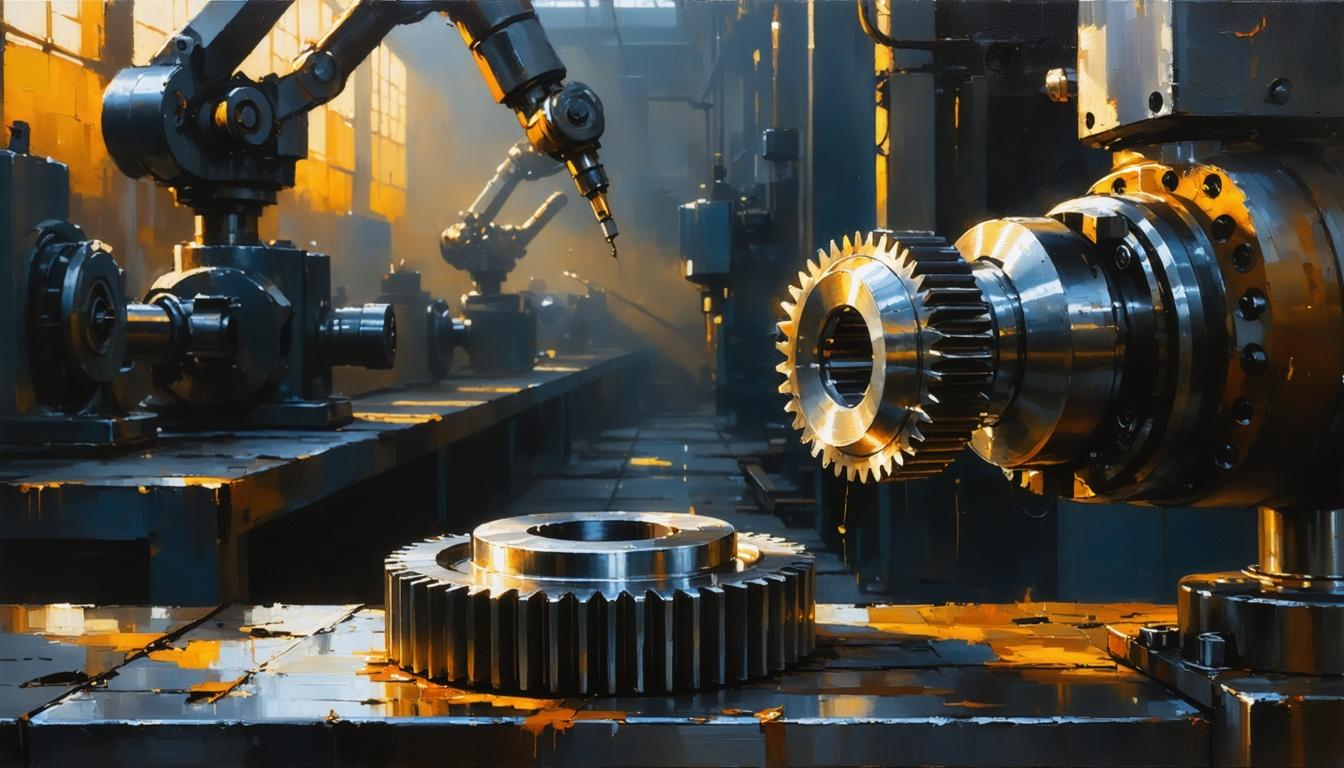
*this image is generated using AI for illustrative purposes only.
Sona BLW Precision Forgings reported a record consolidated revenue of ₹1,310 crore for Q1 FY27, marking a 54% year-on-year increase. Profit after tax (PAT) grew 45% to ₹181 crore, while EBITDA rose 49% to ₹303 crore. The strong financial performance was underpinned by a 107% surge in battery electric vehicle (BEV) revenue to ₹435.5 crore, which now constitutes an all-time high of 44% of automotive product sales. This growth trajectory supports the company's newly unveiled "Sona Comstar 2.0" strategy, aiming for tenfold revenue expansion by FY35 through diversification into Robotics and Physical AI.
The Board approved the unaudited standalone and consolidated financial results on July 23, 2026, pursuant to Regulation 30 of the SEBI Listing Regulations. Walker Chandiok & Co LLP served as the statutory auditor for the quarter. Management highlighted that despite continued weakness in the US EV market, the company achieved diversification across customers, products, and geographies. The EBITDA margin stood at 23.1%, down slightly from 23.71% in the prior year due to product mix shifts and higher input prices, partially offset by positive operating leverage.
Strategic Expansion: Robotics and Physical AI
A key development in Q1 FY27 was the announcement of Sona Comstar 2.0, which includes entering a new growth vertical: Robotics and Physical AI. Under this initiative, the company will focus on building mission-critical components and subsystems for robotics platforms, developing perception stacks, and providing engineering, research, and development (ER&D) services. Additionally, Sona BLW plans to develop and manufacture selected full-stack robot platforms, specifically autonomous mobile robots (AMRs) and cognitive collaborative robots (cobots). This move complements its existing strengths in electrification and intelligent connected systems.
The company has already secured three orders in this vertical, adding ₹6 billion to the order book, bringing the total Robotics and Physical AI order book to ₹8 billion. Group CTO Praveen Rao noted that these products leverage deep capabilities in motors, gearboxes, and sensors, marking a natural extension of their automotive expertise into intelligent machines.
Joint Ventures and Order Wins
On July 22, 2026, Sona BLW signed definitive agreements with DENSO Corporation Japan to form two joint ventures for electric and hybrid powertrain systems. One JV, with 51:49 equity ownership between DENSO and Sona BLW, will focus on high-voltage liquid-cooled EV traction motors for four-wheelers. The second JV, with 51:49 equity ownership between Sona BLW and DENSO, will develop air-cooled EV traction motors for two- and three-wheelers. As part of this arrangement, Sona BLW will slump sell its existing EV motors and controllers business at an enterprise value of ₹17,500 million.
During the quarter, the company secured significant new orders:
- A hybrid driveline differential assembly program worth ₹640 crore from a North American OEM, with production starting in H2 FY29.
- Two traction motor programs for electric two-wheelers worth ₹90 crore, with production commencing in H2 FY26.
- Differential gears for non-electric passenger vehicles worth ₹210 crore, with production starting in H2 FY28.
Financial Performance Overview
The company's net order book stands at ₹240 billion, equivalent to 5.4 times its FY26 revenue. This includes ₹237 billion added from programs won in Q1 FY27, adjusted for matured and ramp-up programs. Eastern markets contributed 59% of revenue in Q1 FY27, up from 56% last year, signaling a successful geographic diversification strategy.
| Metric | Q1 FY27 | Q1 FY26 | YoY Growth |
|---|---|---|---|
| Revenue | ₹1,310 crore | ₹854 crore | +54% |
| EBITDA | ₹303 crore | ₹203 crore | +49% |
| EBITDA Margin | 23.1% | 23.71% | -0.61 pp |
| PAT | ₹181 crore | ₹125 crore | +45% |
| BEV Revenue | ₹435.5 crore | — | +107% |
What the Numbers Show
The data reveals a clear shift in Sona BLW's revenue composition towards electrification. With BEV revenue doubling and accounting for nearly half of automotive sales, the company is successfully mitigating risks associated with traditional internal combustion engine (ICE) markets. The slight compression in EBITDA margins despite robust top-line growth suggests that scaling new EV programs involves higher initial input costs or less favorable product mixes, a common phase in rapid expansion. However, the substantial order book visibility of ₹240 billion provides a strong foundation for future margin recovery and sustained profitability.
Historical Stock Returns for Sona BLW Precision Forgings
| 1 Day | 5 Days | 1 Month | 6 Months | 1 Year | 5 Years |
|---|---|---|---|---|---|
| -0.59% | -5.65% | -4.26% | +30.98% | +64.82% | +21.79% |

How will the slump sale of the existing EV motors business to the DENSO joint venture impact Sona BLW's near-term cash flows and balance sheet structure?
What specific technological barriers or competitive risks does Sona BLW face in transitioning from automotive components to full-stack robotics and Physical AI platforms?
Given the slight compression in EBITDA margins, what operational levers does management plan to pull to restore margin expansion as BEV revenue scales to 44% of sales?
 20
20









 Access 50+ Readymade Screeners
  Use 200+ Custom Filters
  Get Full Market Insights





