

Shri Gang Industries Q1 Results: Net profit up 115% YoY


Shri Gang Industries & Allied Products Limited delivered robust Q1FY27 results, posting a net profit of ₹2.06 crore, a 115% increase year-on-year. Gross margins expanded significantly to 24%, driving EBITDA growth of 17% despite flat net revenue of ₹84 crore. The company secured a new contract manufacturing LOI from Tilaknagar Industries and continues to expand its bottling capacity.


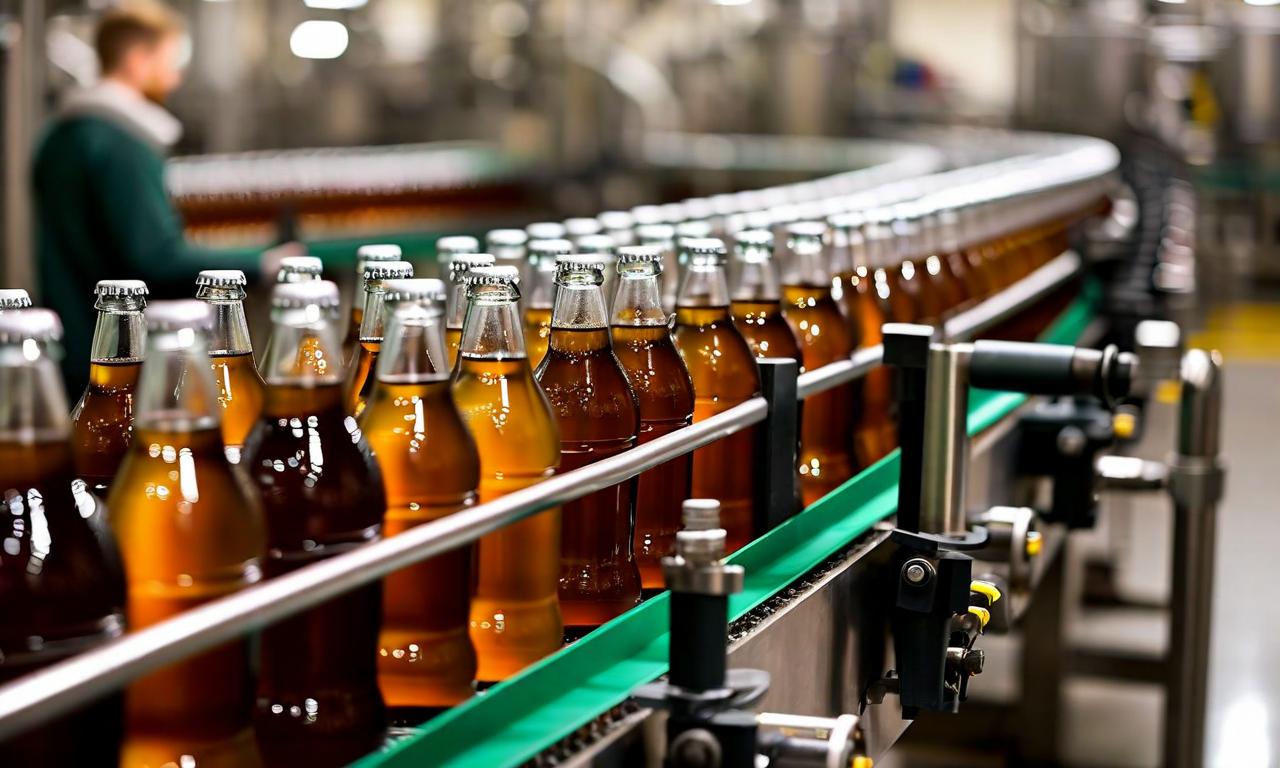
*this image is generated using AI for illustrative purposes only.
Shri Gang Industries & Allied Products Limited reported a significant improvement in profitability for the first quarter of FY27, with net profit more than doubling year-on-year. The company’s financial results reflect stronger operating efficiency despite broadly flat top-line growth.
Net revenue stood at ₹84 crore in Q1FY27, remaining largely unchanged compared to ₹86 crore in Q1FY26, representing a decline of 2%. However, the company achieved a sequential increase of 5% from ₹80 crore in Q4FY26. This stability was driven by an uptick in Indian Made Foreign Liquor (IMFL) contract manufacturing volumes with United Spirits Limited (USL) and strong traction from products under the franchise agreement with Three Brothers LLP.
Financial Performance
The primary driver of the quarter’s positive outcome was margin expansion. Gross profit rose 27% year-on-year to ₹20 crore from ₹16 crore, lifting the gross profit margin by 600 basis points to 24% from 18% in Q1FY26. This operational leverage allowed earnings before interest, taxes, depreciation, and amortization (EBITDA) to grow 17% to ₹5 crore, maintaining a margin of 6%.
| Metric | Q1FY27 | Q1FY26 | YoY Change |
|---|---|---|---|
| Net Revenue: | ₹84 crore | ₹86 crore | -2% |
| Gross Profit: | ₹20 crore | ₹16 crore | +27% |
| EBITDA: | ₹5 crore | ₹4 crore | +17% |
| Net Profit: | ₹2.06 crore | ₹0.96 crore | +115% |
Profit after tax (PAT) surged to ₹2.06 crore, up from ₹0.96 crore in the corresponding period of FY26. This improvement was supported by a reduction in finance costs, which fell 31% to ₹1.3 crore from ₹1.9 crore, alongside controlled employee benefit expenses that rose only 41% to ₹3 crore.
What the Numbers Show
A key analytical observation is the divergence between revenue stagnation and profit acceleration. While net revenue contracted slightly on a yearly basis, the expansion in gross margin from 18% to 24% indicates improved cost management or a shift toward higher-margin product mixes. This operational efficiency gain was sufficient to double the bottom line despite the lack of top-line growth, highlighting the impact of vertical integration and fixed-cost absorption at current volume levels.
Strategic Developments
The company highlighted new business opportunities in its investor presentation. Shri Gang Industries secured a Letter of Intent (LOI) from Tilaknagar Industries for the contract manufacturing of 2 lakh cases per month. Civil work for the associated bottling line expansion is underway, with commissioning expected by the end of December 2026.
Additionally, the company continues to scale its owned brands, Golden Cascade and Bulldozer, within the Uttar Pradesh Mahua Liquor (UPML) segment. The integration of captive Ethylated Narcotic Spirits (ENA) production is enhancing cost efficiency and operating leverage. Management noted that discussions are ongoing with third-party brands for further contract manufacturing opportunities, while evaluating capacity expansions in bottling facilities from 5.6 million to 10 million cases.
Historical Stock Returns for Shri Gang Industries
| 1 Day | 5 Days | 1 Month | 6 Months | 1 Year | 5 Years |
|---|---|---|---|---|---|
| 0.0% | -7.86% | -13.90% | -33.44% | -39.54% | 0.0% |

Will the upcoming commissioning of the Tilaknagar Industries bottling line in late 2026 significantly accelerate top-line growth, or will it primarily serve to stabilize current margins?
How sustainable is the 600 basis point expansion in gross profit margin given the flat revenue environment, and does this indicate a permanent shift in product mix toward higher-margin IMFL contracts?
What is the projected timeline and capital expenditure required to expand bottling capacity from 5.6 million to 10 million cases, and how will this impact the company's debt levels?
 18
18









 Create Custom Screeners
  Access 200+ Pre-built Filters
  Use 50+ Readymade Screener





