

Sar Auto Products profit surges 222% as revenue doubles in Q1FY27


Sar Auto Products posted a strong Q1FY27 performance with net profit rising 221.3% to ₹37.11 crore on doubled revenue. The Board also reshuffled governance by appointing Harsh Radiya as an Independent Director.


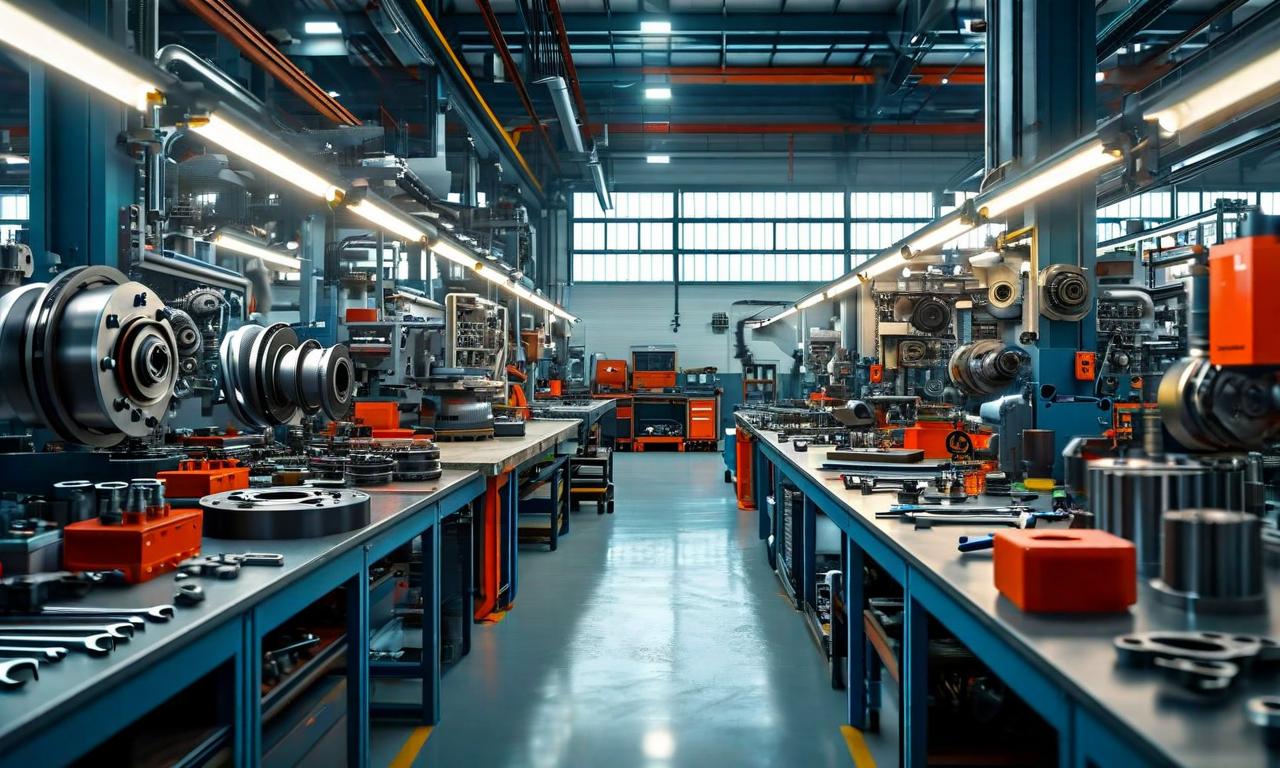
*this image is generated using AI for illustrative purposes only.
Sar Auto Products reported a net profit of ₹37.11 crore for the quarter ended June 30, 2026, marking a 221.3% year-on-year increase from ₹11.55 crore in Q1FY26. The surge was primarily driven by revenue from operations, which more than doubled to ₹533.19 crore from ₹226.94 crore in the corresponding period last year, highlighting robust demand for its gears and transmission components.
The Board of Directors approved the unaudited financial results on August 3, 2026, pursuant to Regulation 30 and Regulation 33 of the SEBI (Listing Obligations and Disclosure Requirements) Regulations, 2015. The results were reviewed by the Audit Committee and subjected to a limited review by the statutory auditors, J. A. Sheth & Associates, Chartered Accountants.
Financial Performance
| Particulars | Q1FY27 (₹ crore) | Q4FY26 (₹ crore) | Q1FY26 (₹ crore) |
|---|---|---|---|
| Revenue from Operations | 533.19 | 608.16 | 226.94 |
| Total Income | 565.43 | 639.05 | 252.13 |
| Total Expenses | 528.33 | 611.33 | 240.58 |
| Net Profit After Tax | 37.11 | 20.49 | 11.55 |
| Basic EPS (₹) | 0.78 | 0.43 | 0.24 |
While total income rose to ₹565.43 crore from ₹252.13 crore, total expenses increased to ₹528.33 crore from ₹240.58 crore. This expense rise was largely due to higher cost of materials consumed at ₹827.11 crore against ₹150.96 crore in Q1FY26. However, significant negative changes in inventories of finished goods and work-in-progress amounting to ₹(546.50) crore helped mitigate the impact of higher material costs on the bottom line.
Board Changes and Governance
Concurrently with the financial results, the Board noted the resignation of Vijay Narendrabhai Kalariya (DIN: 10454403) as an Independent Director effective August 3, 2026, citing personal reasons and pre-occupation. Mr. Kalariya confirmed no other material reasons for his resignation and stated he does not hold directorships in other listed companies.
On the recommendation of the Nomination and Remuneration Committee, the Board appointed Harsh Mukeshbhai Radiya (DIN: 11803235) as an Additional Director under the category of Non-Executive Independent Director. His appointment is effective from August 3, 2026, for a term of five consecutive years, subject to shareholder approval at the ensuing Annual General Meeting. Mr. Radiya holds an MBA in Finance from NMIMS, Mumbai, and is currently associated with a CA firm. He has no shareholding in the company and is not related to any promoters or key managerial personnel.
What the Numbers Show
The dramatic improvement in net profit is largely attributable to inventory adjustments rather than pure margin expansion. While revenue surged over 134% YoY, the reduction in inventory levels contributed significantly to lowering total expenses relative to income. Investors should monitor whether this profitability trend sustains without such large inventory write-downs in subsequent quarters. The company operates in a single segment focused on manufacturing gears, gearboxes, and other transmission components.
Corporate Actions
The Board also appointed Mr. Kalpesh P. Rachchh of K.P. Rachchh & Co. as the Secretarial Auditor for FY27 and as the Scrutinizer for the 39th Annual General Meeting. The notice for the AGM, along with the record date, will be intimated separately in due course.
Historical Stock Returns for SAR Auto Products
| 1 Day | 5 Days | 1 Month | 6 Months | 1 Year | 5 Years |
|---|---|---|---|---|---|
| -5.00% | -26.49% | -32.59% | 0.0% | 0.0% | 0.0% |

Can Sar Auto Products sustain its profit margins in Q2FY27 without relying on the significant negative inventory adjustments seen in Q1?
How might the resignation of Independent Director Vijay Kalariya and the appointment of Harsh Radiya impact the company's governance stability and strategic direction?
What specific factors drove the 134% year-on-year revenue surge, and are these demand trends expected to persist in the automotive transmission sector?
 17
17






 Create Custom Screeners
  Access 200+ Pre-built Filters
  Use 50+ Readymade Screener





