

Sai Silks (Kalamandir) files BRSR for FY26


Sai Silks (Kalamandir) Limited filed its Business Responsibility and Sustainability Report (BRSR) for FY26, reporting a turnover of ₹1,653.67 crore and a net worth of ₹1,260.47 crore. The company operates 81 stores and 4 warehouses across five states, employing 6,315 permanent workers. The report highlights a decrease in well-being costs to 0.26% of revenue and identifies talent management and shrinkage as key risks.


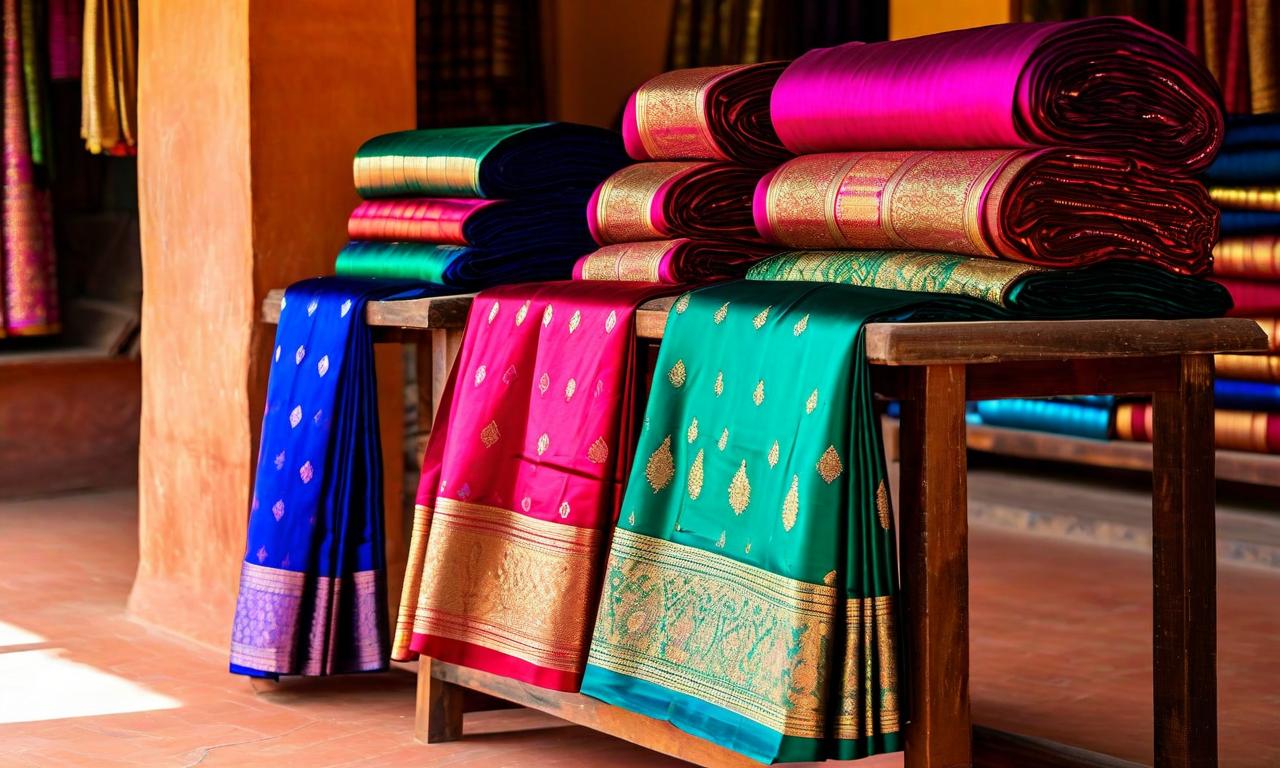
*this image is generated using AI for illustrative purposes only.
Sai Silks (Kalamandir) Limited has filed its Business Responsibility and Sustainability Report (BRSR) for the financial year ended March 31, 2026, as required under Regulation 34(2)(f) of the SEBI (LODR) Regulations, 2015. The report outlines the company's environmental, social, and governance (ESG) performance, highlighting a total turnover of ₹1,653.67 crore and a net worth of ₹1,260.47 crore for FY26. Sai Silks operates on a standalone basis with 81 stores and 4 warehouses located across five states: Andhra Pradesh, Telangana, Karnataka, Tamil Nadu, and Puducherry. The entity specializes in the retail trading of textile goods, which accounts for 100% of its turnover.
Workforce and Governance
As of March 31, 2026, the company employed 6,315 permanent workers, comprising 3,783 male employees (59.90%) and 2,532 female employees (40.10%). Additionally, 58 differently abled employees were on the rolls. The Board of Directors consists of seven members, with one female director representing 14.29% of the board. The governance structure is headed by Mr. Nagakanaka Durga Prasad Chalavadi, Managing Director, who oversees the implementation of business responsibility policies. The company has established various committees, including an Internal Complaints Committee (ICC) for sexual harassment prevention and a Vigil Mechanism for whistleblower protection.
Financial and Operational Metrics
The report details several financial and operational metrics for the financial year. The cost incurred on well-being measures stood at 0.26% of total revenue, a decrease from 0.33% in the previous year. The median remuneration for the Board of Directors was ₹1.99 crore, while Key Managerial Personnel received a median of ₹58.75 lakh.
| Metric | FY 2025-26 | FY 2024-25 |
|---|---|---|
| Turnover Rate (Permanent Employees) | ||
| Male | 9% | 16% |
| Female | 14% | 21% |
| Total | 11% | 18% |
| Days of Accounts Payables | 60 | 11 |
Sustainability and Risk Management
Sai Silks identified talent management and shrinkage as material risks. To mitigate talent attrition, the company focuses on robust compensation structures and skill development. For shrinkage control, it has implemented a double-check mechanism for monitoring sensor tags and conducts regular global counting audits. The company reported no fines, penalties, or non-monetary actions by regulators during the year. It confirmed that it has not formally measured Scope 1 and Scope 2 greenhouse gas emissions but is in the process of establishing systems to capture this data. No safety incidents were reported, and the company maintains a zero-tolerance policy towards retaliation and discrimination.
Source: https://lodr-files.dhan.co/lodr-inputs/Company/INE438K01021/74912b2d9cfb4247.pdf
Historical Stock Returns for Sai Silks (Kalamandir)
| 1 Day | 5 Days | 1 Month | 6 Months | 1 Year | 5 Years |
|---|---|---|---|---|---|
| +0.03% | -3.66% | -10.15% | -21.81% | -58.92% | -69.71% |

How will the establishment of systems to capture Scope 1 and Scope 2 emissions impact Sai Silks' operational costs and sustainability strategy in the coming years?
Can the significant reduction in employee turnover rates be sustained, and what specific skill development initiatives are planned to further mitigate talent attrition?
What is driving the drastic increase in 'Days of Accounts Payables' from 11 to 60, and how might this affect supplier relationships and working capital management?
 17
17








 Create Custom Screeners
  Access 200+ Pre-built Filters
  Use 50+ Readymade Screener





