

Rocket Lab shares rebound to $83 on $397 million Space Force contract win


Rocket Lab Corp shares surged to $83 following major contract wins, including a $397 million deal with the U.S. Space Force for Neutron rocket launches. The company's backlog reached a record $2.2 billion, supporting analyst expectations of 60% revenue growth in the upcoming earnings report, despite elevated market volatility.

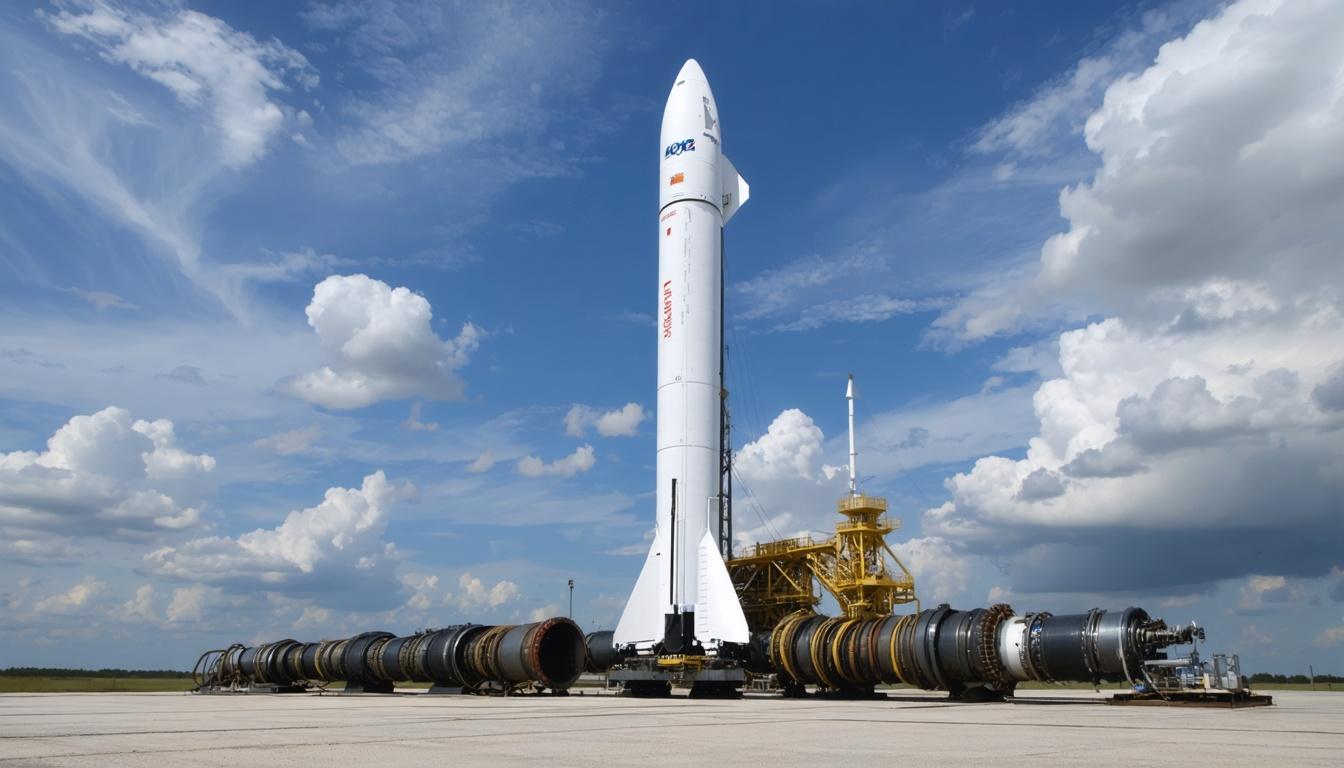

*this image is generated using AI for illustrative purposes only.
Rocket Lab Corp (NASDAQ: RKLB) shares have staged a sharp rebound, climbing from a low of approximately $56 to $83, as investors respond to significant contract momentum and an expanding order backlog. The rally is primarily driven by a newly awarded $397 million contract to build and launch flatellites for the U.S. Space Force, alongside other strategic wins that reinforce the company’s position in the defense and space-infrastructure market. This surge in equity value comes just ahead of the company’s upcoming earnings report, which will be the first since it announced its acquisition of Iridium.
Major Contract Wins and Backlog Growth
The $397 million award involves building and launching satellites designed to track airborne threats using Rocket Lab’s medium-lift Neutron rocket. The U.S. Space Force holds options to add more flatellites to this order. Additionally, the company secured a separate $266 million contract for 12 suborbital launches, with missions expected to start no earlier than late 2026 and run through Dec. 31, 2028. This contract includes options for six additional HASTE missions.
In the commercial sector, Rocket Lab signed an agreement with Institute for Q-shu Pioneers of Space Inc (iQPS) for three additional dedicated Electron launches. This marks iQPS’ third multi-launch booking, bringing its total contracted Electron missions to 18. These missions will deploy QPS-SAR satellites into a 575-kilometer low Earth orbit.
| Contract Partner | Value | Details |
|---|---|---|
| U.S. Space Force | $397 million | Build and launch flatellites; Neutron rocket |
| U.S. Space Force | $266 million | 12 suborbital launches; options for 6 more |
| Institute for Q-shu Pioneers of Space Inc | N/A | 3 additional Electron launches; 18 total |
These deals have strengthened Rocket Lab’s backlog, which hit a record $2.2 billion in the second quarter when revenue jumped 63.5% to $200.3 million.
Earnings Outlook and Market Sentiment
Analysts expect the upcoming results to show revenue jumping by 60% in the second quarter to $230 million, with third-quarter guidance projected at $232 million, representing a 52% annual increase. Wall Street is closely monitoring execution timelines for the expanded backlog and progress on the Neutron rocket.
The stock carries a Buy rating with an average price forecast of $105.86. Recent analyst actions include:
- KGI Securities: Upgraded to Outperform with a $107.00 target on July 27.
- Piper Sandler: Initiated coverage with a Neutral rating and $83.00 target on July 16.
- B of A Securities: Maintained Buy rating, raising target to $115.00 on June 30.
Technical Analysis and Volatility
Technically, Rocket Lab shares retreated from a high of $150 to a low of $57.4 on July 29 before rebounding above the 25-day Exponential Moving Average (EMA). The Average Directional Index (ADX) has remained above 20, indicating continuing trend strength. However, implied volatility has jumped to 110%, higher than the historical average of 96%, suggesting heightened uncertainty surrounding the earnings release. Investors are also monitoring broader space sector sentiment, with SpaceX earnings confirmed for Tuesday after the closing bell.

How might the upcoming earnings report clarify the integration timeline and financial impact of Rocket Lab's recent acquisition of Iridium?
What specific execution risks associated with the Neutron rocket's development could threaten the delivery schedule of the $397 million Space Force contract?
How will the release of SpaceX's earnings on Tuesday influence investor sentiment and capital allocation within the broader commercial space sector?
 16
16












 Access Market Heat-map & Insights
  Create, Save & Share your Screener
  Use 200+ Screening Filters





