

Rathi Steel & Power revenue surges 42% in FY26 to ₹7,164.9 crore


- Revenue surged 42% YoY to ₹7,164.9 crore in FY26, driven by doubled production volumes
- EBITDA grew 19% to ₹288.98 crore, but net profit fell 7.8% due to higher finance costs
- Rolled products production more than doubled to 1,02,971 MT from 47,440 MT in FY25
- Green power consumption rose to 29.76% of total usage, up from 9.63% last year
- AGM scheduled for September 29, 2026, to approve new Memorandum of Association



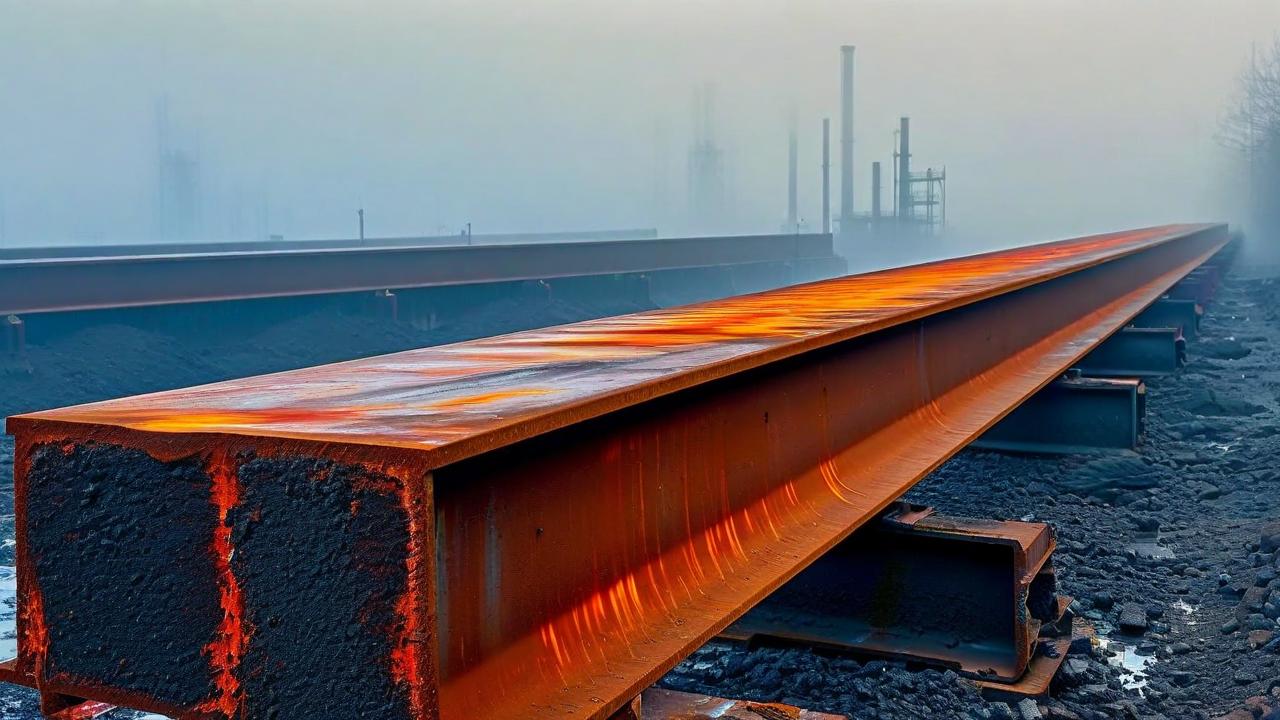
*this image is generated using AI for illustrative purposes only.
Rathi Steel & Power reported a 42% year-on-year increase in total revenue to ₹7,164.9 crore for FY26, driven by robust demand and the resumption of operations at its TMT bar mill. The company’s EBITDA grew by 19% to ₹288.98 crore, while net profit stood at ₹128.65 crore.
The board approved the financial statements during its meeting on September 1, 2026, and scheduled the 55th Annual General Meeting (AGM) for September 29, 2026. The meeting will be conducted via video conferencing or other audio-visual means.
Financial Performance
Total revenue from operations reached ₹7,160.5 crore in FY26, compared to ₹5,043.9 crore in FY25. The growth was supported by an increase in rolled products production to 1,02,971.46 MT from 47,440.04 MT in the previous year.
| Metric | FY26 | FY25 | Change |
|---|---|---|---|
| Total Revenue | ₹7,164.9 crore | ₹5,054.3 crore | +42% |
| EBITDA | ₹288.98 crore | ₹243.11 crore | +19% |
| Net Profit | ₹128.65 crore | ₹139.54 crore | -7.8% |
| Rolled Products (MT) | 1,02,971.46 | 47,440.04 | +117% |
EBITDA included other income and was before exceptional items. Profit before tax decreased slightly to ₹128.65 crore from ₹139.54 crore in FY25, primarily due to higher finance costs which rose to ₹74.21 crore from ₹55.03 crore. Depreciation expenses declined to ₹86.13 crore from ₹95.69 crore.
Operational Highlights
The company resumed production at its idle TMT bar mill in Q1FY26, a strategic move to utilize idle assets and expand brand visibility. Capacity utilization levels remain at approximately 51-53%, providing significant headroom for further ramp-up. Green power consumption increased to 29.76% of total power usage, up from 9.63% in FY25, supporting the company’s sustainability goals.
Corporate Governance Updates
The board appointed M/s R. M. Bansal & Co. as the cost auditor and M/s DIT & Company as the internal auditor for FY27. These appointments were made on the recommendation of the Audit Committee.
Mr. Sameer Kishore Bhatnagar was appointed as the scrutinizer for the remote e-voting and e-voting process during the AGM. The board also approved the adoption of a new Memorandum of Association to align with the latest provisions of the Companies Act, 2013, requiring shareholder approval at the upcoming AGM.
Auditor Appointments
| Role | Firm Name | Effective Date | Term |
|---|---|---|---|
| Cost Auditor | M/s R. M. Bansal & Co. | September 1, 2026 | FY26-27 |
| Internal Auditor | M/s DIT & Company | September 1, 2026 | FY26-27 |
M/s R. M. Bansal & Co. brings experience in cost audit and management costing, having worked with entities such as NTPC, IOCL, and Coal India Ltd. M/s DIT & Company has approximately 15 years of experience in conducting financial record verifications for various manufacturing industries.
What the Numbers Show
While revenue grew significantly by 42%, net profit declined by nearly 8%. This divergence highlights that the top-line growth was largely volume-driven rather than margin-expanding. Finance costs increased by over 34% to ₹74.21 crore, reflecting higher debt utilization to support the operational ramp-up and working capital needs. The company’s focus on green power, now contributing nearly 30% of energy consumption, positions it favorably for future regulatory compliance and potential cost savings as green energy prices stabilize.
Historical Stock Returns for Rathi Steel & Power
| 1 Day | 5 Days | 1 Month | 6 Months | 1 Year | 5 Years |
|---|---|---|---|---|---|
| -4.47% | -4.23% | -10.92% | -9.82% | -23.47% | +476.06% |

How does Rathi Steel plan to leverage its 47-49% capacity headroom to improve EBITDA margins in FY27 without incurring disproportionate finance costs?
Will the increased adoption of green power (nearly 30%) provide a tangible cost advantage or regulatory benefit as carbon pricing mechanisms evolve in the Indian steel sector?
Given the 34% rise in finance costs, what is the company's strategy for debt restructuring or equity infusion to optimize its capital structure ahead of the AGM?
 19
19




 Create Custom Screeners
  Access 200+ Pre-built Filters
  Use 50+ Readymade Screener





